Owen Amber R, Farias Ana, Levins Anne-Marie, Wang Ziyin, Higham Sophie L, Mack Matthias, Tregoning John S, Johansson Cecilia
Respiratory Infections, National Heart and Lung Institute, Imperial College London, United Kingdom.
Department of Infectious Disease, Imperial College London, United Kingdom.
Mucosal Immunol. 2024 Dec;17(6):1184-1198. doi: 10.1016/j.mucimm.2024.08.002. Epub 2024 Aug 9.
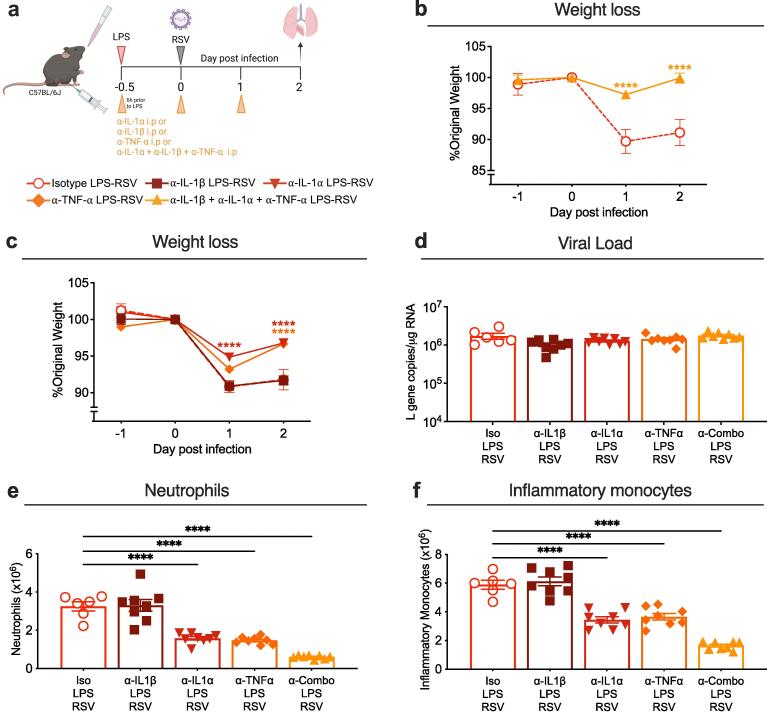
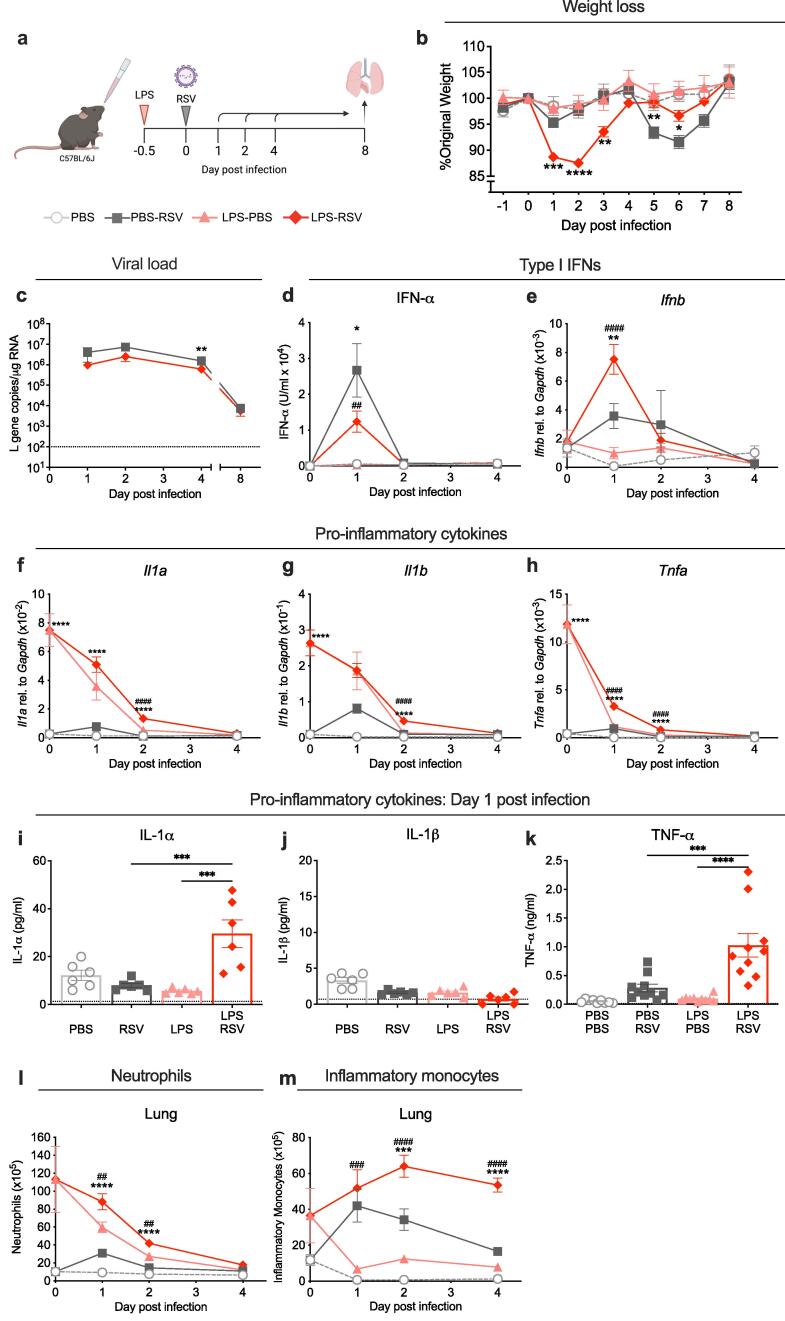
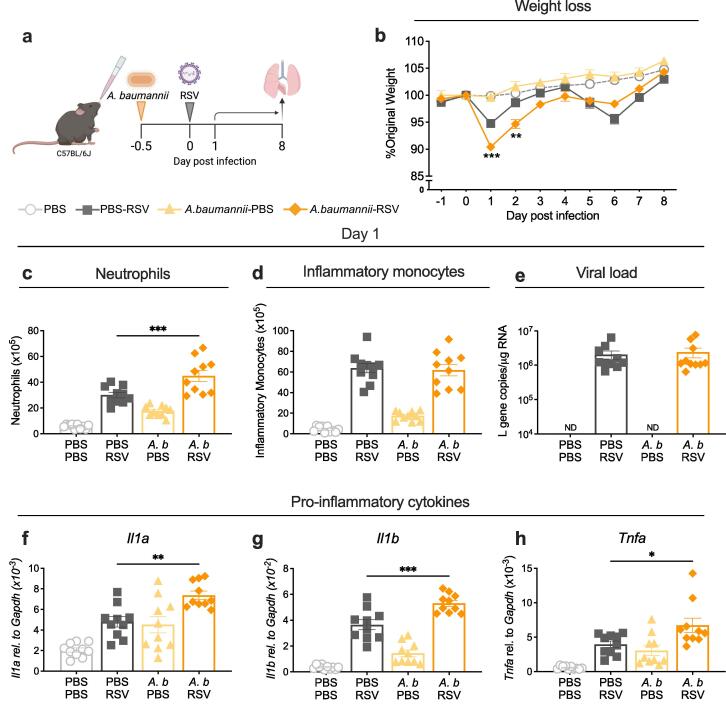
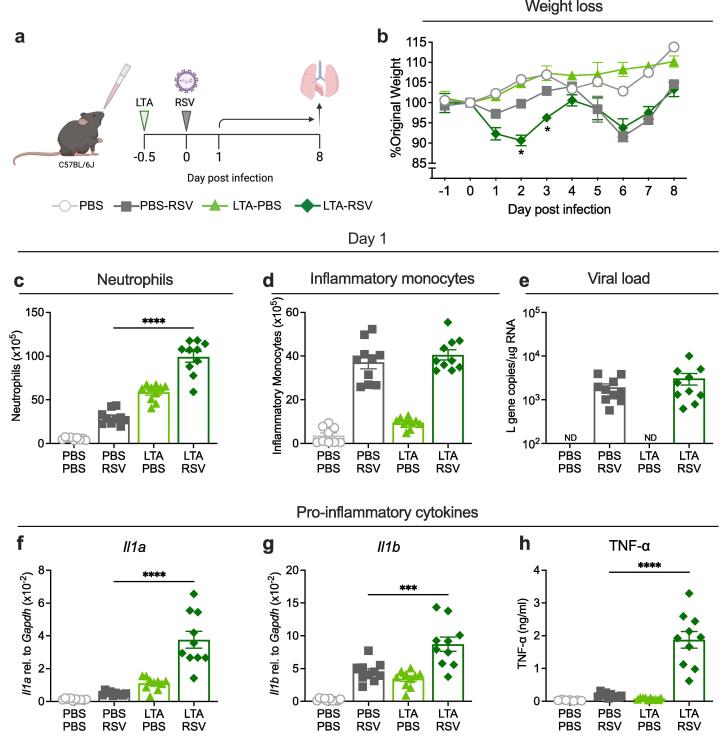
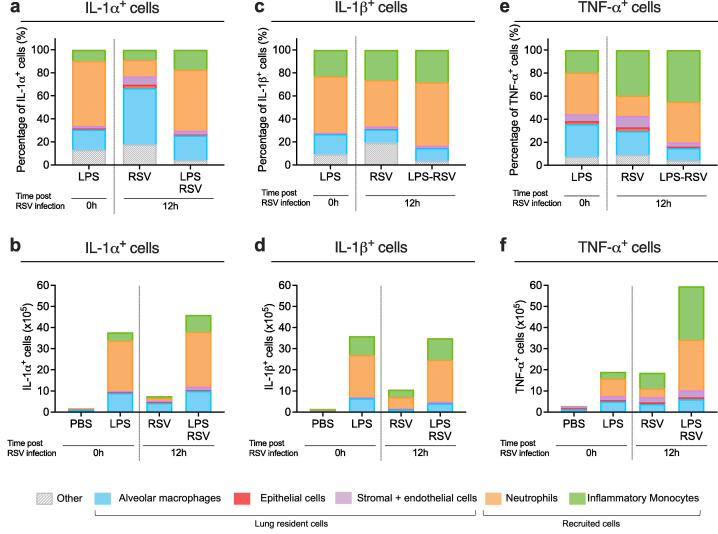
Respiratory syncytial virus (RSV) can cause severe lower respiratory tract infections. Understanding why some individuals get more serious disease may help with diagnosis and treatment. One possible risk factor underlying severe disease is bacterial exposure before RSV infection. Bacterial exposure has been associated with increased respiratory viral-induced disease severity but the mechanism remains unknown. Respiratory bacterial infections or exposure to their pathogen associated molecular patterns (PAMPs) trigger innate immune inflammation, characterised by neutrophil and inflammatory monocyte recruitment and the production of inflammatory cytokines. We hypothesise that these changes to the lung environment alter the immune response and disease severity during subsequent RSV infection. To test this, we intranasally exposed mice to LPS, LTA or Acinetobacter baumannii (an airway bacterial pathogen) before RSV infection and observed an early induction of disease, measured by weight loss, at days 1-3 after infection. Neutrophils or inflammatory monocytes were not responsible for driving this exacerbated weight loss. Instead, exacerbated disease was associated with increased IL-1α and TNF-α, which orchestrated the recruitment of innate immune cells into the lung. This study shows that exposure to bacterial PAMPs prior to RSV infection increases the expression of IL-1α and TNF-α, which dysregulate the immune response resulting in exacerbated disease.
呼吸道合胞病毒(RSV)可引起严重的下呼吸道感染。了解为何有些人会患上更严重的疾病可能有助于诊断和治疗。严重疾病潜在的一个可能风险因素是RSV感染前接触过细菌。接触细菌与呼吸道病毒诱发的疾病严重程度增加有关,但其机制尚不清楚。呼吸道细菌感染或接触其病原体相关分子模式(PAMPs)会引发先天性免疫炎症,其特征是中性粒细胞和炎性单核细胞募集以及炎性细胞因子的产生。我们假设,肺部环境的这些变化会改变后续RSV感染期间的免疫反应和疾病严重程度。为了验证这一点,我们在RSV感染前通过鼻腔将小鼠暴露于脂多糖(LPS)、脂磷壁酸(LTA)或鲍曼不动杆菌(一种气道细菌病原体),并在感染后第1至3天通过体重减轻来观察疾病的早期诱导情况。中性粒细胞或炎性单核细胞并非导致体重减轻加剧的原因。相反,疾病加剧与白细胞介素-1α(IL-1α)和肿瘤坏死因子-α(TNF-α)增加有关,它们协调了先天性免疫细胞向肺部的募集。这项研究表明,RSV感染前接触细菌PAMPs会增加IL-1α和TNF-α的表达,从而使免疫反应失调,导致疾病加剧。