Nicholas Sarah-Anne E, Helming Stephen R, Ménoret Antoine, Pathoulas Christopher, Xu Maria M, Hensel Jessica, Kimble Amy L, Heineman Brent, Jellison Evan R, Reese Bo, Zhou Beiyan, Rodriguez-Oquendo Annabelle, Vella Anthony T, Murphy Patrick A
Center for Vascular Biology and Calhoun Cardiology Center, UCONN Health School of Medicine, Farmington, CT.
Department of Immunology, UCONN Health, Farmington, CT.
bioRxiv. 2024 Aug 4:2024.08.02.605922. doi: 10.1101/2024.08.02.605922.
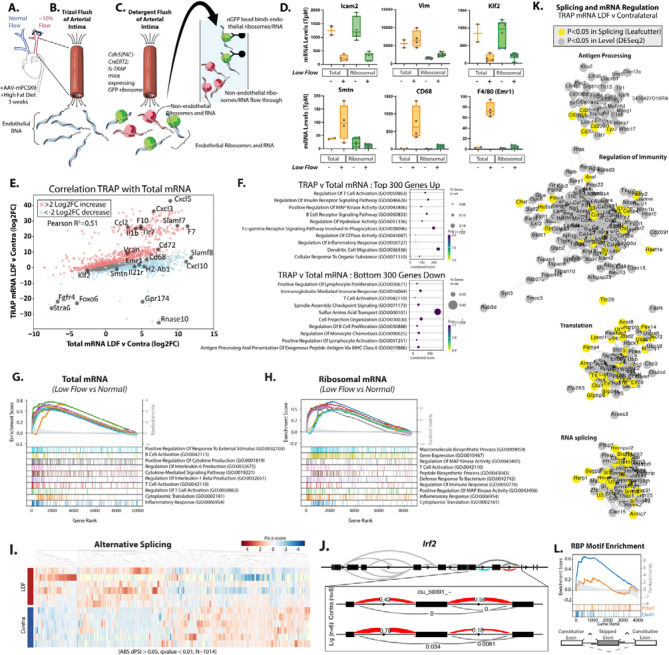
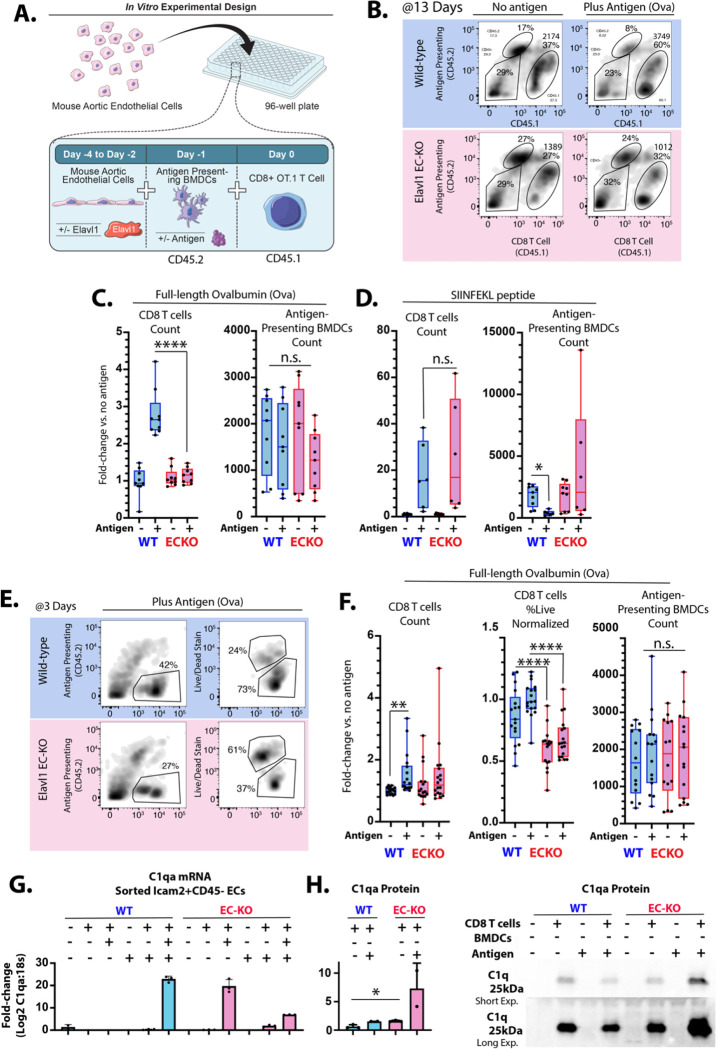
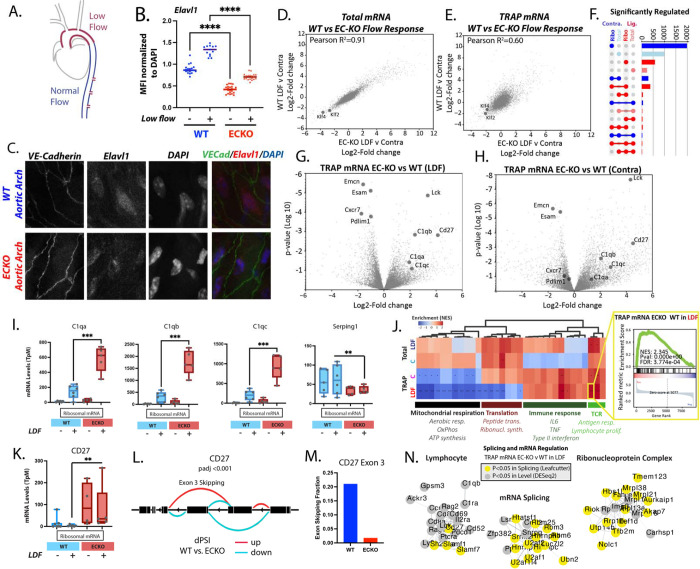
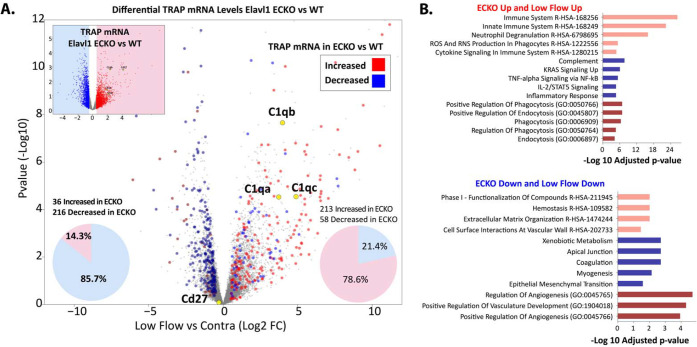
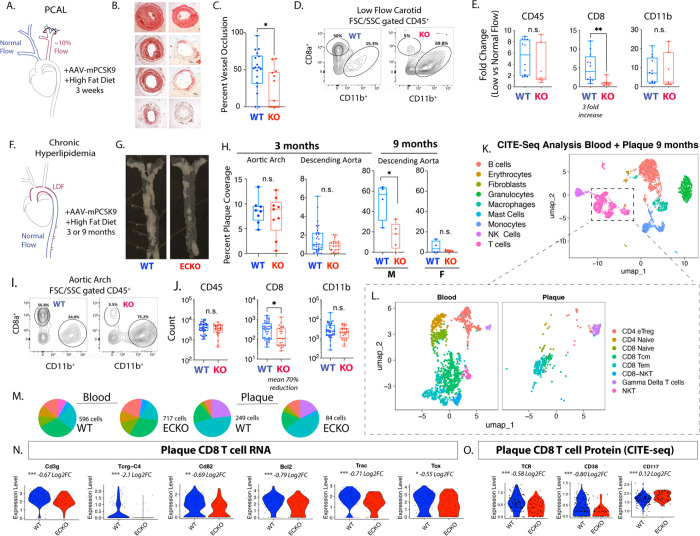
Atherosclerotic plaques are defined by the accumulation of lipids and immune cells beneath the endothelium of the arterial intima. CD8 T cells are among the most abundant immune cell types in plaque, and conditions linked to their activation correlate with increased levels of cardiovascular disease. As lethal effectors of the immune response, CD8 T cell activation is suppressed at multiple levels. These checkpoints are critical in dampening autoimmune responses, and limiting damage in cardiovascular disease. Endothelial cells are well known for their role in recruiting CD8 T and other hematopoietic cells to low and disturbed flow (LDF) arterial regions that develop plaque, but whether they locally influence CD8 effector functions is unclear. Here, we show that endothelial cells can actively suppress CD8 T cell responses in settings of chronic plaque inflammation, but that this behavior is governed by expression of the RNA-binding protein Embryonic Lethal, Abnormal Vision-Like 1 (Elavl1). In response to immune cell recruitment in plaque, the endothelium dynamically shifts splicing of pre-mRNA and their translation to enhance expression of immune-regulatory proteins including C1q and CD27. This program is immuno-suppressive, and limited by Elavl1. We show this by -mediated deletion of Elavl1 (ECKO), and analysis of changes in translation by Translating Ribosome Affinity Purification (TRAP). In ECKO mice, the translational shift in chronic inflammation is enhanced, leading to increased ribosomal association of C1q components and other critical regulators of immune response and resulting in a ~70% reduction in plaque CD8 T cells. CITE-seq analysis of the remaining plaque T cells shows that they exhibit lower levels of markers associated with T cell receptor (TCR) signaling, survival, and activation. To understand whether the immunosuppressive mechanism occurred through failed CD8 recruitment or local modulation of T cell responses, we used a novel co-culture system to show that ECKO endothelial cells suppress CD8 T cell expansion-even in the presence of wild-type myeloid antigen-presenting cells, antigen-specific CD8 T cells, and antigen. Despite the induction of C1q mRNA by T cell co-culture in both wild-type and ECKO endothelial cells, we find C1q protein abundantly expressed only in co-culture with ECKO cells. Together, our data define a novel immune-suppressive transition in the endothelium, reminiscent of the transition of T cells to T-regs, and demonstrate the regulation of this process by Elavl1.
动脉粥样硬化斑块是由脂质和免疫细胞在动脉内膜内皮下方的积聚所定义的。CD8 T细胞是斑块中最丰富的免疫细胞类型之一,与其激活相关的状况与心血管疾病水平的升高相关。作为免疫反应的致死效应器,CD8 T细胞的激活在多个层面受到抑制。这些检查点对于抑制自身免疫反应以及限制心血管疾病中的损伤至关重要。内皮细胞因其在将CD8 T细胞和其他造血细胞募集到形成斑块的低血流和紊乱血流(LDF)动脉区域中的作用而广为人知,但它们是否在局部影响CD8效应功能尚不清楚。在这里,我们表明内皮细胞可以在慢性斑块炎症环境中积极抑制CD8 T细胞反应,但这种行为受RNA结合蛋白胚胎致死、异常视觉样1(Elavl1)的表达调控。响应斑块中免疫细胞的募集,内皮细胞动态改变前体mRNA的剪接及其翻译,以增强包括C1q和CD27在内的免疫调节蛋白的表达。该程序具有免疫抑制作用,并受Elavl1限制。我们通过Elavl1的介导性缺失(ECKO)以及通过翻译核糖体亲和纯化(TRAP)分析翻译变化来证明这一点。在ECKO小鼠中,慢性炎症中的翻译转变增强,导致C1q成分和其他免疫反应关键调节因子的核糖体结合增加,从而使斑块CD8 T细胞减少约70%。对剩余斑块T细胞的CITE-seq分析表明,它们表现出与T细胞受体(TCR)信号传导、存活和激活相关的标志物水平较低。为了了解免疫抑制机制是通过CD8募集失败还是T细胞反应的局部调节发生的,我们使用了一种新型共培养系统来表明ECKO内皮细胞抑制CD8 T细胞扩增——即使在存在野生型髓样抗原呈递细胞、抗原特异性CD8 T细胞和抗原的情况下也是如此。尽管在野生型和ECKO内皮细胞中T细胞共培养均诱导了C1q mRNA,但我们发现仅在与ECKO细胞共培养时C1q蛋白大量表达。总之,我们的数据定义了内皮细胞中一种新的免疫抑制转变,类似于T细胞向调节性T细胞的转变,并证明了Elavl1对这一过程的调控。