Jyothi Vanjavaka Pavana, Bhaskaran Mohana Subramanian, Gundi Vijay A K B
MBIG Research Laboratory, Department of Biotechnology, Vikrama Simhapuri University, Nellore - 524 324, Andhra Pradesh, India.
Cisgen Biotech Discoveries, IITM Research Park, Chennai-600113, Tamilnadu, India.
Bioinformation. 2024 May 31;20(5):536-546. doi: 10.6026/973206300200536. eCollection 2024.
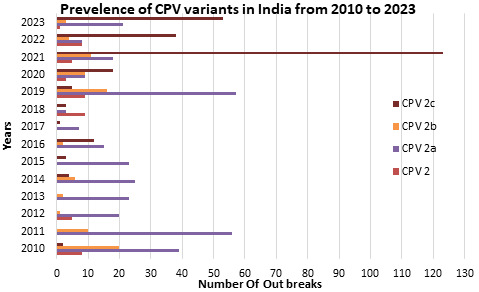
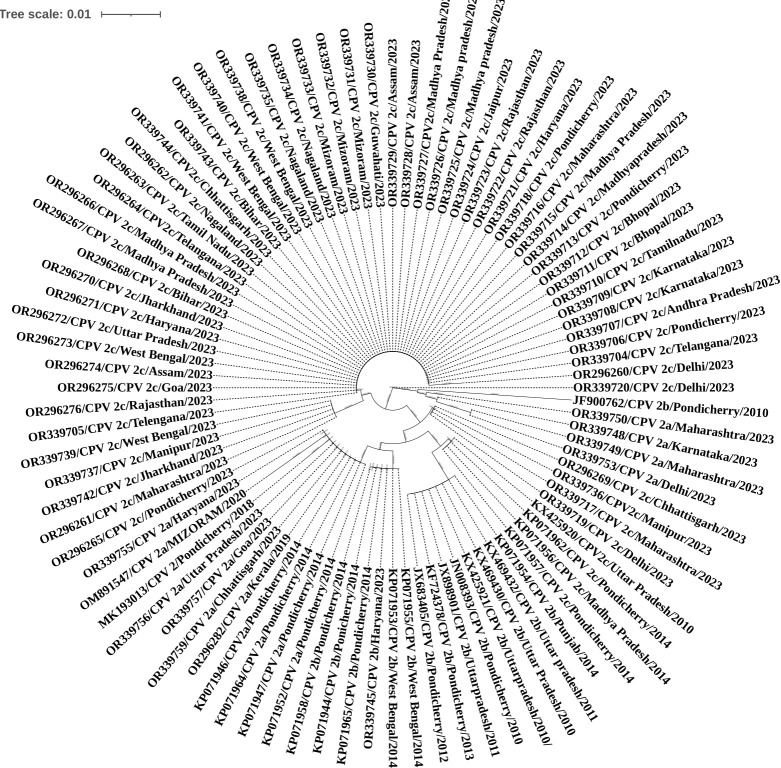
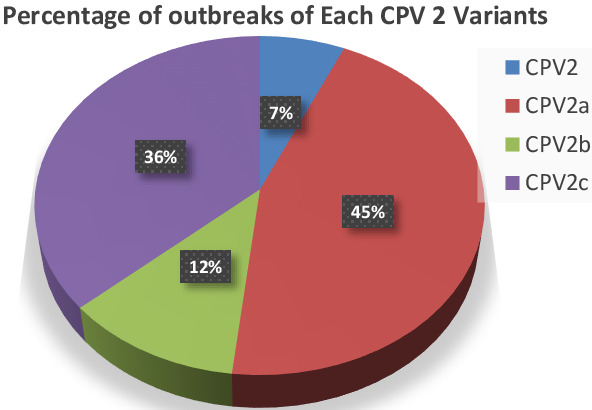
Canine parvovirus (CPV) is a highly contagious and lethal virus that causes severe gastroenteritis and myocarditis in young dogs. In 1978, CPV has rapidly spread worldwide, resulting in outbreaks and high morbidity rates among dog populations. Over a decade, CPV has undergone genetic changes, leading to the emergence of different genotypes (CPV-2a, CPV-2b, and CPV-2c), which have expanded its host range to include cats and tissue culture cells. This review focuses on CPV-2 outbreaks in India from 2010 to 2023, analyzing gene lengths covering 274-438 amino acids in the VP2 gene which are collected from the NCBI database to investigate CPV epidemiology and diversity. The study highlighted substantial differences in seroprevalence over the period for CPV-2 (7%), CPV-2a (45%), CPV-2b (12%), and CPV-2c (36%). Our study found significant seroprevalence differences among CPV variants, with CPV-2a being the most prevalent, underscoring the need for effective diagnostic and preventive strategies.
犬细小病毒(CPV)是一种具有高度传染性和致死性的病毒,可导致幼犬严重的肠胃炎和心肌炎。1978年,CPV迅速在全球传播,导致犬类群体中爆发疫情且发病率很高。在过去十多年间,CPV发生了基因变化,导致不同基因型(CPV-2a、CPV-2b和CPV-2c)的出现,其宿主范围扩大到包括猫和组织培养细胞。本综述聚焦于2010年至2023年印度的CPV-2疫情,分析从NCBI数据库收集的VP2基因中涵盖274 - 438个氨基酸的基因长度,以调查CPV的流行病学和多样性。该研究强调了在此期间CPV-2(7%)、CPV-2a(45%)、CPV-2b(12%)和CPV-2c(36%)血清阳性率的显著差异。我们的研究发现CPV变体之间存在显著的血清阳性率差异,其中CPV-2a最为普遍,这突出了有效诊断和预防策略的必要性。