College of Life Science and Technology, Xinjiang University, Urumqi, China.
General Hospital of Xinjiang Military Region of PLA, Urumqi, China.
PLoS One. 2024 Aug 12;19(8):e0305233. doi: 10.1371/journal.pone.0305233. eCollection 2024.
Non-steroidal anti-inflammatory drugs (NSAIDs) are currently the most widely used anti-inflammatory medications, but their long-term use can cause damage to the gastrointestinal tract(GIT). One of the risk factors for GIT injury is exposure to a high-altitude hypoxic environment, which can lead to damage to the intestinal mucosal barrier. Taking NSAIDs in a high-altitude hypoxic environment can exacerbate GIT injury and impact gut microbiota. The aim of this study is to investigate the mechanisms by which resveratrol (RSV) intervention alleviates NSAID-induced intestinal injury in a high-altitude hypoxic environment, as well as its role in regulating gut microbiota.
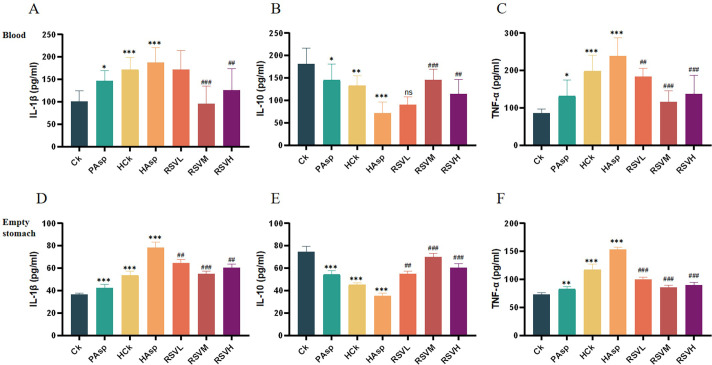
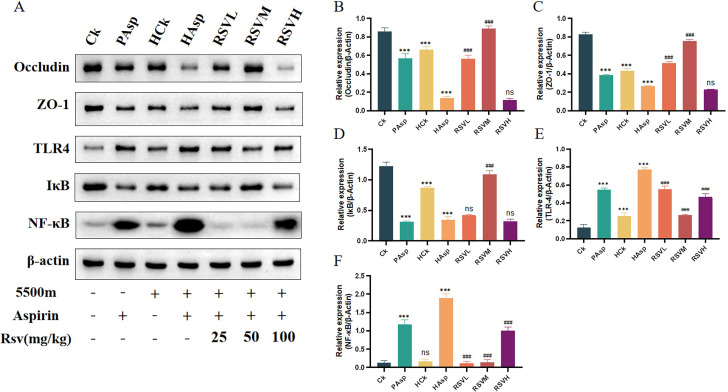
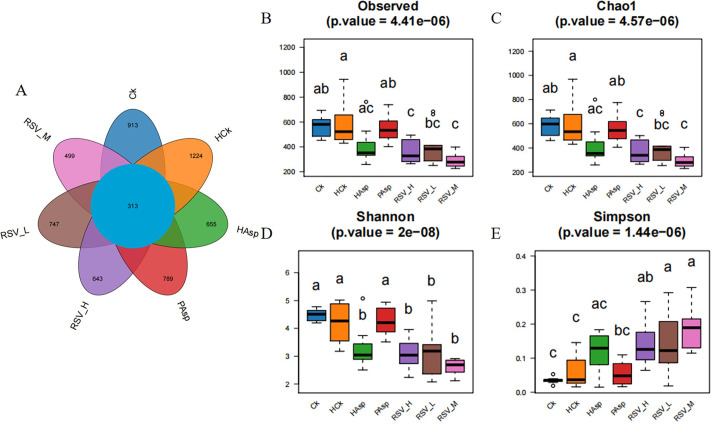
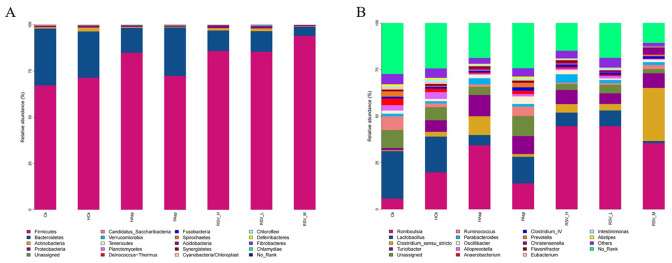
Aspirin was administered orally to rats to construct a rat model of intestinal injury induced by NSAIDs. Following the induction of intestinal injury, rats were administered RSV by gavage, and the expression levels of TLR4, NF-κB,IκB as well as Zonula Occludens-1 (ZO-1) and Occludin proteins in the different treatment groups were assessed via Western blot. Furthermore, the expression of the inflammatory factors IL-10, IL-1β, and TNF-α was evaluated using Elisa.16sRNA sequencing was employed to investigate alterations in the gut microbiota.
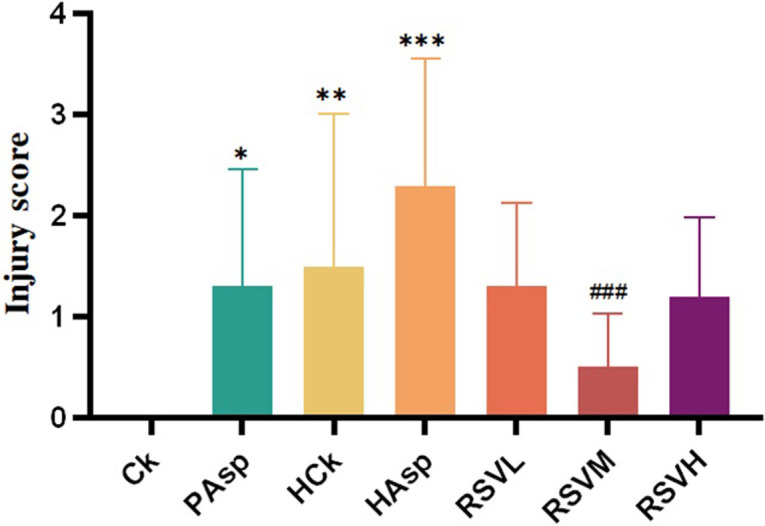
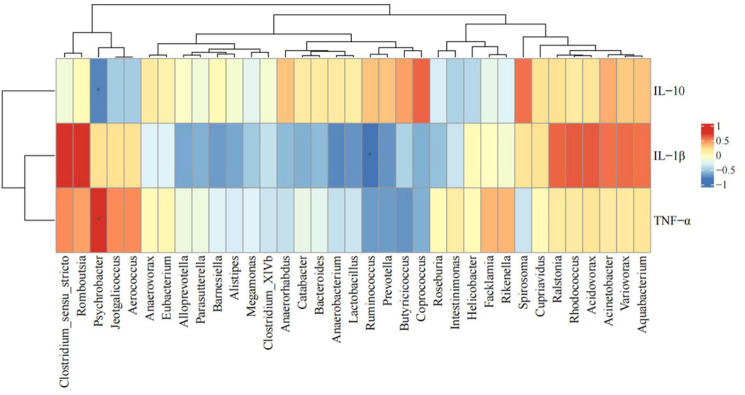
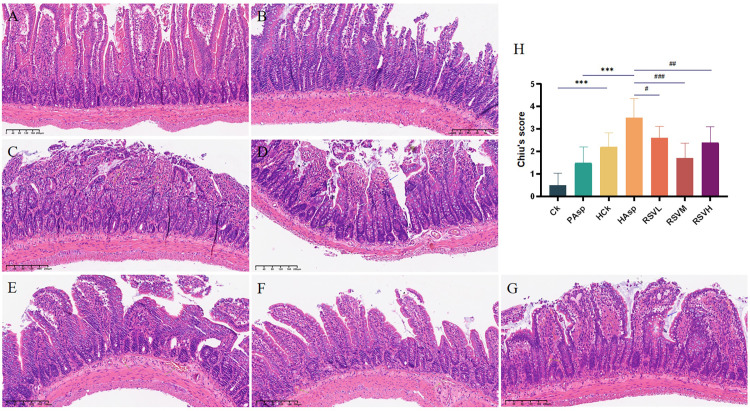
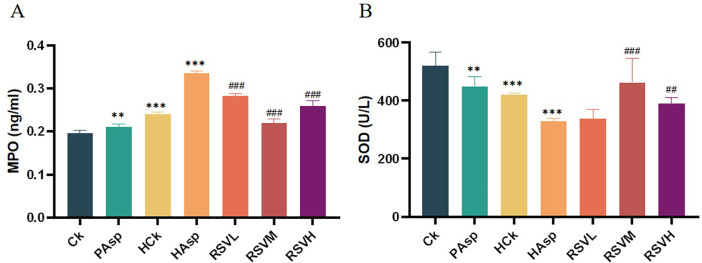
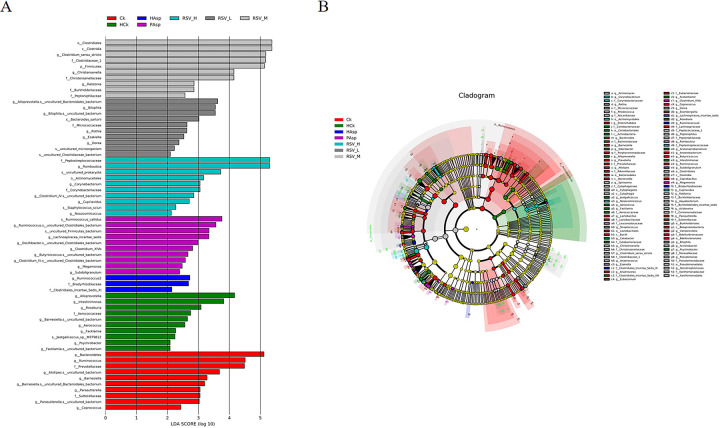
The HCk group showed elevated expression of TLR4/NF-κB/IκB pathway proteins, increased expression of pro-inflammatory factors IL-1β and TNF-α, decreased expression of the anti-inflammatory factor IL-10, and expression of intestinal mucosal barrier proteins ZO-1 and Occludin. The administration of NSAIDs drugs in the plateau hypoxic environment exacerbates intestinal inflammation and damage to the intestinal mucosal barrier. After treatment with RSV intervention, the expression of TLR4/NF-κB/IκB signaling pathway proteins would be reduced, thereby lowering the expression of inflammatory factors in the HAsp group. The results of HE staining directly show the damage to the intestines and the repair of intestinal mucosa after RSV intervention. 16sRNA sequencing results show significant differences (P<0.05) in Ruminococcus, Facklamia, Parasutterella, Jeotgalicoccus, Coprococcus, and Psychrobacter between the HCk group and the Ck group. Compared to the HCk group, the HAsp group shows significant differences (P<0.05) in Facklamia, Jeotgalicoccus, Roseburia, Psychrobacter, and Alloprevotella. After RSV intervention, Clostridium_sensu_stricto bacteria significantly increase compared to the HAsp group.
Resveratrol can attenuate intestinal damage caused by the administration of NSAIDs at high altitude in hypoxic environments by modulating the TLR4/NF-κB/IκB signaling pathway and gut microbiota composition.
非甾体抗炎药(NSAIDs)是目前应用最广泛的抗炎药物,但长期使用会导致胃肠道(GIT)损伤。GIT 损伤的一个风险因素是暴露于高海拔缺氧环境,这会导致肠道黏膜屏障受损。在高海拔缺氧环境中服用 NSAIDs 会加重 GIT 损伤并影响肠道微生物群。本研究旨在探讨白藜芦醇(RSV)干预如何缓解高海拔缺氧环境中 NSAID 诱导的肠道损伤,以及它在调节肠道微生物群中的作用。
给大鼠口服阿司匹林构建 NSAIDs 诱导的肠道损伤大鼠模型。在诱导肠道损伤后,通过灌胃给予 RSV,通过 Western blot 评估不同治疗组中 TLR4、NF-κB、IκB 以及 Zonula Occludens-1(ZO-1)和 Occludin 蛋白的表达水平。此外,使用 Elisa 评估炎症因子 IL-10、IL-1β 和 TNF-α 的表达。16sRNA 测序用于研究肠道微生物群的变化。
HCk 组 TLR4/NF-κB/IκB 通路蛋白表达升高,促炎因子 IL-1β 和 TNF-α 表达增加,抗炎因子 IL-10 表达减少,肠道黏膜屏障蛋白 ZO-1 和 Occludin 表达减少。在高原缺氧环境中给予 NSAIDs 药物会加重肠道炎症和肠道黏膜屏障损伤。经过 RSV 干预治疗后,TLR4/NF-κB/IκB 信号通路蛋白的表达会降低,从而降低 HAsp 组中炎症因子的表达。HE 染色的结果直接显示了 RSV 干预后的肠道损伤和肠道黏膜修复。16sRNA 测序结果显示,Ruminococcus、Facklamia、Parasutterella、Jeotgalicoccus、Coprococcus 和 Psychrobacter 在 HCk 组和 Ck 组之间存在显著差异(P<0.05)。与 HCk 组相比,HAsp 组的 Facklamia、Jeotgalicoccus、Roseburia、Psychrobacter 和 Alloprevotella 存在显著差异(P<0.05)。经过 RSV 干预后,与 HAsp 组相比,Clostridium_sensu_stricto 细菌明显增加。
白藜芦醇通过调节 TLR4/NF-κB/IκB 信号通路和肠道微生物群组成,可以减轻高海拔缺氧环境中 NSAIDs 引起的肠道损伤。