Muilwijk Morven, Hattermann Tore, Martin Torge, Granskog Mats A
Norwegian Polar Institute, Fram Centre, Tromsø, Norway.
Complex Systems Group, Department of Mathematics and Statistics, UiT - The Arctic University of Norway, Tromsø, Norway.
Nat Commun. 2024 Aug 12;15(1):6889. doi: 10.1038/s41467-024-50874-0.
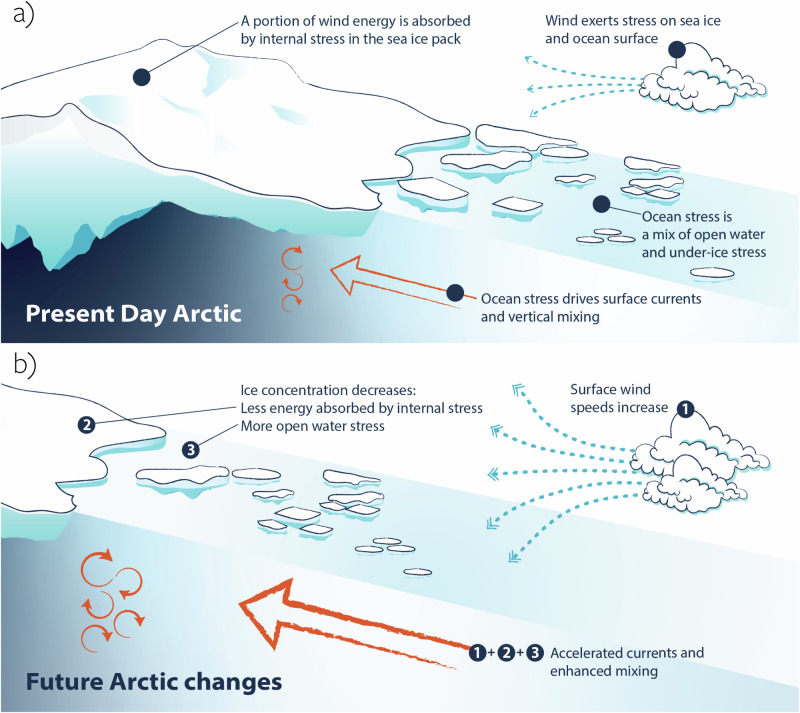
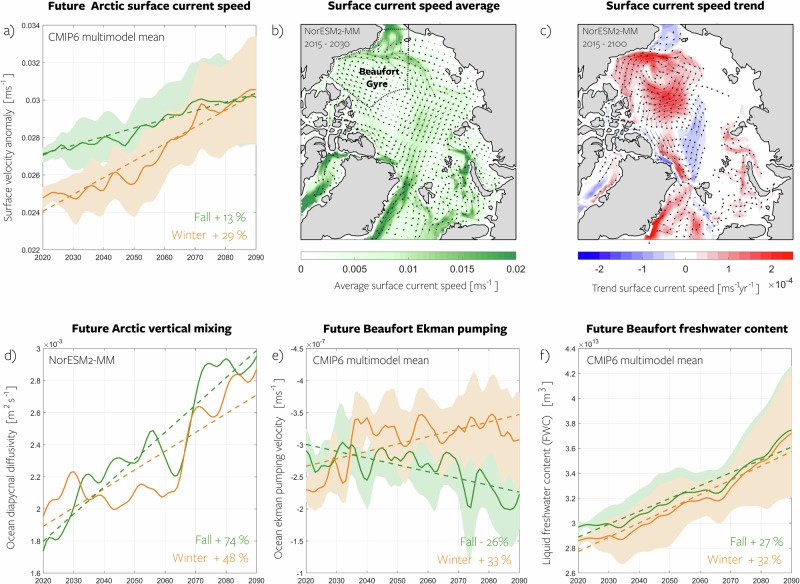
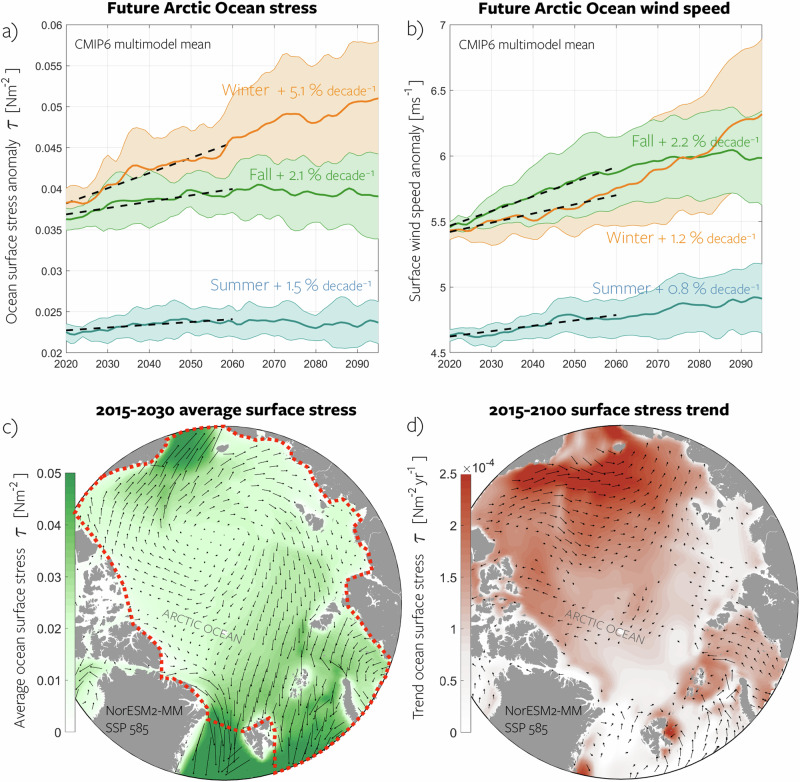
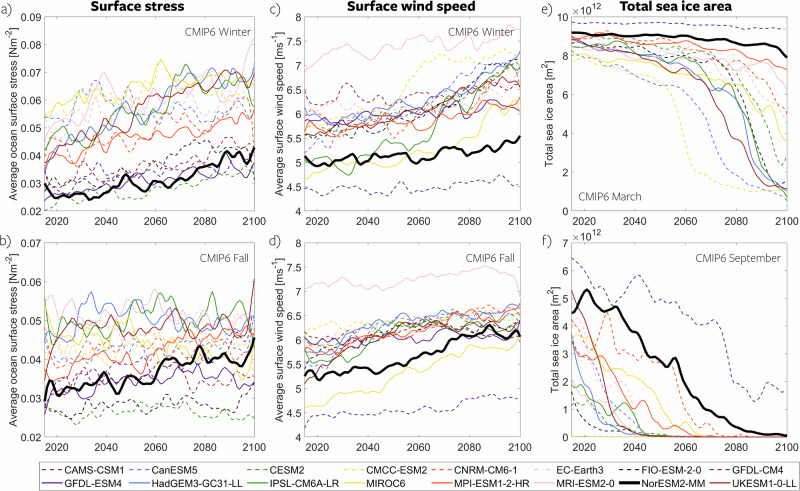
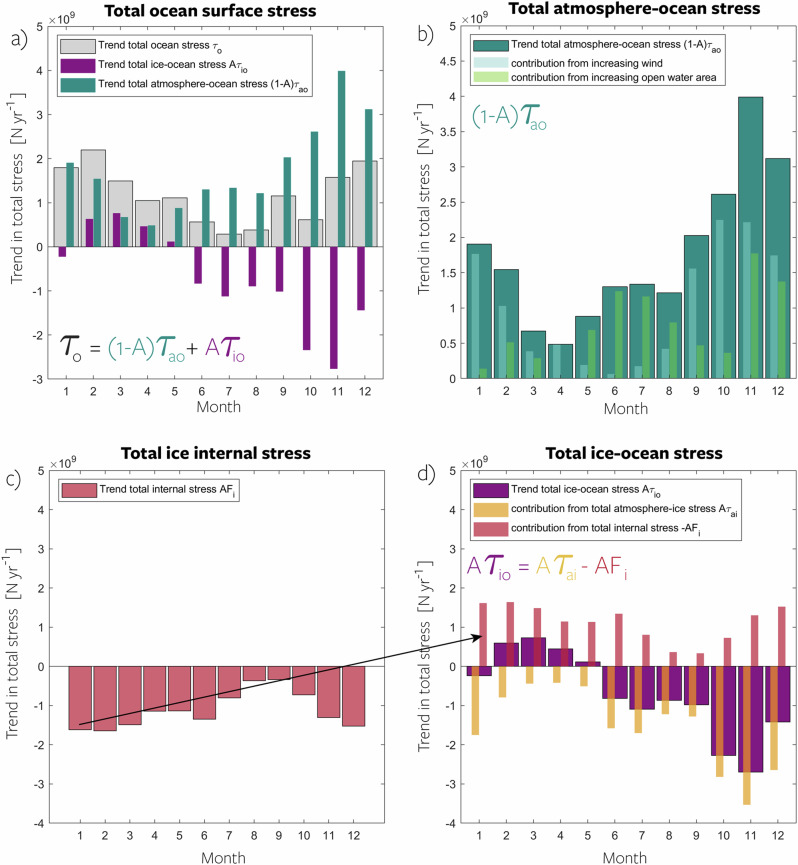
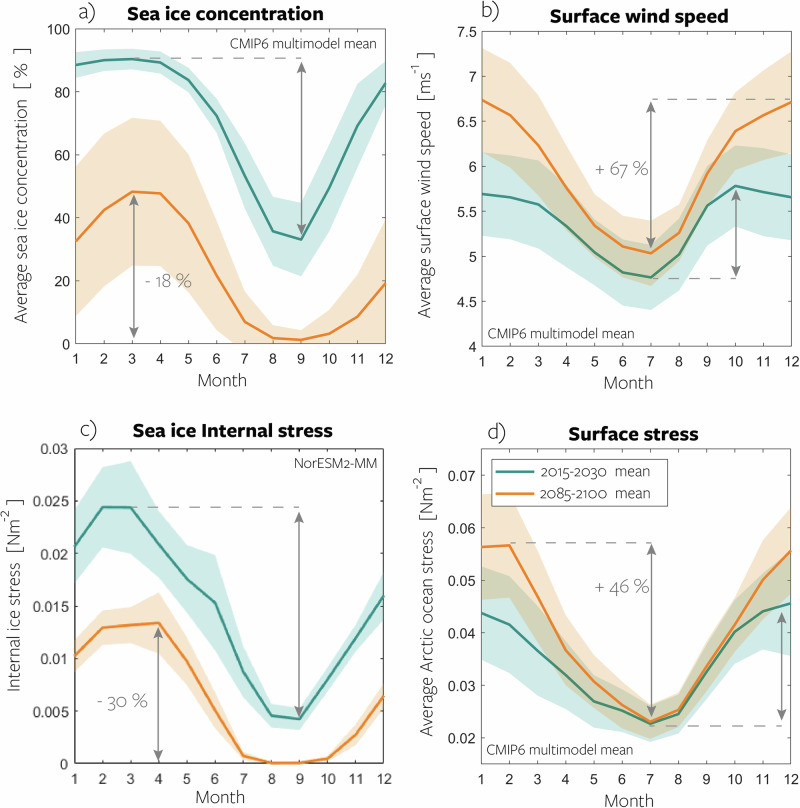
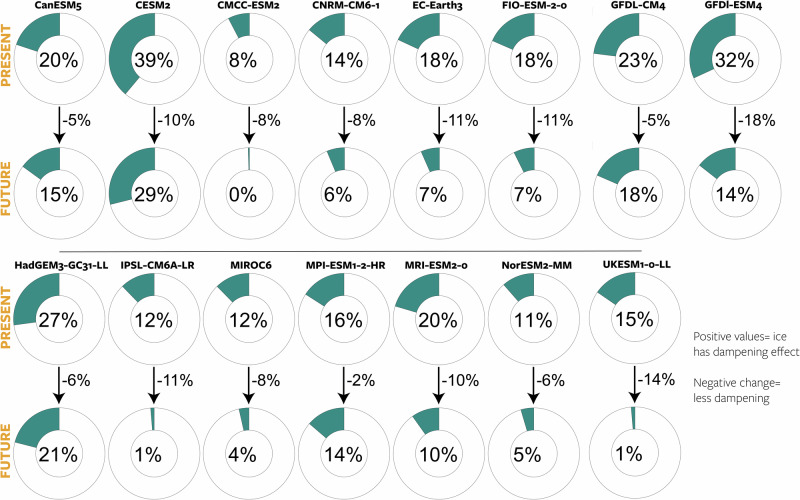
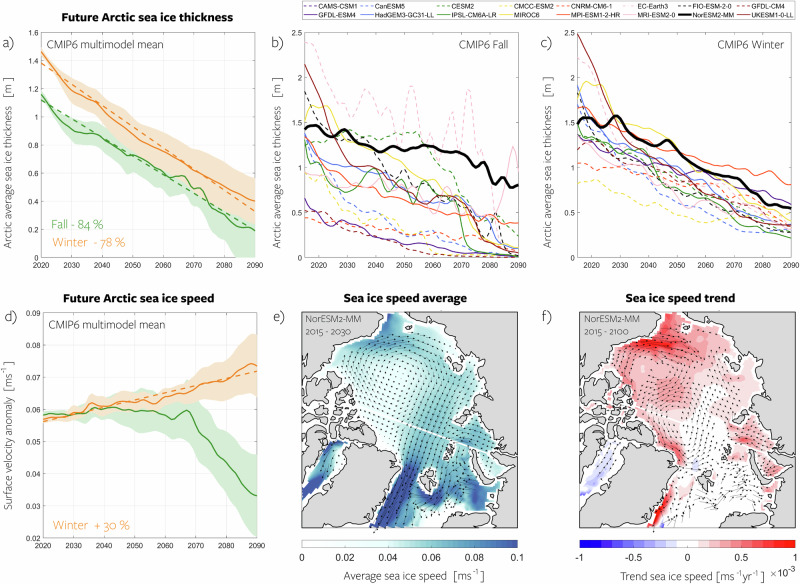
Arctic sea ice mediates atmosphere-ocean momentum transfer, which drives upper ocean circulation. How Arctic Ocean surface stress and velocity respond to sea ice decline and changing winds under global warming is unclear. Here we show that state-of-the-art climate models consistently predict an increase in future (2015-2100) ocean surface stress in response to increased surface wind speed, declining sea ice area, and a weaker ice pack. While wind speeds increase most during fall (+2.2% per decade), surface stress rises most in winter (+5.1% per decade) being amplified by reduced internal ice stress. This is because, as sea ice concentration decreases in a warming climate, less energy is dissipated by the weaker ice pack, resulting in more momentum transfer to the ocean. The increased momentum transfer accelerates Arctic Ocean surface velocity (+31-47% by 2100), leading to elevated ocean kinetic energy and enhanced vertical mixing. The enhanced surface stress also increases the Beaufort Gyre Ekman convergence and freshwater content, impacting Arctic marine ecosystems and the downstream ocean circulation. The impacts of projected changes are profound, but different and simplified model formulations of atmosphere-ice-ocean momentum transfer introduce considerable uncertainty, highlighting the need for improved coupling in climate models.
北冰洋海冰调节着大气 - 海洋动量传递,驱动着上层海洋环流。在全球变暖的情况下,北冰洋表面应力和流速如何响应海冰减少和不断变化的风尚不清楚。在这里,我们表明,最先进的气候模型一致预测,未来(2015 - 2100年)海洋表面应力会随着表面风速增加、海冰面积减少和冰盖变薄而增加。虽然风速在秋季增加最多(每十年增加2.2%),但表面应力在冬季上升最多(每十年增加5.1%),这是由于内部冰应力降低而被放大。这是因为,在气候变暖的情况下,随着海冰浓度降低,较弱的冰盖消散的能量减少,导致更多的动量传递到海洋。增加的动量传递加速了北冰洋表面流速(到2100年增加31 - 47%),导致海洋动能增加和垂直混合增强。增强的表面应力还增加了波弗特环流埃克曼辐合和淡水含量,影响北极海洋生态系统和下游海洋环流。预计变化的影响是深远的,但大气 - 冰 - 海洋动量传递的不同且简化的模型公式引入了相当大的不确定性,凸显了改进气候模型耦合的必要性。