Department of Surgery, the Fourth Affiliated Hospital of School of Medicine, and International School of Medicine, International Institutes of Medicine, Zhejiang University, Yiwu, China.
Department of Breast Surgery and Oncology (Key Laboratory of Cancer Prevention and Intervention, China National Ministry of Education, Key Laboratory of Molecular Biology in Medical Sciences, Zhejiang, China), Ministry of Education, The Second Affiliated Hospital, Zhejiang University School of Medicine, Hangzhou, Zhejiang, China.
Biomed Eng Online. 2024 Aug 12;23(1):81. doi: 10.1186/s12938-024-01274-4.
Liver was one of the most common distant metastatic sites in breast cancer. Patients with distant metastasis were identified as American Joint Committee on Cancer (AJCC) stage IV indicating poor prognosis. However, few studies have predicted the survival in females with T1-2N0-1 breast cancer who developed liver metastasis. This study aimed to explore the clinical features of these patients and establish a nomogram to predict their overall survival.
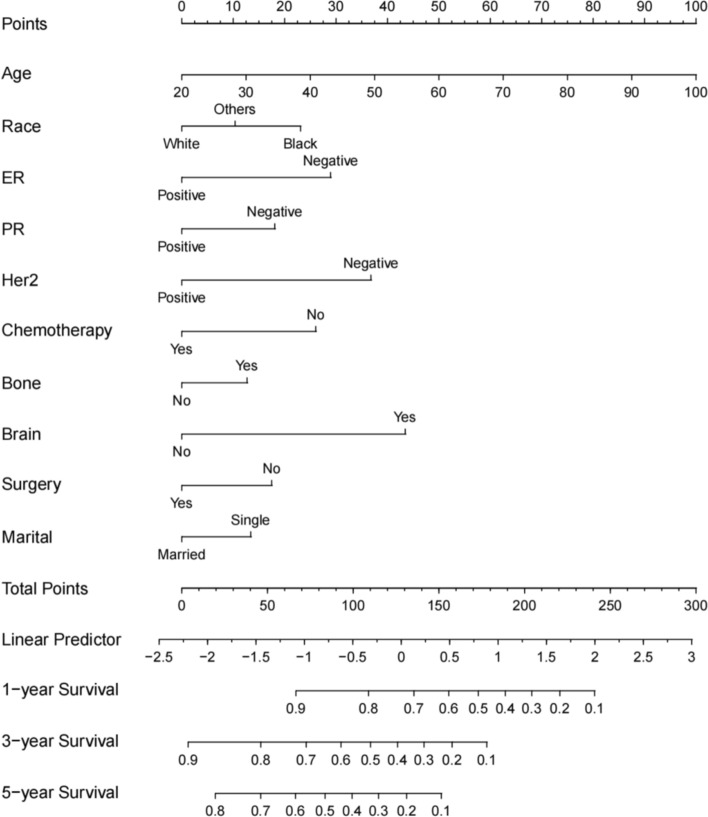
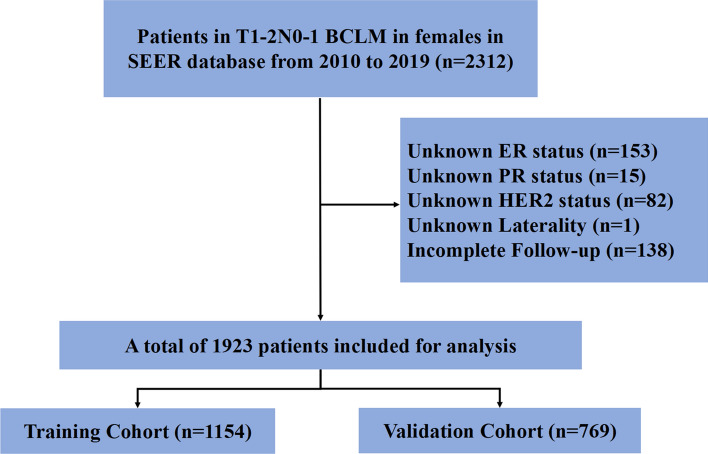
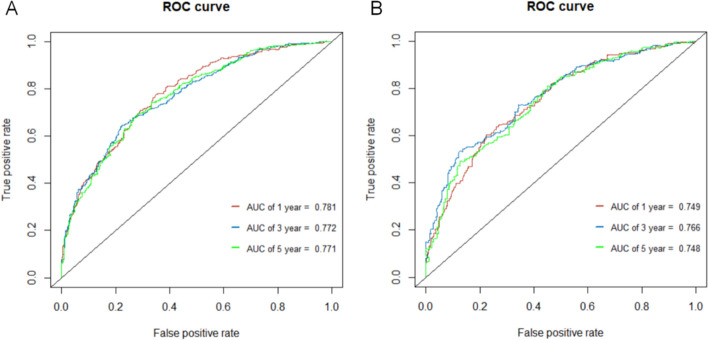
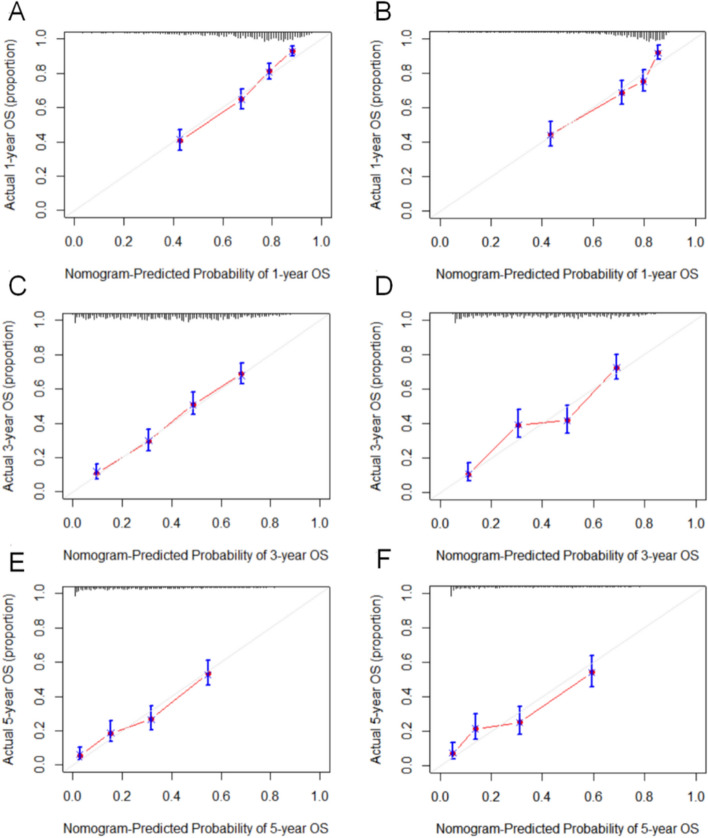
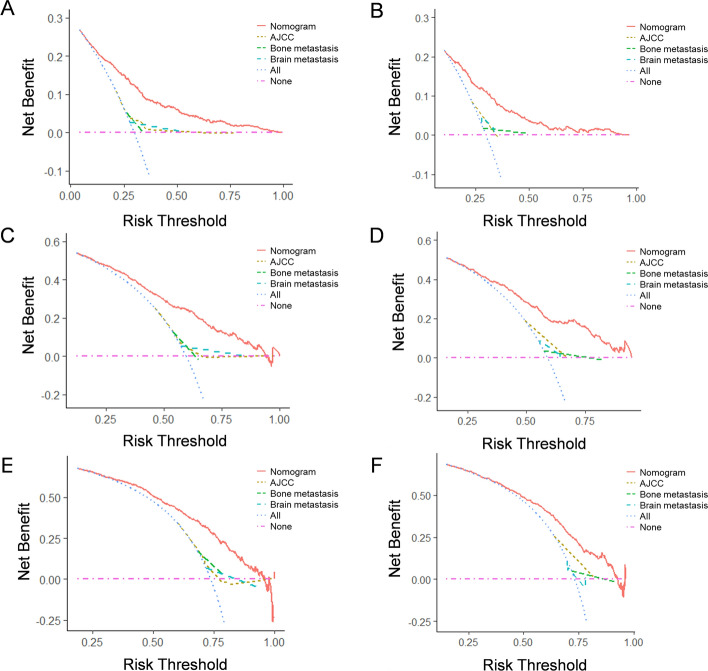
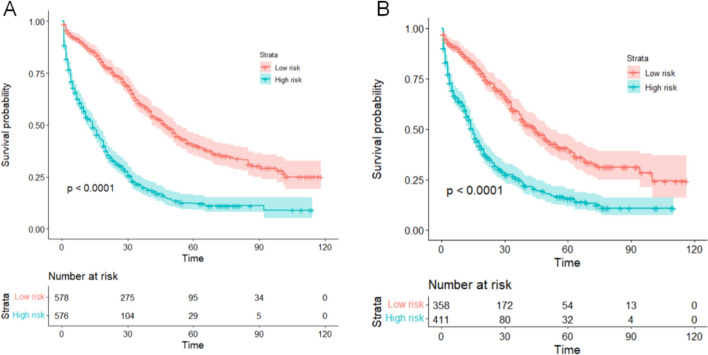
1923 patients were randomly divided into training (n = 1154) and validation (n = 769) cohorts. Univariate and multivariate analysis showed that age, marital status, race, estrogen receptor (ER), progesterone receptor (PR), human epidermal growth factor receptor-2 (HER2), chemotherapy, surgery and bone metastasis, brain metastasis were considered the independent prognostic indicators. We developed a nomogram according to these ten parameters. The consistency index (c-index) was 0.72 (95% confidence interval CI 0.70-0.74) in the training cohort, 0.72 (95% CI 0.69-0.74) in the validation cohort. Calibration plots indicated that the nomogram-predicted survival was consistent with the recorded 1-, 3- and 5-year prognoses. Decision curve analysis curves in both the training and validation cohorts demonstrated that the nomogram showed better prediction than the AJCC TNM (8th) staging system. Kaplan Meier curve based on the risk stratification system showed that the low-risk group had a better prognosis than the high-risk group (P < 0.001).
A predictive nomogram and risk stratification system were constructed to assess prognosis in T1-2N0-1 breast cancer patients with liver metastasis in females. The risk model established in this study had good predictive performance and could provide personalized clinical decision-making for future clinical work.
肝脏是乳腺癌最常见的远处转移部位之一。远处转移的患者被确定为美国癌症联合委员会(AJCC)分期 IV,表明预后不良。然而,很少有研究预测 T1-2N0-1 期乳腺癌女性发生肝转移后的生存情况。本研究旨在探讨这些患者的临床特征,并建立一个列线图来预测其总生存期。
1923 名患者被随机分为训练集(n=1154)和验证集(n=769)。单因素和多因素分析表明,年龄、婚姻状况、种族、雌激素受体(ER)、孕激素受体(PR)、人表皮生长因子受体-2(HER2)、化疗、手术和骨转移、脑转移是独立的预后指标。我们根据这十个参数制定了一个列线图。该列线图在训练队列中的一致性指数(c-index)为 0.72(95%置信区间为 0.70-0.74),在验证队列中的一致性指数为 0.72(95%置信区间为 0.69-0.74)。校准图表明,列线图预测的生存情况与记录的 1、3 和 5 年预后一致。训练队列和验证队列的决策曲线分析曲线表明,该列线图的预测效果优于 AJCC TNM(8 版)分期系统。基于风险分层系统的 Kaplan-Meier 曲线表明,低危组的预后优于高危组(P<0.001)。
构建了一个预测列线图和风险分层系统,用于评估女性 T1-2N0-1 期乳腺癌伴肝转移患者的预后。本研究建立的风险模型具有良好的预测性能,可以为未来的临床工作提供个性化的临床决策。