The Pharmaceutical Engineering Group, School of Pharmacy, Queen's University Belfast, 97 Lisburn Road, Belfast, Northern Ireland BT9 7BL, U.K.
Mol Pharm. 2024 Sep 2;21(9):4272-4284. doi: 10.1021/acs.molpharmaceut.4c00152. Epub 2024 Aug 13.
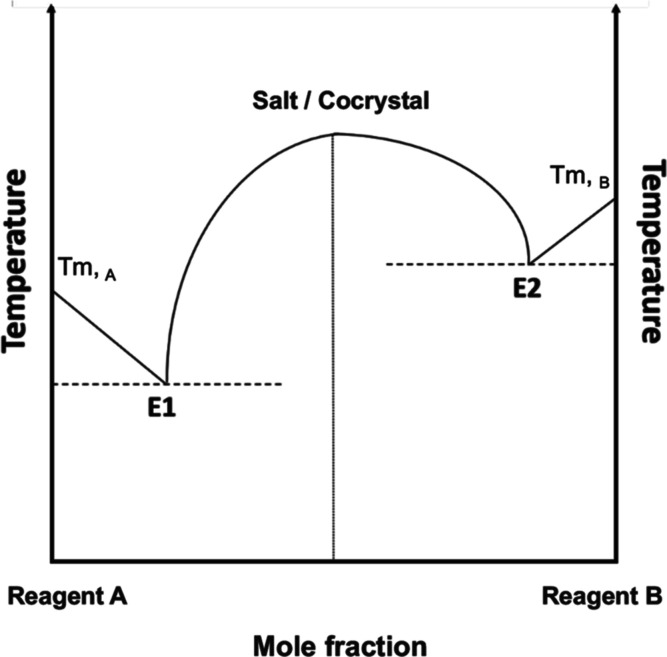
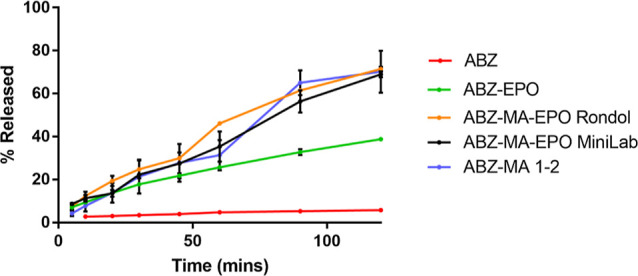
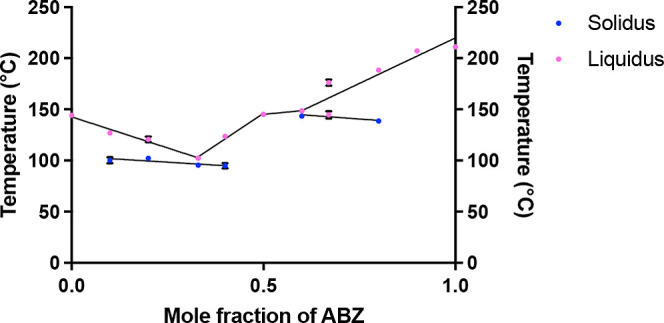
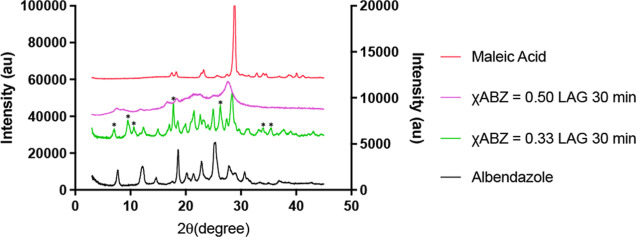
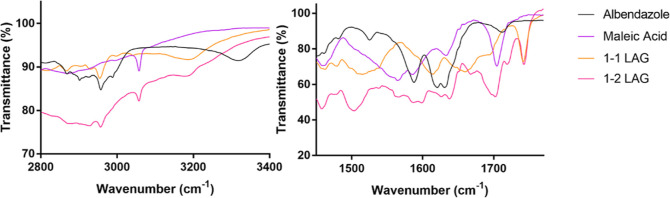
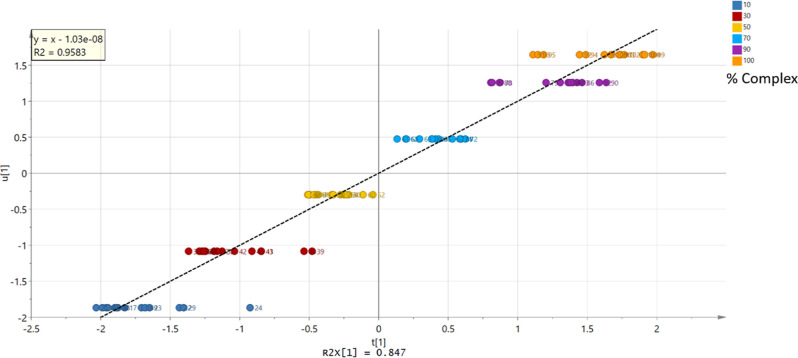
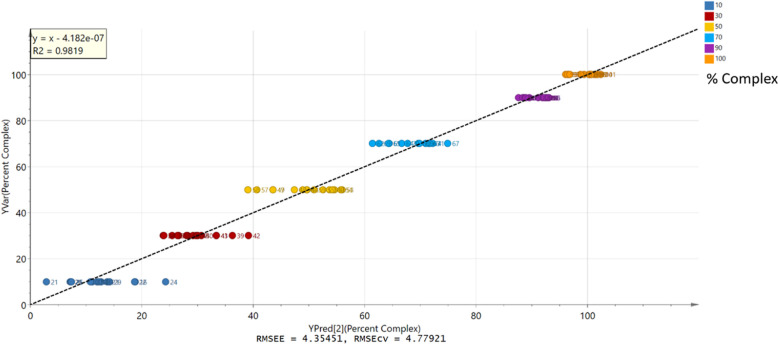
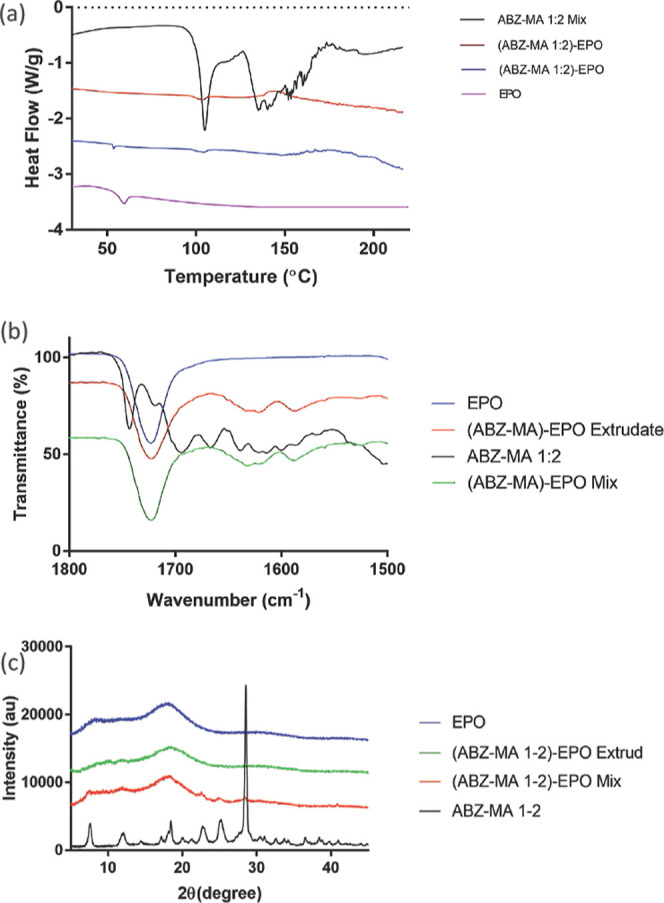
There has been a significant volume of work investigating the design and synthesis of new crystalline multicomponent systems via examining complementary functional groups that can reliably interact through the formation of noncovalent bonds, such as hydrogen bonds (H-bonds). Crystalline multicomponent molecular adducts formed using this approach, such as cocrystals, salts, and eutectics, have emerged as drug product intermediates that can lead to effective drug property modifications. Recent advancement in the production for these multicomponent molecular adducts has moved from batch techniques that rely upon intensive solvent use to those that are solvent-free, continuous, and industry-ready, such as reactive extrusion. In this study, a novel eutectic system was found when processing albendazole and maleic acid at a 1:2 molar ratio and successfully prepared using mechanochemical methods including liquid-assisted grinding and hot-melt reactive extrusion. The produced eutectic was characterized to exhibit a 100 °C reduction in melting temperature and enhanced dissolution performance (>12-fold increase at 2 h point), when compared to the native drug compound. To remove handling of the eutectic as a formulation intermediate, an end-to-end continuous-manufacturing-ready process enables feeding of the raw parent reagents in their respective natural forms along with a chosen polymeric excipient, Eudragit EPO. The formation of the eutectic was confirmed to have taken place in situ in the presence of the polymer, with the reaction yield determined using a multivariate calibration model constructed by combining spectroscopic analysis with partial least-squares regression modeling. The ternary extrudates exhibited a dissolution profile similar to that of the 1:2 prepared eutectic, suggesting a physical distribution (or suspension) of the in situ synthesized eutectic contents within the polymeric matrix.
已经有大量工作致力于通过研究可以通过形成非共价键(如氢键(H 键))可靠相互作用的互补官能团来设计和合成新的多晶成分系统。通过这种方法形成的多晶成分分子加合物,如共晶、盐和共熔物,已成为药物产品中间体,可以有效地改变药物性质。这些多成分分子加合物的生产最近已经从依赖于大量溶剂使用的分批技术发展到无溶剂、连续和工业化就绪的技术,如反应挤出。在这项研究中,当以 1:2 摩尔比处理阿苯达唑和马来酸时,发现了一种新的共晶系统,并通过包括液辅助研磨和热熔反应挤出在内的机械化学方法成功制备。所制备的共晶的熔点降低了 100°C,溶解性能得到增强(在 2 小时点时增加了 12 倍以上),与天然药物化合物相比。为了避免将共晶作为制剂中间体进行处理,一种端到端的连续制造就绪工艺能够以其各自的天然形式进料原始母体试剂以及选择的聚合物赋形剂,Eudragit EPO。在聚合物存在的情况下,确认共晶原位形成,使用通过结合光谱分析和偏最小二乘回归建模的多元校准模型确定反应产率。三元挤出物的溶解曲线与制备的 1:2 共晶相似,表明在聚合物基质中存在原位合成的共晶含量的物理分布(或悬浮)。