Loukopoulos Edward, Papatriantafyllopoulou Constantina, Moushi Eleni, Kitos Alexandros A, Tasiopoulos Anastasios J, Perlepes Spyros P, Nastopoulos Vassilios
Department of Chemistry, University of Patras, Patras, 26504, Greece.
Department of Chemistry, University of Cyprus, Nicosia, 1678, Cyprus.
Acta Crystallogr B Struct Sci Cryst Eng Mater. 2024 Aug 1;80(Pt 4):347-359. doi: 10.1107/S2052520624005948. Epub 2024 Jul 30.
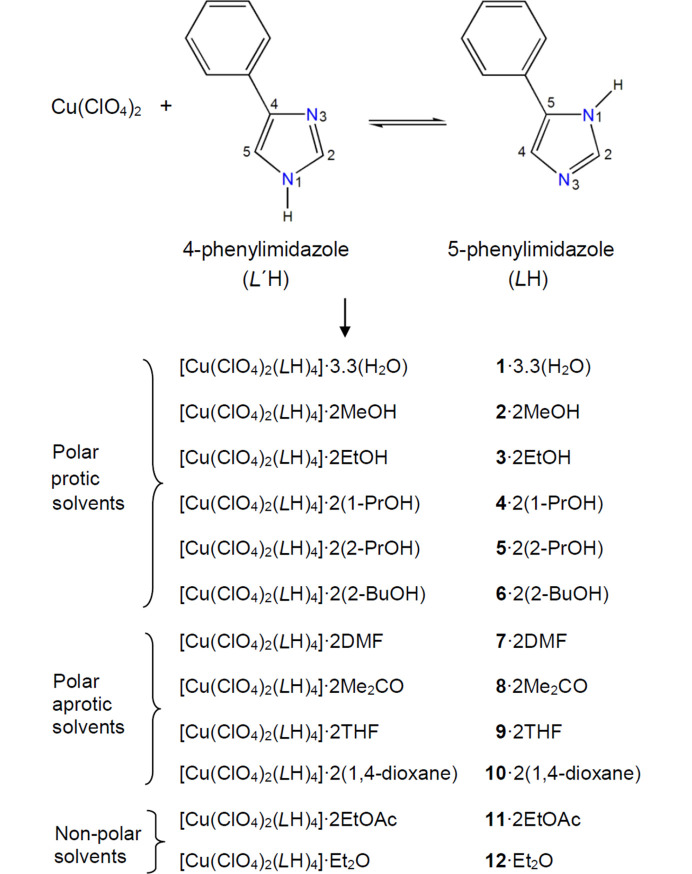
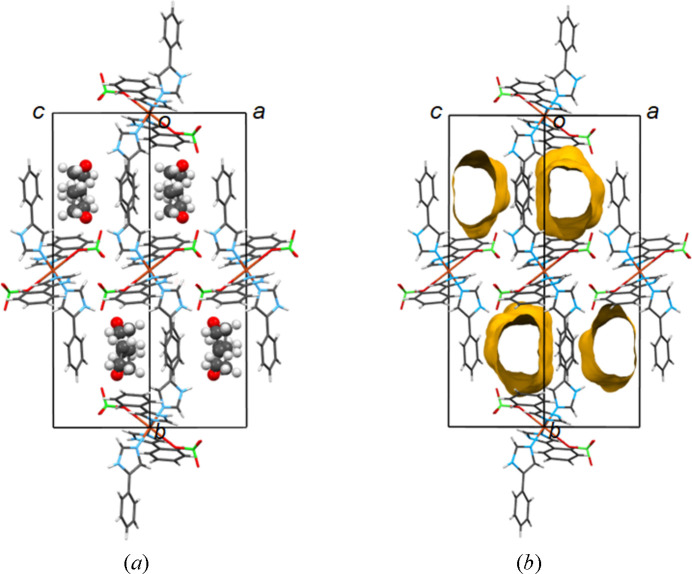
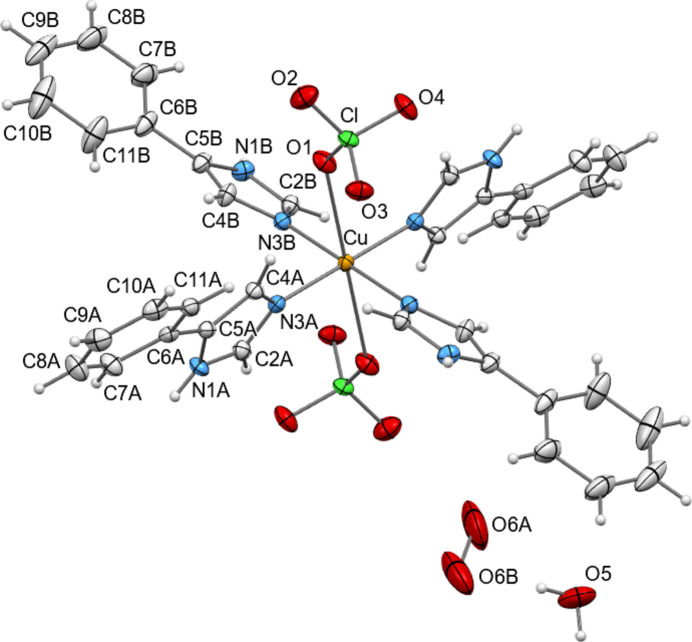
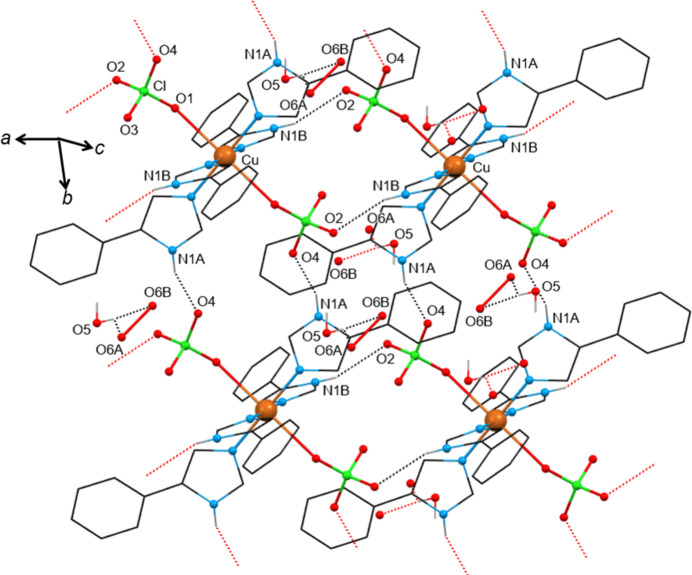
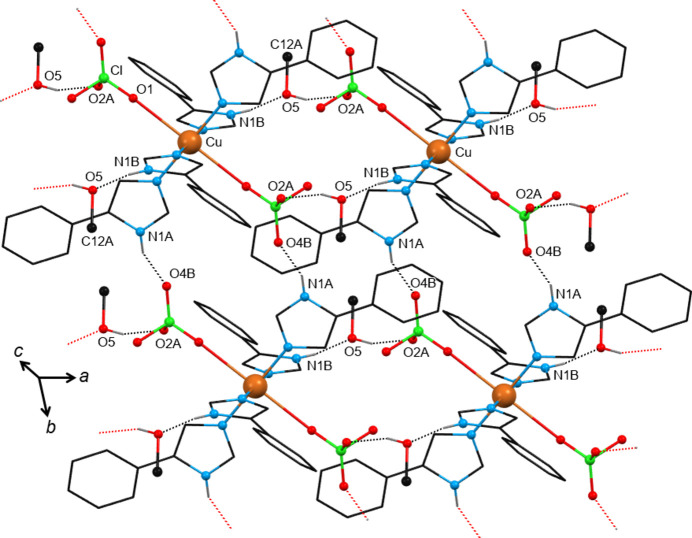
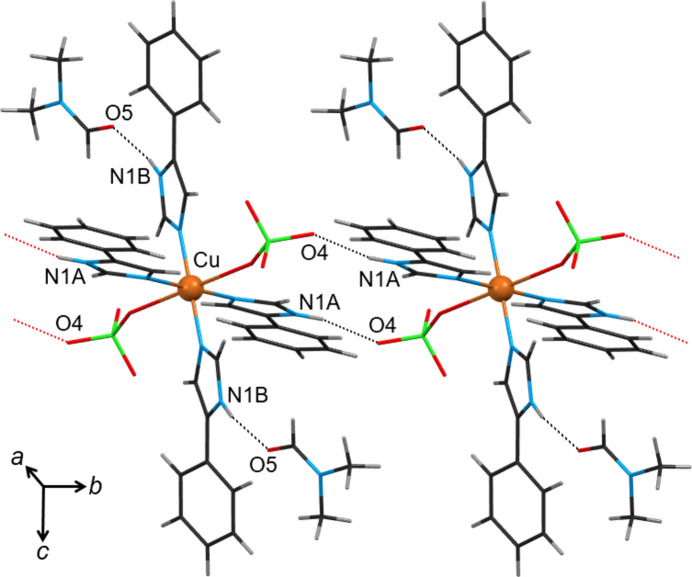
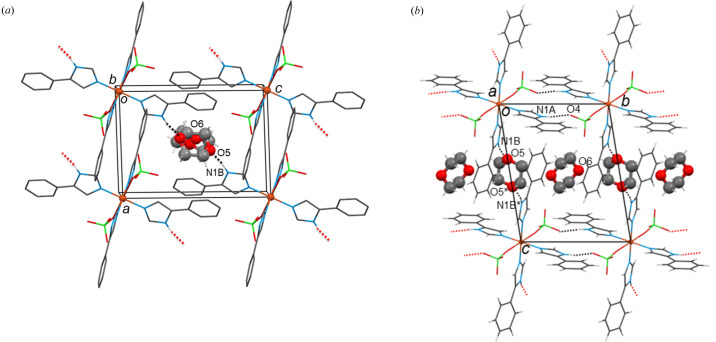
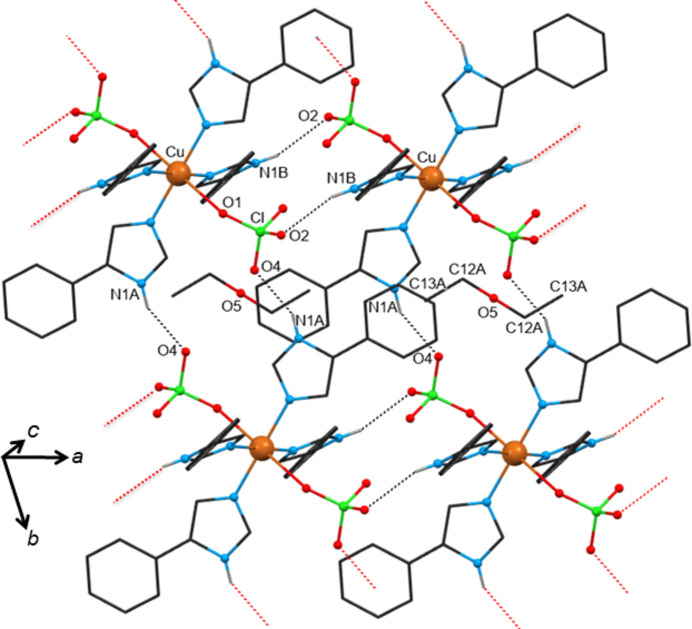
In the course of an investigation of the supramolecular behaviour of copper(II) complexes with the 5-phenylimidazole/perchlorate ligand system (`blend') remarkable solvatomorphism has been observed. By employing a variety of crystallization solvents (polar protic, polar/non-polar aprotic), a series of 12 crystalline solvatomorphs with the general formula [Cu(ClO)(LH)]·x(solvent) have been obtained [LH = 5-phenylimidazole, x(solvent) = 3.3(HO) (1), 2(methanol) (2), 2(ethanol) (3), 2(1-propanol) (4), 2(2-propanol) (5), 2(2-butanol) (6), 2(dimethylformamide) (7), 2(acetone) (8), 2(tetrahydrofurane) (9), 2(1,4-dioxane) (10), 2(ethyl acetate) (11) and 1(diethyl ether) (12)]. The structures have been solved using single-crystal X-ray diffraction and the complexes were characterized by thermal analysis and infrared spectroscopy. The solvatomorphs are isostructural (triclinic, P1), with the exception of compound 9 (monoclinic, P2/n). The supramolecular structures and the role of the various solvents is discussed. All potential hydrogen-bond functionalities, both of the [Cu(ClO)(LH)] units and of the solvents, are utilized in the course of the crystallization process. The supramolecular assembly in all structures is directed by strong recurring N-H...O motifs leading to robust scaffolds composed of the [Cu(ClO)(LH)] host complexes. The solvents are located in channels and, with the exception of the disordered waters in 1 and the diethyl ether in 12, participate in hydrogen-bonding formation with the [Cu(ClO)(LH)] complexes, serving as both hydrogen-bond acceptors and donors (for the polar protic solvents in 2-6), or solely as hydrogen-bond acceptors (for the polar/non-polar aprotic solvents in 7-11), linking the complexes and contributing to the stability of the crystalline compounds.
在对铜(II)与5-苯基咪唑/高氯酸盐配体体系(“混合物”)的超分子行为进行研究的过程中,观察到了显著的溶剂同构现象。通过使用多种结晶溶剂(极性质子溶剂、极性/非极性非质子溶剂),获得了一系列通式为[Cu(ClO)(LH)]·x(溶剂)的12种晶体溶剂同构体[LH = 5-苯基咪唑,x(溶剂)= 3.3(水)(1)、2(甲醇)(2)、2(乙醇)(3)、2(1-丙醇)(4)、2(2-丙醇)(5)、2(2-丁醇)(6)、2(二甲基甲酰胺)(7)、2(丙酮)(8)、2(四氢呋喃)(9)、2(1,4-二氧六环)(10)、2(乙酸乙酯)(11)和1(乙醚)(12)]。使用单晶X射线衍射解析了结构,并通过热分析和红外光谱对配合物进行了表征。除化合物9(单斜晶系,P2/n)外,溶剂同构体为同晶型(三斜晶系,P1)。讨论了超分子结构以及各种溶剂的作用。在结晶过程中,[Cu(ClO)(LH)]单元和溶剂的所有潜在氢键功能都得到了利用。所有结构中的超分子组装都由强烈重复出现的N-H...O基序引导,形成了由[Cu(ClO)(LH)]主体配合物组成的坚固支架。溶剂位于通道中,除了1中的无序水分子和12中的乙醚外,它们与[Cu(ClO)(LH)]配合物参与氢键形成,既作为氢键受体又作为氢键供体(对于2-6中的极性质子溶剂),或者仅作为氢键受体(对于7-11中的极性/非极性非质子溶剂),连接配合物并有助于晶体化合物的稳定性。