Ferch M, Sert C, Fellinger P, Kautzky-Willer A, Winhofer-Stöckl Y
Department for Medicine III, Division of Endocrinology and Metabolism, Medical University of Vienna, Währinger Gürtel 18-20, 1090, Vienna, Austria.
Wien Klin Wochenschr. 2025 May;137(9-10):307-313. doi: 10.1007/s00508-024-02402-9. Epub 2024 Aug 13.
Proprotein convertase subtilisin kexin type 9 (PCSK9) inhibitors have emerged as important therapeutic options for patients unable to achieve the low-density lipoprotein cholesterol (LDL‑C) target or to tolerate alternative lipid-lowering agents. The aim of this study was to investigate the efficacy of PCSK9 inhibitor treatment in tertiary routine care, by determining the percentage of patients reaching individual LDL‑C target levels 1 year after treatment initiation.
Patients routinely started on PCSK9 inhibitors at our lipid clinic between 2017 and 2020 were retrospectively analyzed. Attainment of the LDL‑C target, utilization of follow-ups, cardiovascular events and effects on laboratory parameters were investigated.
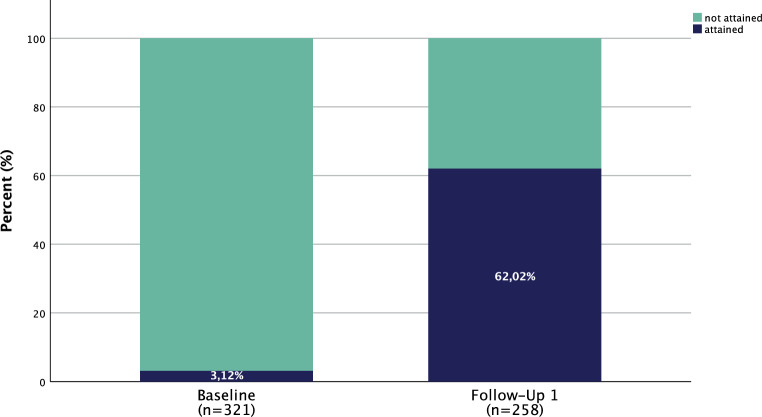
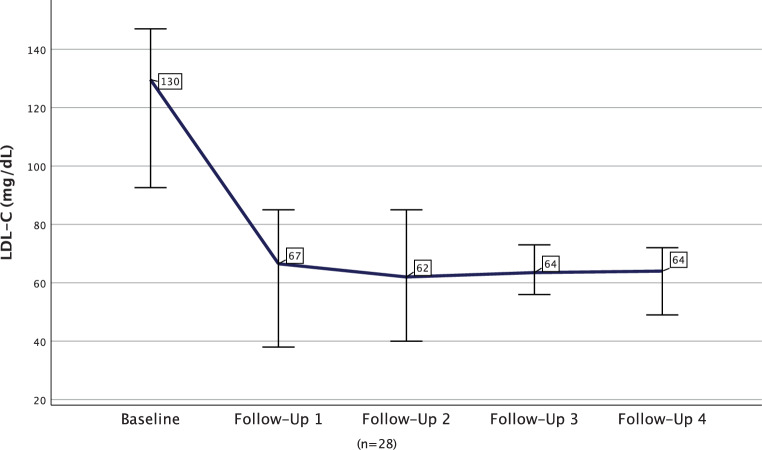
In this study 347 patients were included, with the majority managed in secondary prevention (94.5%). The LDL‑C target was achieved by 44.9% after ca. 14 months, with differences between statin users and non-users (51.0% vs. 22.7%; p < 0.001). The median LDL‑C decreased from 126.00 mg/dL at baseline to 48 mg/dL (-61.6%; -77.00 mg/dL; p < 0.001) after ~2 months and to 60 mg/dL (-52.9%; -59.00 mg/dL; p < 0.001) after ~14 months. Median lipoprotein(a) levels decreased significantly from 184.0 nmol/L to 165.5 nmol/L (-25.9%; -25.5 nmol/L; p = 0.001) after ~2 months, whereas no effects on creatine kinase, amylase and lipase were detectable. Of the patients 15% utilized 4 follow-ups. The PCSK9 inhibitor intolerance occurred in 3.5% of patients.
With the effect of LDL-lowering remaining constant over 14 months, PCSK9 inhibitor treatment showed effective and sustainable LDL‑C lowering in a majority of patients in secondary prevention, bringing them closer to the recommended LDL‑C goal, particularly those under concomitant statin medication. Treatment with PCSK9 inhibitors appears to be well-tolerated, confirming data from clinical trials in real life.
前蛋白转化酶枯草溶菌素9型(PCSK9)抑制剂已成为无法达到低密度脂蛋白胆固醇(LDL-C)目标或无法耐受其他降脂药物的患者的重要治疗选择。本研究的目的是通过确定治疗开始1年后达到个体LDL-C目标水平的患者百分比,来研究PCSK9抑制剂在三级常规治疗中的疗效。
对2017年至2020年间在我们血脂门诊常规开始使用PCSK9抑制剂的患者进行回顾性分析。研究了LDL-C目标的达成情况、随访的利用情况、心血管事件以及对实验室参数的影响。
本研究纳入了347例患者,大多数患者接受二级预防(94.5%)。约14个月后,44.9%的患者实现了LDL-C目标,他汀类药物使用者和非使用者之间存在差异(51.0%对22.7%;p<0.001)。LDL-C中位数在基线时为126.00mg/dL,约2个月后降至48mg/dL(-61.6%;-77.00mg/dL;p<0.001),约14个月后降至60mg/dL(-52.9%;-59.00mg/dL;p<0.001)。脂蛋白(a)中位数水平在约2个月后从184.0nmol/L显著降至165.5nmol/L(-25.9%;-25.5nmol/L;p=0.001),而对肌酸激酶、淀粉酶和脂肪酶未检测到影响。15%的患者进行了4次随访。3.5%的患者出现PCSK9抑制剂不耐受。
在14个月内LDL降低效果保持稳定,PCSK9抑制剂治疗在大多数二级预防患者中显示出有效且可持续的LDL-C降低,使他们更接近推荐的LDL-C目标,尤其是那些同时接受他汀类药物治疗的患者。PCSK9抑制剂治疗似乎耐受性良好,证实了现实生活中临床试验的数据。