Papp Tímea, Rokszin György, Kiss Zoltán, Becker Dávid, Merkely Béla, Járai Zoltán, Jánosi András, Csanádi Zoltán
Division of Cardiology, Department of Cardiology, Faculty of Medicine, University of Debrecen, 22 Móricz Zsigmond Street, 4032, Debrecen, Hajdú-Bihar County, Hungary.
RxTarget Ltd., 10/2 Bacsó Nándor Street, 5000, Szolnok, Hungary.
Cardiol Ther. 2024 Sep;13(3):615-630. doi: 10.1007/s40119-024-00378-1. Epub 2024 Aug 13.
Atrial fibrillation (AF) and heart failure (HF) often coexist due to the common elements of the pathomechanism they share. The potential significance of the order these entities present in the same patient is ill-defined. Herein, we report our results from a nationwide database on the occurrence of various sequences AF and HF may present, the time delays between the two conditions and all-cause mortality associated with different scenarios.
Patients diagnosed with both AF and HF between 2015 and 2021 were enrolled from the Hungarian National Health Insurance Fund (NHIF) database. The order the two entities followed each other, and the time delay in between were registered. Median survival rates were calculated in AF → HF; HF → AF and simultaneous scenarios.
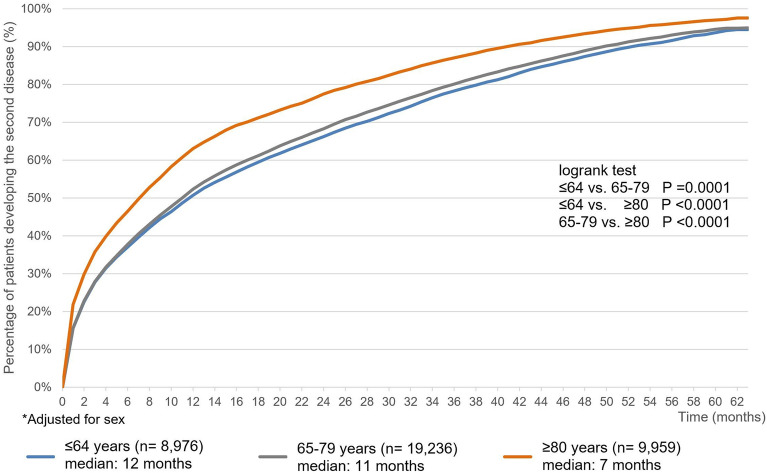
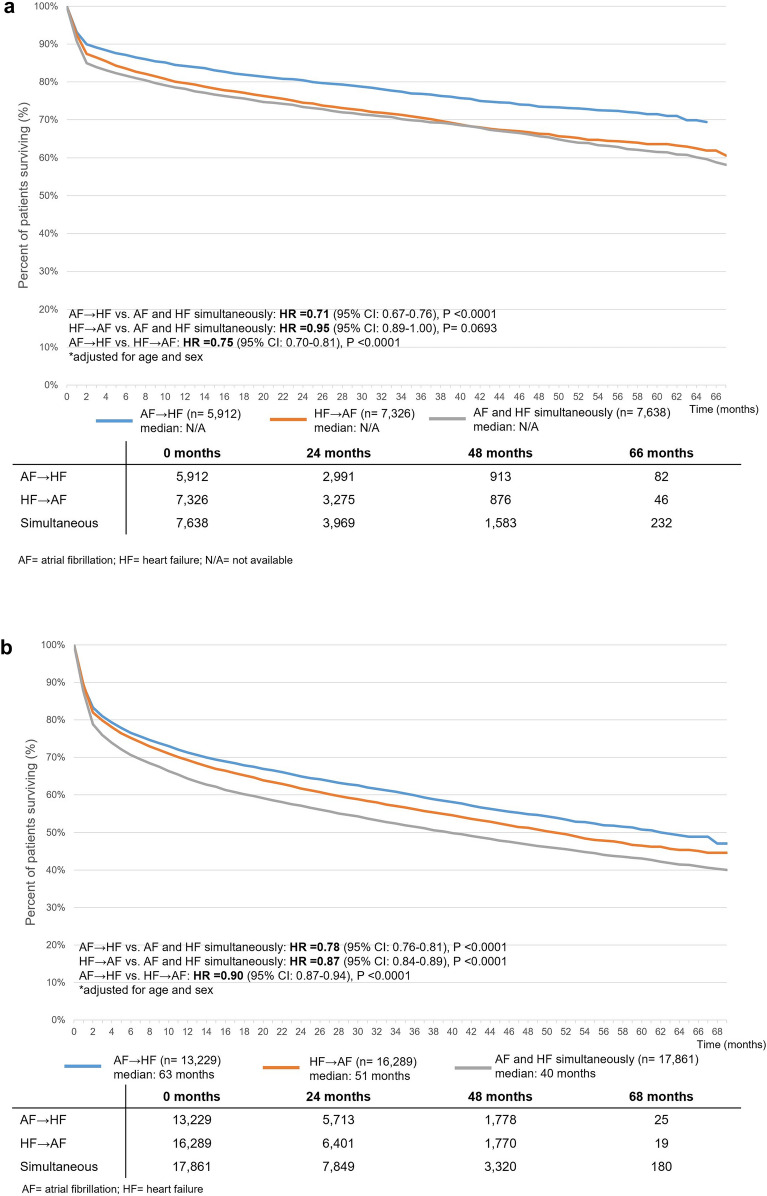
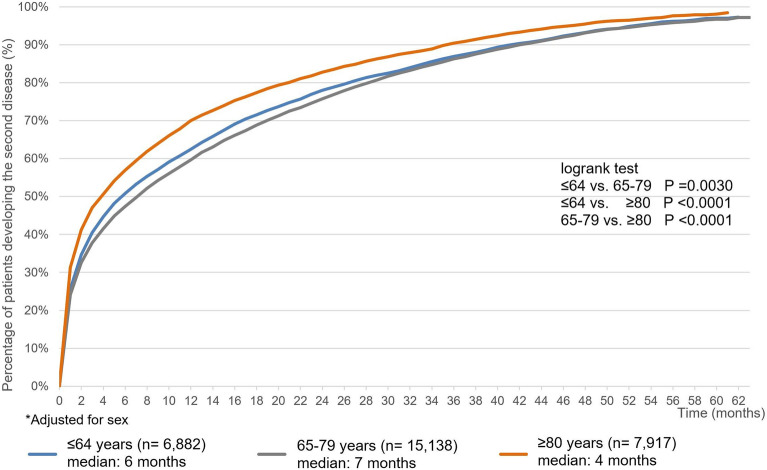
A total of 109,075 patients were enrolled: 29,937 with AF → HF, 38,171 with HF → AF, and 40,967 diagnosed simultaneously. Time delays between AF → HF and HF → AF were 6 and 10 months, respectively. The median survival was 46 months in the AF → HF, 38 months in the HF → AF, and 21 months in the simultaneous group. Patients with HF → AF, and with simultaneous presentations had 5% and 16% greater mortality risk as compared to the AF → HF sequence, with hazard ratios (95% confidence intervals) of 0.95 (0.93-0.97) and 0.84 (0.82-0.85), respectively (P < 0.0001).
HF occurred significantly earlier after the diagnosis of AF than vice versa. Patients diagnosed simultaneously had the worst, while the AF → HF sequence had the best prognosis. These data should have implications for the intensification of monitoring and therapy in different scenarios.
心房颤动(AF)和心力衰竭(HF)常因共同的病理机制要素而并存。这两种病症在同一患者体内出现的先后顺序的潜在意义尚不明确。在此,我们报告了来自全国性数据库的结果,该数据库涉及AF和HF可能呈现的各种顺序、两种病症之间的时间间隔以及与不同情况相关的全因死亡率。
从匈牙利国家健康保险基金(NHIF)数据库中纳入2015年至2021年间被诊断为AF和HF的患者。记录这两种病症出现的先后顺序以及两者之间的时间间隔。计算AF→HF、HF→AF和同时发病情况下的中位生存率。
共纳入109,075例患者:29,937例为AF→HF,38,171例为HF→AF,40,967例为同时诊断。AF→HF和HF→AF之间的时间间隔分别为6个月和10个月。AF→HF组的中位生存期为46个月,HF→AF组为38个月,并同时发病组为21个月。与AF→HF顺序相比,HF→AF组和同时发病组的死亡风险分别高出5%和16%,风险比(95%置信区间)分别为0.95(0.93 - 0.97)和0.84(0.82 - 0.85)(P < 0.0001)。
AF诊断后HF出现的时间明显早于相反情况。同时诊断的患者预后最差,而AF→HF顺序的患者预后最佳。这些数据应有助于在不同情况下加强监测和治疗。