Daher Mohammad, Lopez Ryan, Boufadel Peter, Covarrubias Oscar, Casey Jack C, Casey George A, Fares Mohamad Y, Abboud Joseph A
Division of Shoulder and Elbow Surgery, Rothman Orthopaedic Institute, Philadelphia, PA, USA.
Department of Orthopaedics, Brown University, Providence, RI, USA.
Clin Shoulder Elb. 2024 Sep;27(3):295-308. doi: 10.5397/cise.2024.00178. Epub 2024 Jul 30.
The aim of this study was to evaluate the impact of mental health attributes, such as the presence of psychiatric comorbidities or psychological comorbidities (low resilience), on outcomes after rotator cuff repair (RCR) and total shoulder arthroplasty (TSA).
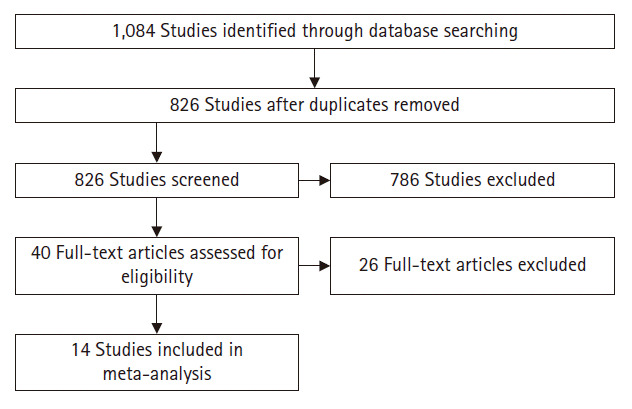
PubMed, Cochrane, and Google Scholar (results pages 1-20) were searched up to November 2023. Mental health problems of interest included the presence of psychiatric comorbidities (depression, anxiety) or indicators of poor psychological functioning, such as low resilience or the presence of distress. Patients were assigned to poor or good mental health groups in this study based on their grouping in the original study.
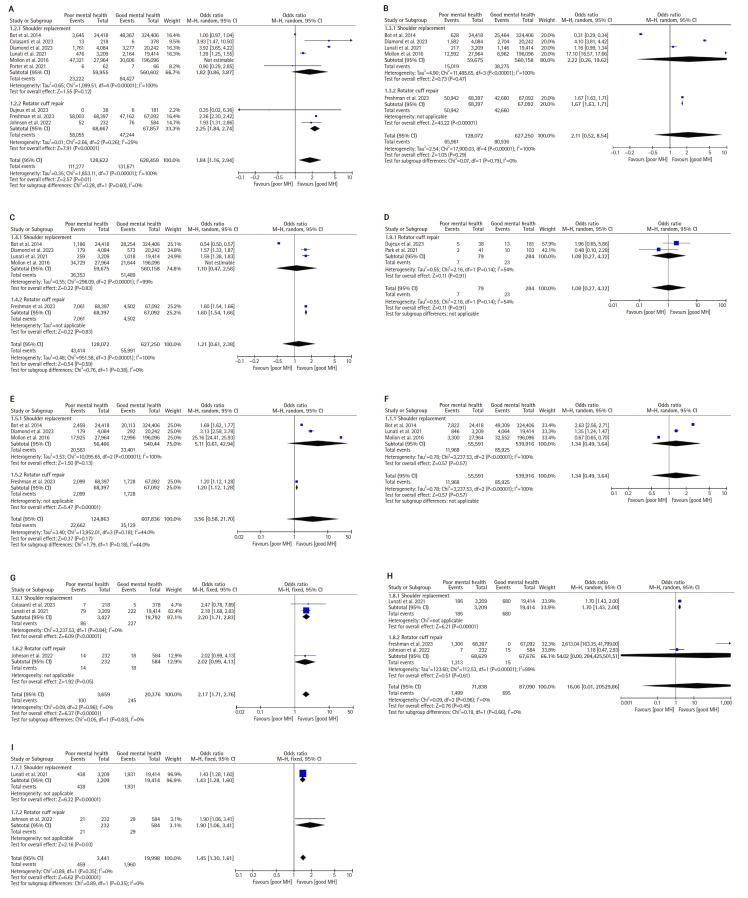
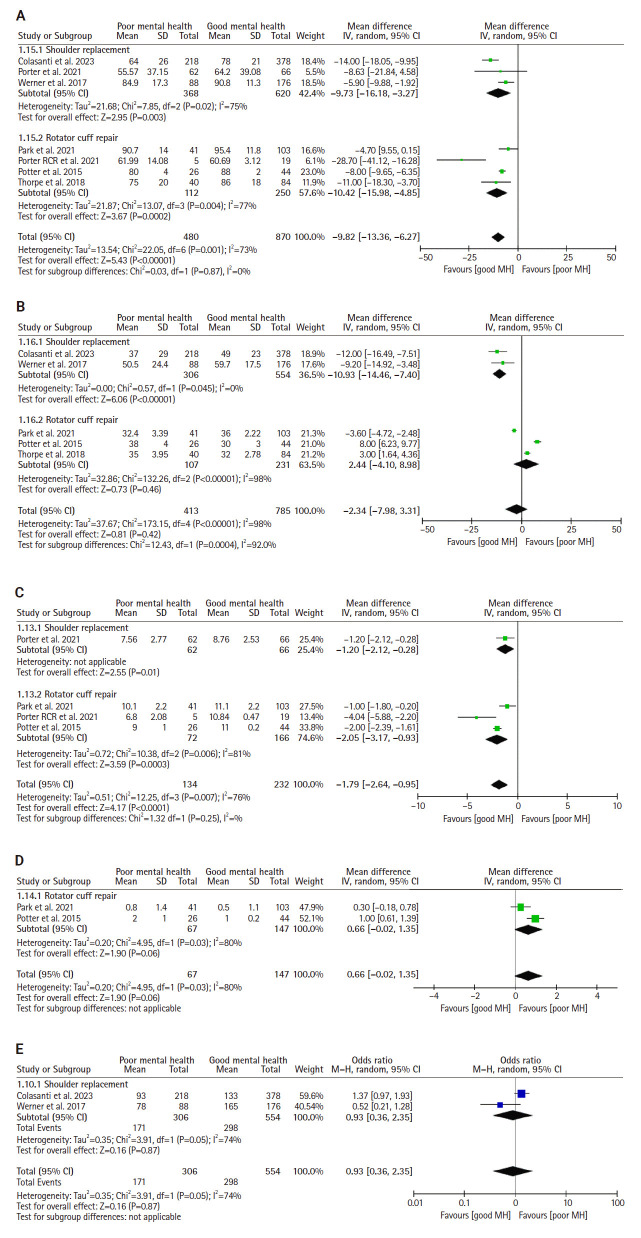
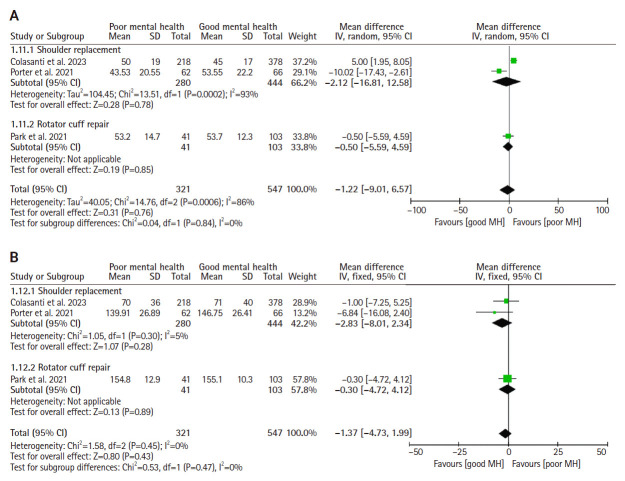
Fourteen studies were included in the meta-analysis. Patients with good mental health had greater improvements in postoperative American Shoulder and Elbow Surgeons and Simple Shoulder Test scores in the TSA cohort (P=0.003 and P=0.01), RCR cohort (P<0.001), and the combined TSA and RCR cohort (P<0.001). No difference was found in visual analog scale score, satisfaction, external rotation, or flexion between the two mental health groups. Patients with poor mental health undergoing RCR experienced higher rates of adverse events and transfusions (P<0.001). Patients with poor mental health also had greater rates of revision and emergency department visits in the TSA cohort (P<0.001), RCR cohort (P=0.05 and P=0.03), and combined cohort (P<0.001). Patients with poor mental health undergoing TSA had a higher rate of re-admission (P<0.001).
Patients with poor preoperative mental health showed inferior patient-reported outcome scores and increased rates of adverse events, revisions, and re-admissions. Level of evidence: III.
本研究旨在评估心理健康属性,如精神共病或心理共病(心理韧性低)对肩袖修复术(RCR)和全肩关节置换术(TSA)术后结果的影响。
截至2023年11月,检索了PubMed、Cochrane和谷歌学术(结果第1 - 20页)。感兴趣的心理健康问题包括精神共病(抑郁、焦虑)的存在或心理功能不佳的指标,如心理韧性低或存在痛苦。在本研究中,根据患者在原始研究中的分组,将其分为心理健康状况差或良好的组。
荟萃分析纳入了14项研究。心理健康状况良好的患者在TSA队列(P = 0.003和P = 0.01)、RCR队列(P < 0.001)以及TSA和RCR联合队列(P < 0.001)中,术后美国肩肘外科医生评分和简单肩关节测试评分有更大改善。两组心理健康状况在视觉模拟量表评分、满意度、外旋或屈曲方面未发现差异。接受RCR的心理健康状况差的患者不良事件和输血发生率更高(P < 0.001)。心理健康状况差的患者在TSA队列(P < 0.001)、RCR队列(P = 0.05和P = 0.03)以及联合队列(P < 0.001)中的翻修率和急诊就诊率也更高。接受TSA的心理健康状况差的患者再入院率更高(P < 0.001)。
术前心理健康状况差的患者患者报告的结局评分较低,不良事件、翻修和再入院率增加。证据级别:III级。