Sigawi Tal, Gelman Ram, Maimon Ofra, Yossef Amal, Hemed Nila, Agus Samuel, Berg Marc, Ilan Yaron, Popovtzer Aron
Department of Medicine, Hadassah Medical Center, and Faculty of Medicine, Hebrew University, Jerusalem, Israel.
Sharett Institute of Oncology, Hebrew University, Hadassah Medical Center, Jerusalem, Israel.
Front Oncol. 2024 Jul 30;14:1426426. doi: 10.3389/fonc.2024.1426426. eCollection 2024.
The main obstacle in treating cancer patients is drug resistance. Lenvatinib treatment poses challenges due to loss of response and the common dose-limiting adverse events (AEs). The Constrained-disorder-principle (CDP)-based second-generation artificial intelligence (AI) systems introduce variability into treatment regimens and offer a potential strategy for enhancing treatment efficacy. This proof-of-concept clinical trial aimed to assess the impact of a personalized algorithm-controlled therapeutic regimen on lenvatinib effectiveness and tolerability.
A 14-week open-label, non-randomized trial was conducted with five cancer patients receiving lenvatinib-an AI-assisted application tailored to a personalized therapeutic regimen for each patient, which the treating physician approved. The study assessed changes in tumor response through FDG-PET-CT and tumor markers and quality of life via the EORTC QLQ-THY34 questionnaire, AEs, and laboratory evaluations. The app monitored treatment adherence.
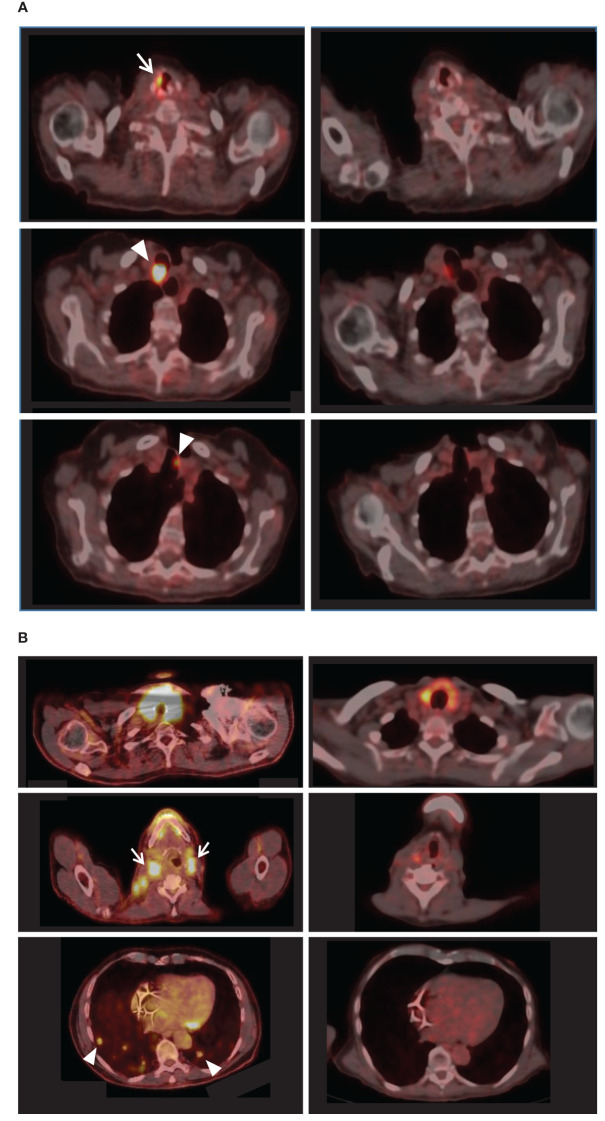
At 14 weeks of follow-up, the disease control rate (including the following outcomes: complete response, partial response, stable disease) was 80%. The FDG-PET-CT scan-based RECIST v1.1 and PERCIST criteria showed partial response in 40% of patients and stable disease in an additional 40% of patients. One patient experienced a progressing disease. Of the participants with thyroid cancer, 75% showed a reduction in thyroglobulin levels, and 60% of all the participants showed a decrease in neutrophil-to-lymphocyte ratio during treatment. Improvement in the median social support score among patients utilizing the system supports an ancillary benefit of the intervention. No grade 4 AEs or functional deteriorations were recorded.
The results of this proof-of-concept open-labeled clinical trial suggest that the CDP-based second-generation AI system-generated personalized therapeutic recommendations may improve the response to lenvatinib with manageable AEs. Prospective controlled studies are needed to determine the efficacy of this approach.
治疗癌症患者的主要障碍是耐药性。乐伐替尼治疗因反应丧失和常见的剂量限制性不良事件(AE)而面临挑战。基于受限无序原理(CDP)的第二代人工智能(AI)系统为治疗方案引入了可变性,并提供了一种提高治疗效果的潜在策略。这项概念验证临床试验旨在评估个性化算法控制的治疗方案对乐伐替尼有效性和耐受性的影响。
对五名接受乐伐替尼治疗的癌症患者进行了一项为期14周的开放标签、非随机试验——这是一种根据每位患者的个性化治疗方案量身定制的人工智能辅助应用程序,由主治医生批准。该研究通过氟代脱氧葡萄糖正电子发射断层扫描-计算机断层扫描(FDG-PET-CT)和肿瘤标志物评估肿瘤反应的变化,并通过欧洲癌症研究与治疗组织(EORTC)QLQ-THY34问卷、不良事件和实验室评估来评估生活质量。该应用程序监测治疗依从性。
在14周的随访中,疾病控制率(包括以下结果:完全缓解、部分缓解、病情稳定)为80%。基于FDG-PET-CT扫描的实体瘤疗效评价标准(RECIST)v1.1和实体瘤疗效评价标准(PERCIST)显示,40%的患者部分缓解,另外40%的患者病情稳定。一名患者病情进展。在甲状腺癌患者中,75%的患者甲状腺球蛋白水平降低,所有参与者中有60%在治疗期间中性粒细胞与淋巴细胞比值降低。使用该系统的患者中位社会支持得分的改善支持了该干预措施的辅助益处。未记录到4级不良事件或功能恶化。
这项概念验证开放标签临床试验的结果表明,基于CDP的第二代人工智能系统生成的个性化治疗建议可能会改善对乐伐替尼的反应,且不良事件可控。需要进行前瞻性对照研究以确定这种方法的疗效。