van Mourik Marloes, Tiemeijer Bart M, van Zon Maarten, Abinzano Florencia, Tel Jurjen, Foolen Jasper, Ito Keita
Orthopaedic Biomechanics, Department of Biomedical Engineering, Eindhoven University of Technology, Gem-Z 1.106, P.O. Box 513, 5600 MB Eindhoven, the Netherlands.
Institute for Complex Molecular Systems, Eindhoven University of Technology, 5600 MB Eindhoven, the Netherlands.
Matrix Biol Plus. 2024 Jul 15;23:100157. doi: 10.1016/j.mbplus.2024.100157. eCollection 2024 Aug.
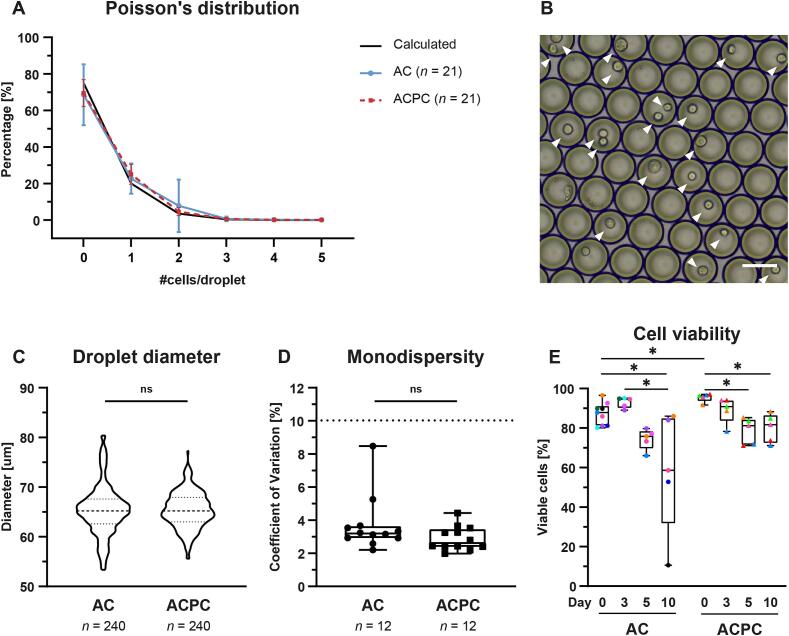
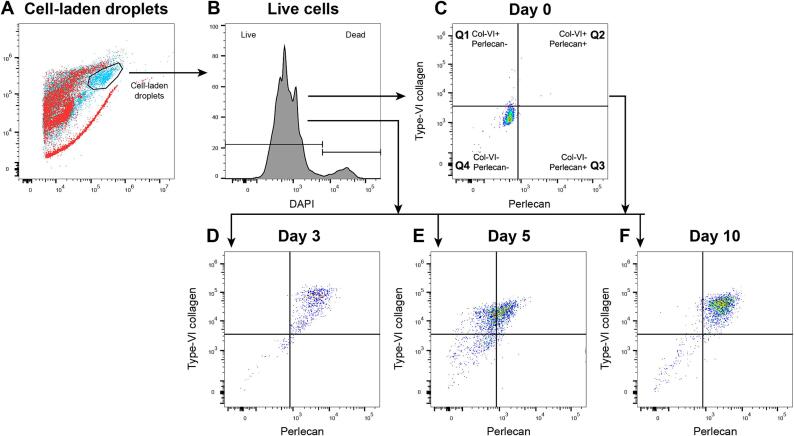
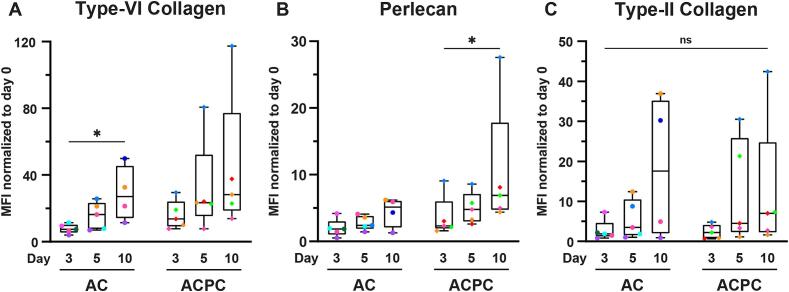
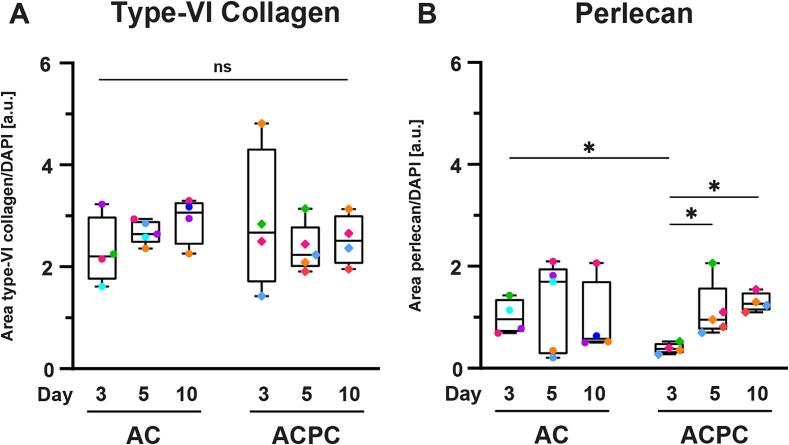
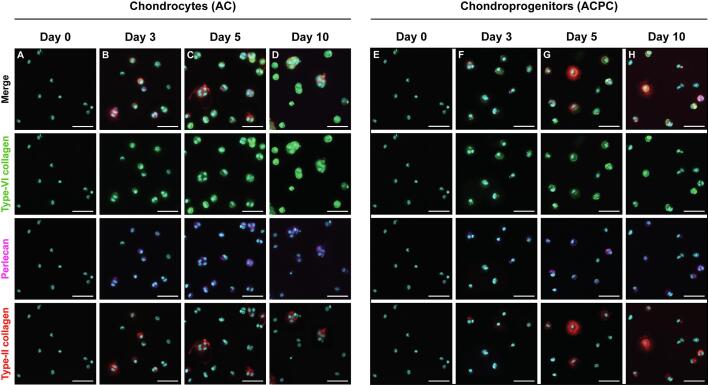
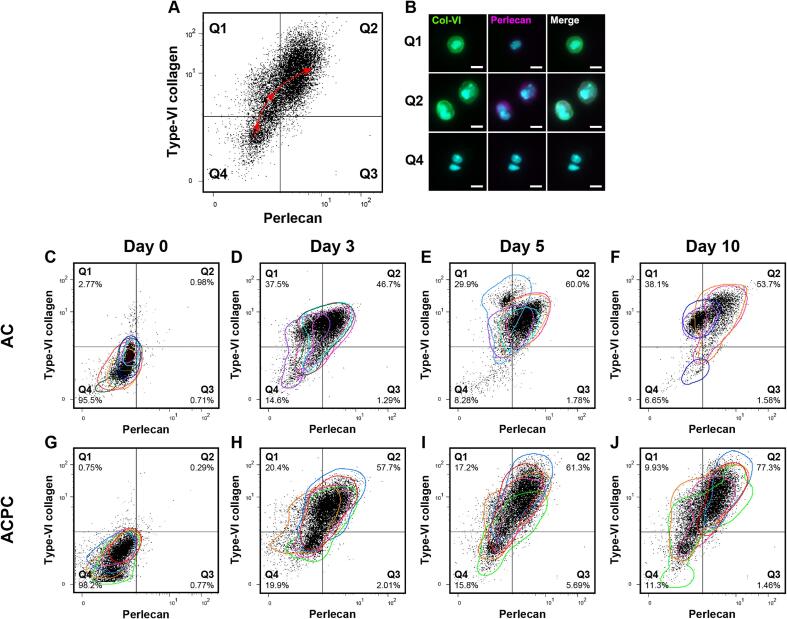
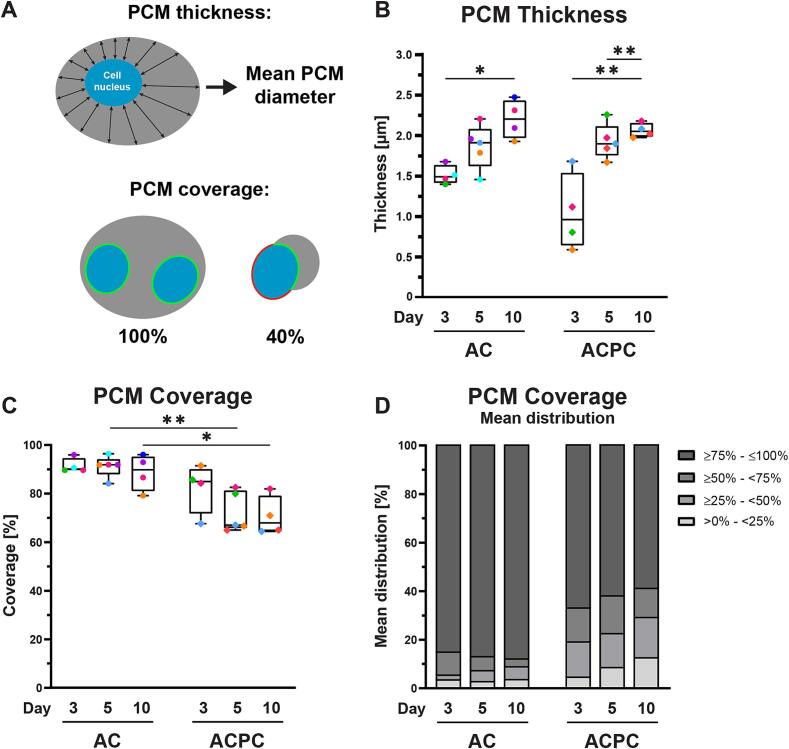
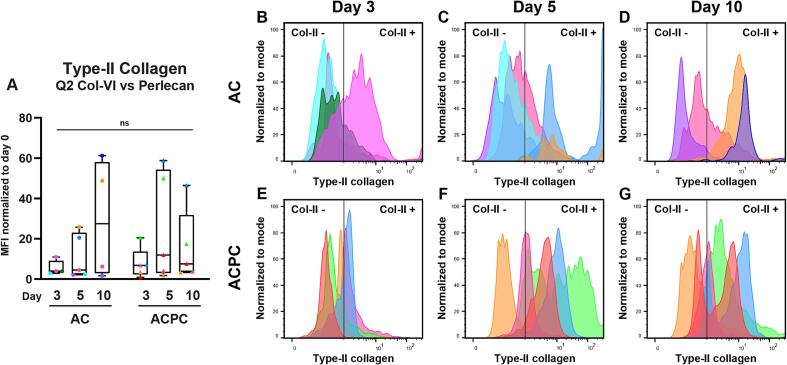
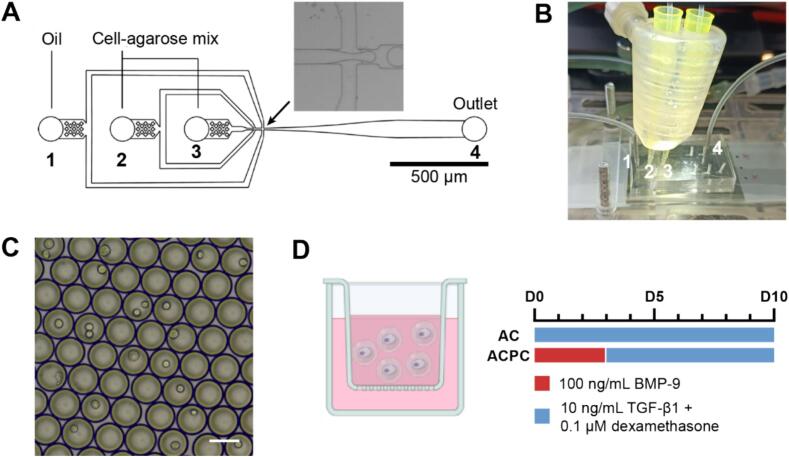
The pericellular matrix (PCM) surrounding chondrocytes is essential for articular cartilage tissue engineering. As the current isolation methods to obtain chondrocytes with their PCM (chondrons) result in a heterogeneous mixture of chondrocytes and chondrons, regenerating the PCM using a tissue engineering approach could prove beneficial. In this study, we aimed to discern the behavior of articular chondrocytes (ACs) in regenerating the PCM in such an approach and whether this would also be true for articular cartilage-derived progenitor cells (ACPCs), as an alternative cell source. Bovine ACs and ACPCs were encapsulated in agarose microgels using droplet-based microfluidics. ACs were stimulated with TGF-β1 and dexamethasone and ACPCs were sequentially stimulated with BMP-9 followed by TGF-β1 and dexamethasone. After 0, 3, 5, and 10 days of culture, PCM components, type-VI collagen and perlecan, and ECM component, type-II collagen, were assessed using flow cytometry and fluorescence microscopy. Both ACs and ACPCs synthesized the PCM before the ECM. It was seen for the first time that synthesis of type-VI collagen always preceded perlecan. While the PCM synthesized by ACs resembled native chondrons after only 5 days of culture, ACPCs often made less well-structured PCMs. Both cell types showed variations between individual cells and donors. On one hand, this was more prominent in ACPCs, but also a subset of ACPCs showed superior PCM and ECM regeneration, suggesting that isolating these cells may potentially improve cartilage repair strategies.
软骨细胞周围的细胞周基质(PCM)对于关节软骨组织工程至关重要。由于目前获取带有其PCM的软骨细胞(软骨粒)的分离方法会导致软骨细胞和软骨粒的异质混合物,因此采用组织工程方法再生PCM可能会带来益处。在本研究中,我们旨在了解关节软骨细胞(ACs)在这种方法中再生PCM时的行为,以及对于作为替代细胞来源的关节软骨衍生祖细胞(ACPCs)而言是否也是如此。使用基于液滴的微流控技术将牛ACs和ACPCs封装在琼脂糖微凝胶中。用TGF-β1和地塞米松刺激ACs,并用BMP-9依次刺激ACPCs,随后再用TGF-β1和地塞米松刺激。培养0、3、5和10天后,使用流式细胞术和荧光显微镜评估PCM成分、VI型胶原蛋白和基底膜聚糖,以及ECM成分II型胶原蛋白。ACs和ACPCs在合成ECM之前都先合成了PCM。首次发现VI型胶原蛋白的合成总是先于基底膜聚糖。虽然ACs合成的PCM在培养仅5天后就类似于天然软骨粒,但ACPCs形成的PCM结构往往较差。两种细胞类型在个体细胞和供体之间都表现出差异。一方面,这种差异在ACPCs中更为明显,但也有一部分ACPCs表现出优异的PCM和ECM再生能力,这表明分离这些细胞可能会潜在地改善软骨修复策略。