Subedi Ujjwol, Raychaudhuri Samnhita, Fan Si, Ogedengbe Opeyemi, Obanda Diana N
Department of Nutrition and Food Sciences University of Maryland College Park Maryland USA.
Food Sci Nutr. 2024 May 6;12(8):5480-5496. doi: 10.1002/fsn3.4195. eCollection 2024 Aug.
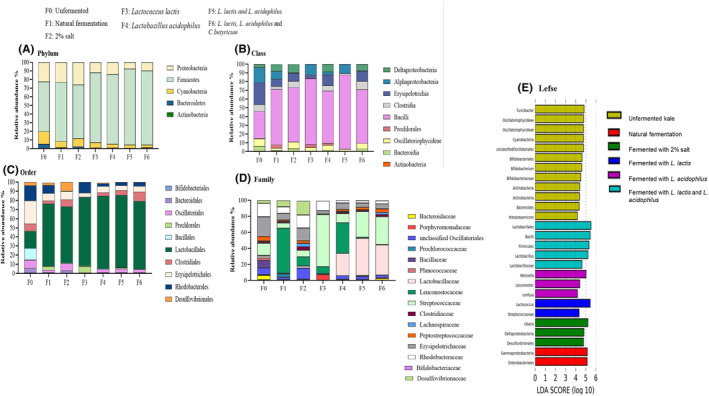
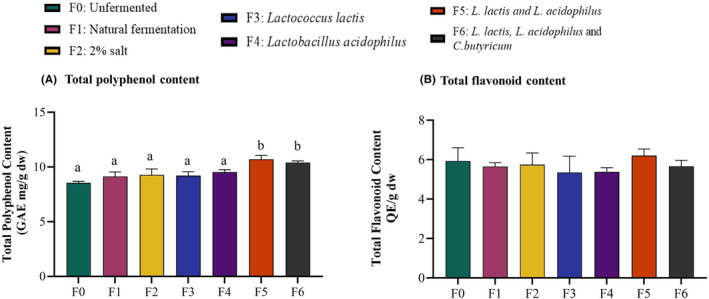
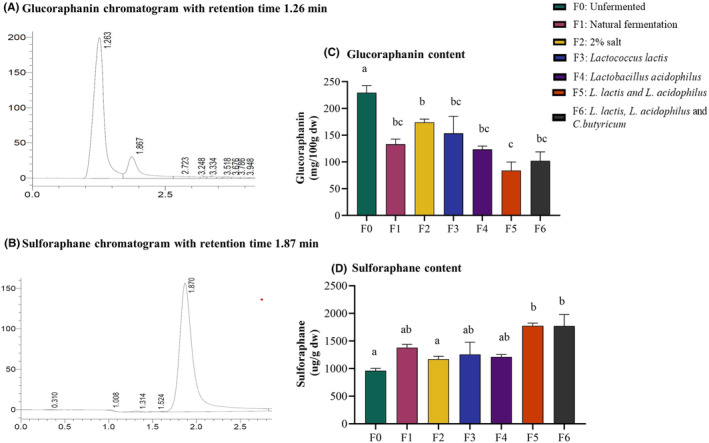
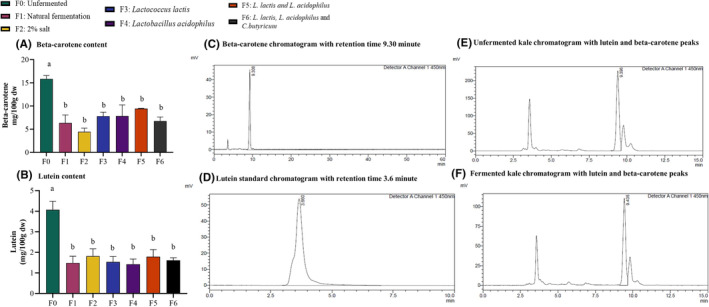
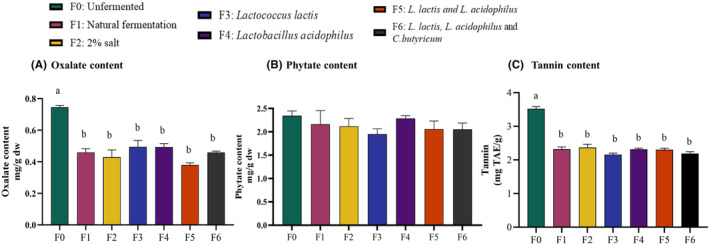
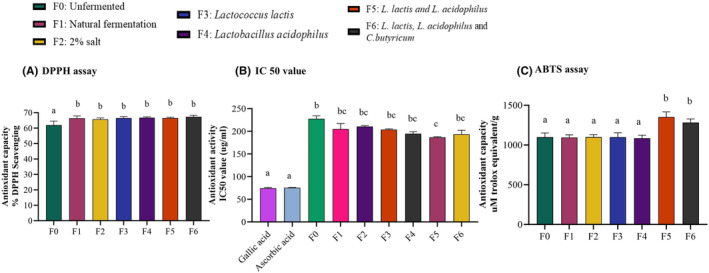
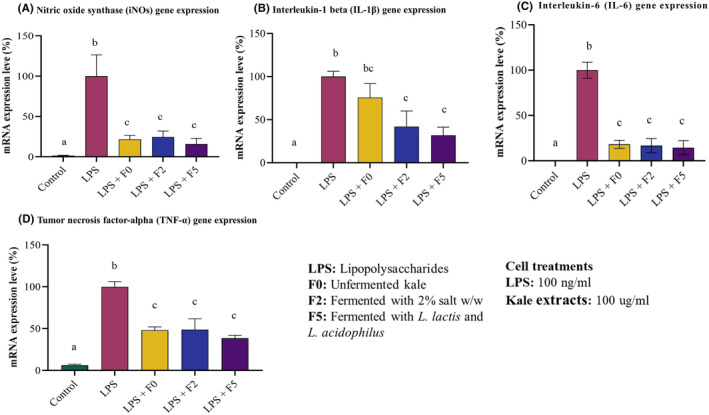
The properties of kale as a functional food are well established. We sought to determine how fermentation further enhances these properties. We tested different fermentation conditions: (i) spontaneous fermentation with naturally occurring bacteria, (ii) spontaneous fermentation with 2% salt, (iii) , (iv) , (v) mixture of and , (vi) mixture of , , and We quantified selected bioactive components using high-performance liquid chromatography (HPLC) and antinutritional factors using a gravimetric method and spectrophotometry. We then determined (i) the antioxidant capacity of the vegetable, (ii) anti-inflammation capacity, and (iii) the surface microbiota composition by 16S sequencing. All fermentation methods imparted some benefits. However, fermentation with mixed culture of and was most effective in increasing polyphenols and sulforaphane accessibility, increasing antioxidant activity, and reducing antinutritional factors. Specifically, fermentation with increased total polyphenols from 8.5 to 10.7 mgGAE/g (milligrams of gallium acid equivalent per gram) and sulforaphane from 960.8 to 1777 μg/g (microgram per gram) but decreased the antinutritional factors oxalate and tannin. Total oxalate was reduced by 49%, while tannin was reduced by 55%-65%. The antioxidant capacity was enhanced but not the anti-inflammation potential. Both unfermented and fermented kale protected equally against lipopolysaccharide (LPS)-induced inflammation in RAW 264.7 macrophages and prevented increases in inducible nitric oxide synthase (iNOS), tumor necrosis factor-alpha (TNF-α), interleukin-1 beta (IL-1β), and interleukin-6 messenger RNA (IL-6 mRNA) expression by 84.3%, 62%, 68%, and 85.5%, respectively. Unfermented and naturally fermented kale had high proportions of sulfur reducing Desulfubrio and Proteobacteria usually associated with inflammation. Fermenting with and/or changed the bacterial proportions, reducing the Proteobacteria while increasing the genera and In summary, fermentation enhances the well-known beneficial impacts of kale. Fermentation with mixed cultures of and imparts higher benefits compared to the single cultures or fermentation with native bacteria present in the vegetable.
羽衣甘蓝作为一种功能性食品的特性已得到充分证实。我们试图确定发酵如何进一步增强这些特性。我们测试了不同的发酵条件:(i)用天然存在的细菌进行自发发酵,(ii)用2%的盐进行自发发酵,(iii),(iv),(v)和的混合物,(vi)、和的混合物 我们使用高效液相色谱法(HPLC)对选定的生物活性成分进行定量,并使用重量法和分光光度法对抗营养因子进行定量。然后,我们通过16S测序确定了(i)蔬菜的抗氧化能力,(ii)抗炎能力,以及(iii)表面微生物群组成。所有发酵方法都有一些益处。然而,用和的混合培养物进行发酵在提高多酚和萝卜硫素的可及性、增加抗氧化活性以及减少抗营养因子方面最为有效。具体而言,用发酵使总多酚从8.5毫克没食子酸当量/克增加到10.7毫克没食子酸当量/克,萝卜硫素从960.8微克/克增加到1777微克/克,但降低了抗营养因子草酸盐和单宁。总草酸盐减少了49%,而单宁减少了55%-65%。抗氧化能力增强了,但抗炎潜力没有增强。未发酵和发酵的羽衣甘蓝对RAW 264.7巨噬细胞中脂多糖(LPS)诱导的炎症具有同等的保护作用,并分别使诱导型一氧化氮合酶(iNOS)、肿瘤坏死因子-α(TNF-α)、白细胞介素-1β(IL-1β)和白细胞介素-6信使核糖核酸(IL-6 mRNA)的表达增加分别降低了84.3%、62%、68%和85.5%。未发酵和自然发酵的羽衣甘蓝中通常与炎症相关的还原硫的脱硫弧菌和变形菌比例较高。用和/或发酵改变了细菌比例,减少了变形菌,同时增加了属和属 总之,发酵增强了羽衣甘蓝众所周知的有益影响。与单一培养物或用蔬菜中存在的天然细菌进行发酵相比,用和的混合培养物进行发酵具有更高的益处。