Desai Mira Kirankumar
Department of Pharmacology, Dr. M. K. Shah Medical College and Research Centre, Ahmedabad, Gujarat, India.
Perspect Clin Res. 2024 Jul-Sep;15(3):116-121. doi: 10.4103/picr.picr_290_23. Epub 2024 Mar 27.
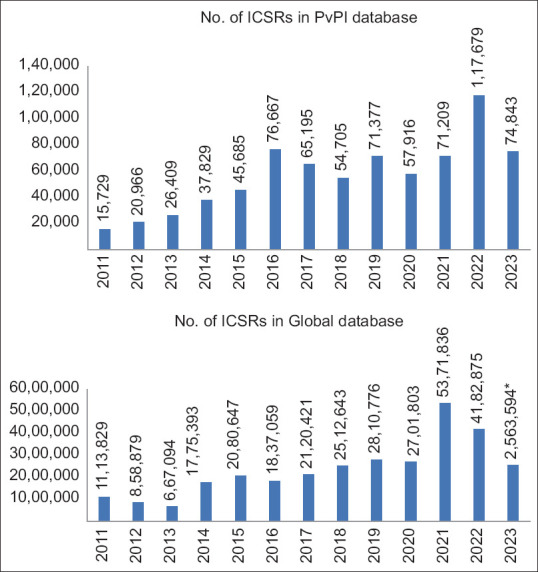
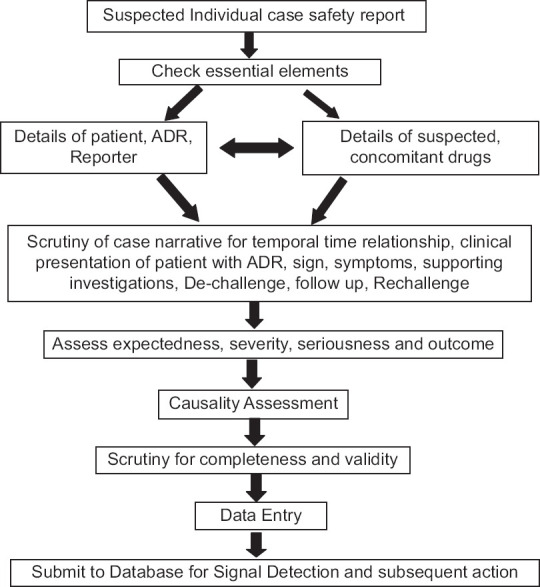
Pharmacovigilance (PV) is a data-driven process to identify medicine safety issues at the earliest by processing suspected adverse event (AE) reports and extraction of health data. The PV case processing cycle starts with data collection, data entry, initial checking completeness and validity, coding, medical assessment for causality, expectedness, severity, and seriousness, subsequently submitting report, quality checking followed by data storage and maintenance. This requires a workforce and technical expertise and therefore, is expensive and time-consuming. There has been exponential growth in the number of suspected AE reports in the PV database due to smart collection and reporting of individual case safety reports, widening the base by increased awareness and participation by health-care professionals and patients. Processing of the enormous volume and variety of data, making its sensible use and separating "," is a challenge for key stakeholders such as pharmaceutical firms, regulatory authorities, medical and PV experts, and National Pharmacovigilance Program managers. Artificial intelligence (AI) in health care has been very impressive in specialties that rely heavily on the interpretation of medical images. Similarly, there has been a growing interest to adopt AI tools to complement and automate the PV process. The advanced technology can certainly complement the routine, repetitive, manual task of case processing, and boost efficiency; however, its implementation across the PV lifecycle and practical impact raises several questions and challenges. Full automation of PV system is a double-edged sword and needs to consider two aspects - people and processes. The focus should be a collaborative approach of technical expertise (people) combined with intelligent technology (processes) to augment human talent that meets the objective of the PV system and benefit all stakeholders. AI technology should enhance human intelligence rather than substitute human experts. What is important is to emphasize and ensure that AI brings more benefits to PV rather than challenges. This review describes the benefits and the outstanding scientific, technological, and policy issues, and the maturity of AI tools for full automation in the context to the Indian health-care system.
药物警戒(PV)是一个数据驱动的过程,通过处理疑似不良事件(AE)报告和提取健康数据,尽早识别药物安全问题。PV病例处理周期始于数据收集、数据录入、初步检查完整性和有效性、编码、对因果关系、预期性、严重性和重要性进行医学评估,随后提交报告、进行质量检查,接着进行数据存储和维护。这需要人力和技术专长,因此成本高昂且耗时。由于智能收集和报告个例安全报告,PV数据库中疑似AE报告的数量呈指数级增长,医疗保健专业人员和患者的意识提高及参与度增加也扩大了报告基数。处理大量且多样的数据、合理利用数据以及分隔“,”对制药公司、监管机构、医学和PV专家以及国家药物警戒计划管理人员等关键利益相关者而言是一项挑战。医疗保健领域的人工智能(AI)在严重依赖医学影像解读的专业中表现十分出色。同样,人们越来越有兴趣采用AI工具来补充和自动化PV流程。先进技术肯定可以补充病例处理的常规、重复、手工任务,并提高效率;然而,其在PV生命周期中的实施及其实际影响引发了一些问题和挑战。PV系统的完全自动化是一把双刃剑,需要考虑两个方面——人员和流程。重点应该是技术专长(人员)与智能技术(流程)相结合的协作方法,以增强符合PV系统目标并使所有利益相关者受益的人才。AI技术应增强人类智能而非替代人类专家。重要的是强调并确保AI给PV带来更多益处而非挑战。本综述描述了在印度医疗保健系统背景下,AI工具完全自动化的益处、突出的科学、技术和政策问题以及成熟度。