Precision Medicine for Obesity Program and Division of Gastroenterology and Hepatology, Mayo Clinic, Rochester, MN, USA.
Division of Biomedical Statistics and Informatics, Mayo Clinic, Rochester, MN, USA.
EBioMedicine. 2024 Sep;107:105283. doi: 10.1016/j.ebiom.2024.105283. Epub 2024 Aug 13.
Gut L-type enteroendocrine cells (EECs) are intestinal chemosensory cells that secrete satiety hormones GLP-1 and PYY in response to activation of G-protein coupled receptors (GPCRs) by luminal components of nutrient digestion and microbial fermentation. Regulator of G-protein Signaling (RGS) proteins are negative regulators of GPCR signaling. The expression profile of RGS in EECs, and their potential role in satiety hormone secretion and obesity is unknown.
Transcriptomic profiling of RGS was completed in native colonic EECs was completed using single-cell RNA sequencing (scRNA-Seq) in lean and obesity, and human jejunal EECs with data obtained from a publicly available RNAseq dataset (GSE114853). RGS validation studies were completed using whole mucosal intestinal tissue obtained during endoscopy in 61 patients (n = 42 OB, n = 19 Lean); a subset of patients' postprandial plasma was assayed for GLP-1 and PYY. Ex vivo human intestinal cultures and in vitro NCI-H716 cells overexpressing RGS9 were exposed to GLP-1 secretagogues in conjunction with a nonselective RGS-inhibitor and assayed for GLP-1 secretion.
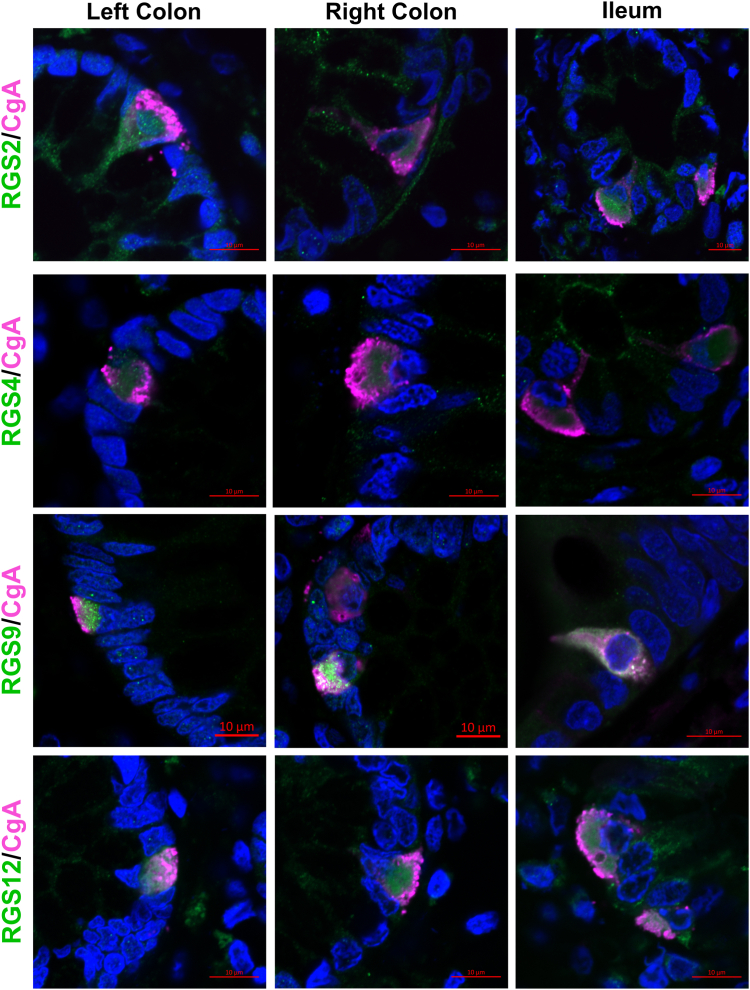
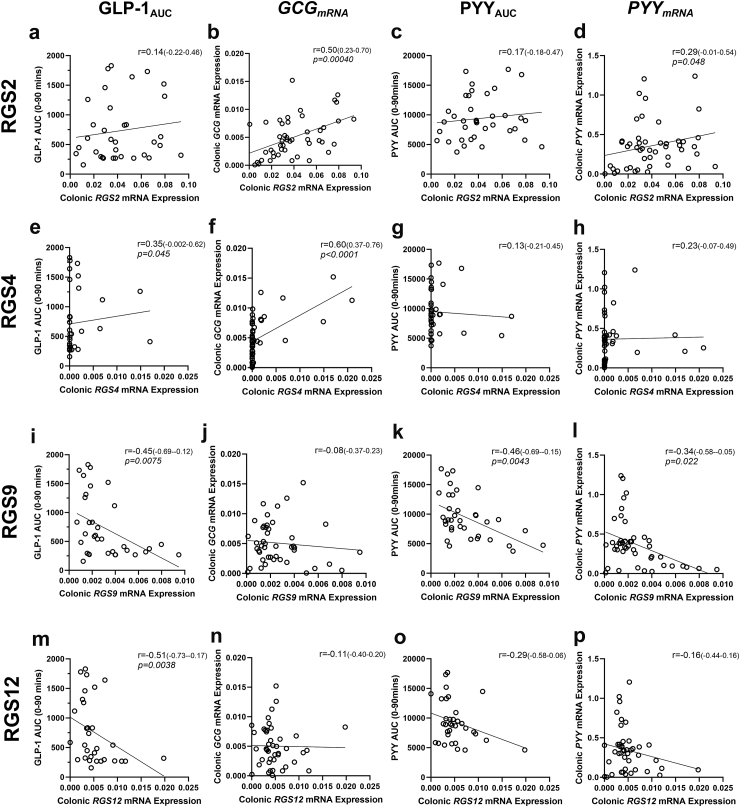
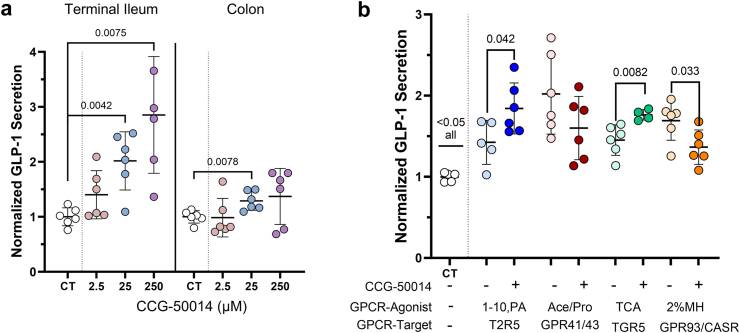
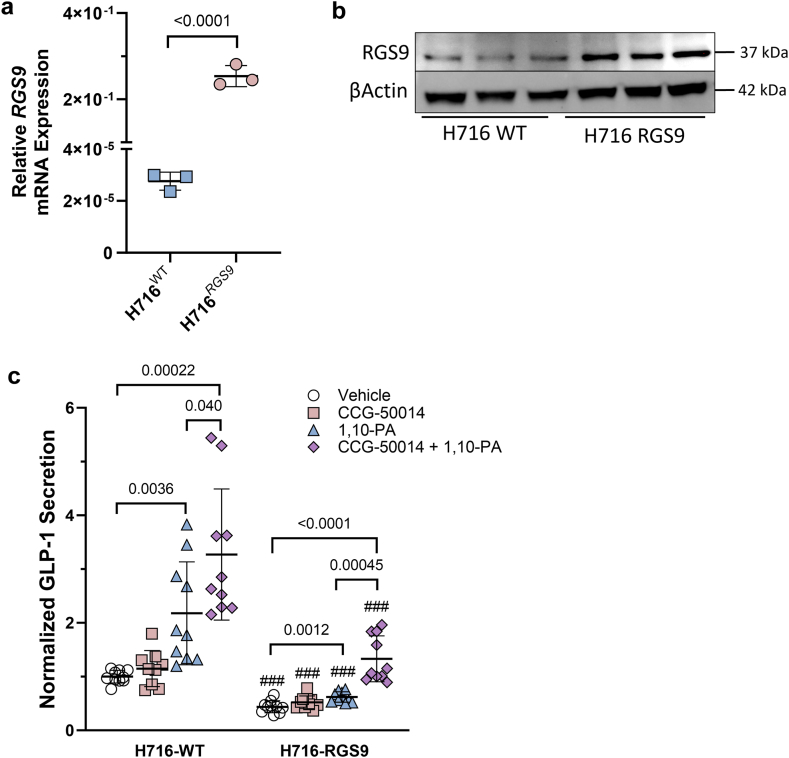
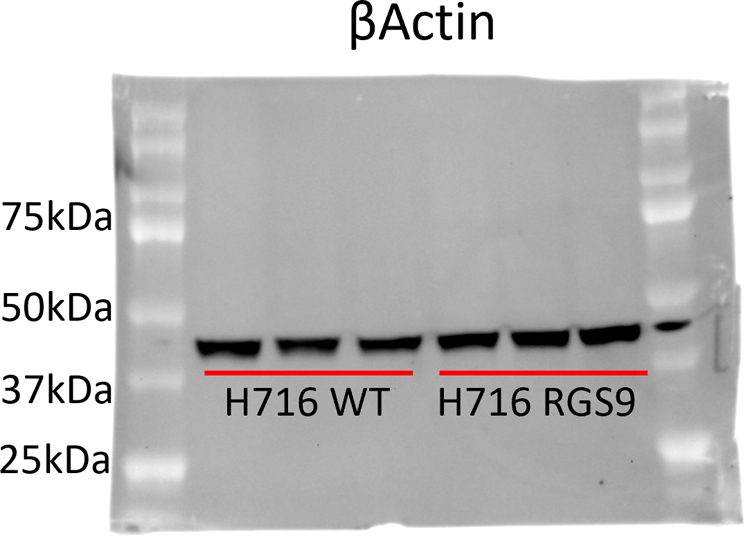
Transcriptomic profiling of colonic and jejunal enteroendocrine cells revealed a unique RGS expression profile in EECs, and further within GLP-1+ L-type EECs. In obesity the RGS expression profile was altered in colonic EECs. Human gut RGS9 expression correlated positively with BMI and negatively with postprandial GLP-1 and PYY. RGS inhibition in human intestinal cultures increased GLP-1 release from EECs ex vivo. NCI-H716 cells overexpressing RGS9 displayed defective nutrient-stimulated GLP-1 secretion.
This study introduces the expression profile of RGS in human EECs, alterations in obesity, and suggests a role for RGS proteins as modulators of GLP-1 and PYY secretion from intestinal EECs.
AA is supported by the NIH(C-Sig P30DK84567, K23 DK114460), a Pilot Award from the Mayo Clinic Center for Biomedical Discovery, and a Translational Product Development Fund from The Mayo Clinic Center for Clinical and Translational Science Office of Translational Practice in partnership with the University of Minnesota Clinical and Translational Science Institute.
肠道 L 型肠内分泌细胞(EECs)是肠道化学感觉细胞,它们通过对营养消化和微生物发酵过程中腔内成分激活 G 蛋白偶联受体(GPCRs)来分泌饱腹感激素 GLP-1 和 PYY。G 蛋白信号调节蛋白(RGS)是 GPCR 信号的负调节剂。EEC 中 RGS 的表达谱及其在饱腹感激素分泌和肥胖中的潜在作用尚不清楚。
使用单细胞 RNA 测序(scRNA-Seq)在瘦人和肥胖人群中完成了天然结肠 EEC 中 RGS 的转录组谱分析,并使用来自公开 RNAseq 数据集(GSE114853)的数据完成了人类空肠 EEC 的 RGS 验证研究。在 61 名患者(n=42 OB,n=19 Lean)的内镜检查期间获得整个黏膜肠组织进行了 RGS 验证研究;对一部分患者的餐后血浆进行了 GLP-1 和 PYY 检测。将 ex vivo 人肠培养物和过表达 RGS9 的体外 NCI-H716 细胞暴露于 GLP-1 分泌激动剂,并与非选择性 RGS 抑制剂一起检测 GLP-1 分泌。
结肠和空肠肠内分泌细胞的转录组谱分析显示,EEC 中存在独特的 RGS 表达谱,在 GLP-1+L 型 EEC 中进一步显示。在肥胖中,结肠 EEC 中的 RGS 表达谱发生改变。人类肠道 RGS9 表达与 BMI 呈正相关,与餐后 GLP-1 和 PYY 呈负相关。人肠培养物中的 RGS 抑制增加了 EEC 的 ex vivo GLP-1 释放。过表达 RGS9 的 NCI-H716 细胞显示出营养刺激的 GLP-1 分泌缺陷。
本研究介绍了 RGS 在人 EEC 中的表达谱、肥胖中的改变,并提示 RGS 蛋白作为肠 EEC 中 GLP-1 和 PYY 分泌的调节剂。
AA 得到 NIH(C-Sig P30DK84567,K23 DK114460)、Mayo 诊所生物医学发现中心的试点奖以及 Mayo 诊所临床和转化科学中心转化产品开发基金的支持,该基金与明尼苏达大学临床和转化科学研究所合作,与大学合作。