Manzi Joseph E, Dowling Brittany, Wang Zhaorui, Sudah Suleiman Y, Moran Jay, Chen Frank R, Estrada Jennifer A, Nicholson Allen, Ciccotti Michael C, Ruzbarsky Joseph J, Dines Joshua S
Department of Orthopaedic Surgery, Lenox Hill Hospital, New York, New York, USA.
Sports Performance Center, Midwest Orthopaedics at Rush, Chicago, Illinois, USA.
Orthop J Sports Med. 2024 Aug 13;12(8):23259671241262730. doi: 10.1177/23259671241262730. eCollection 2024 Aug.
Kinematic parameters predictive of pitch velocity have been evaluated in adolescent and collegiate baseball pitchers; however, they have not been established for high school or professional pitchers.
To create multiregression models using anthropometric and kinematics features most predictive for pitch velocity in high school and professional pitchers and compare them with prior multiregression models evaluating other playing levels.
Descriptive laboratory study.
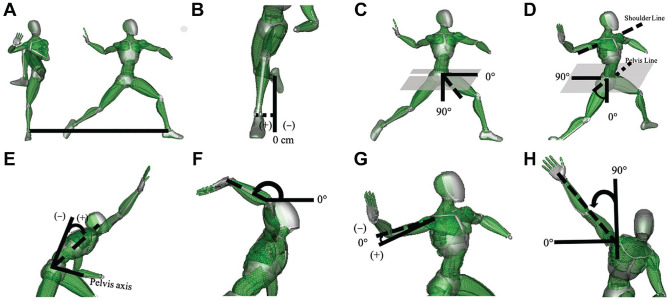
High school (n = 59) and professional (n = 337) baseball pitchers threw 8 to 12 fastballs while being evaluated with 3-dimensional motion capture (480 Hz). Using anthropometric and kinematic variables, multiregression models for pitch velocity were created for each group. A systematic review was conducted to determine previous studies that established kinematic models for ball velocity in youth, high school, and collegiate pitchers.
Leg length was predictive of pitch velocity for high school and professional pitchers ( < .001 for both). When compared with previously established models for pitch velocity, almost all groups were distinct from one another when assessing age ( < .001), weight ( = .0095), and pitch velocity ( < .001). Stride length was a significant predictor for the youth/high school pitchers, as well as the current study's high school and professional pitchers ( < .001 for all). Maximal shoulder external rotation (collegiate: = .001; professional: < .001) and maximal elbow extension velocity (high school/collegiate: = .024; collegiate: < .001; professional: = .006) were shared predictors for the collegiate and current study's professional group multiregression models. Trunk flexion at ball release was a commonly shared predictor in the youth/high school ( = .04), high school/collegiate ( = .003), collegiate ( < .001), and the current study's professional group ( < .001).
Youth, high school, collegiate, and professional pitchers had unique, predictive kinematic and anthropometric features predictive of pitch velocity. Leg length, stride length, trunk flexion at ball release, and maximal shoulder external rotation were predictive features that were shared between playing levels.
Coaches, clinicians, scouts, and pitchers can consider both the unique and the shared predictive features at each playing level when attempting to maximize pitch velocity.
已对青少年和大学棒球投手预测投球速度的运动学参数进行了评估;然而,尚未针对高中或职业投手确定这些参数。
利用对高中和职业投手投球速度最具预测性的人体测量学和运动学特征创建多元回归模型,并将其与评估其他比赛水平的先前多元回归模型进行比较。
描述性实验室研究。
高中(n = 59)和职业(n = 337)棒球投手在接受三维运动捕捉(480Hz)评估时投出8至12个快球。利用人体测量学和运动学变量,为每个组创建投球速度的多元回归模型。进行了一项系统综述,以确定先前建立青少年、高中和大学投手球速运动学模型的研究。
腿长对高中和职业投手的投球速度具有预测性(两者均P <.001)。与先前建立的投球速度模型相比,在评估年龄(P <.001)、体重(P =.0095)和投球速度(P <.001)时,几乎所有组都彼此不同。步长对青少年/高中投手以及本研究中的高中和职业投手是一个重要的预测指标(所有均P <.001)。最大肩部外旋(大学组:P =.001;职业组:P <.001)和最大肘部伸展速度(高中/大学组:P =.024;大学组:P <.001;职业组:P =.006)是大学组和本研究职业组多元回归模型的共同预测指标。球释放时的躯干屈曲是青少年/高中组(P =.04)、高中/大学组(P =.003)、大学组(P <.001)和本研究职业组(P <.001)中共同的预测指标。
青少年、高中、大学和职业投手具有预测投球速度的独特的、可预测的运动学和人体测量学特征。腿长、步长、球释放时的躯干屈曲和最大肩部外旋是不同比赛水平之间共有的预测特征。
教练、临床医生、球探和投手在试图最大化投球速度时,可以考虑每个比赛水平独特的和共有的预测特征。