Rassi Tiago N O, Barbosa Lucas M, Pereira Sacha, Novais Eduardo A, Penha Fernando, Roisman Luiz, Maia Mauricio
Department of Ophthalmology, Banco de Olhos Foundation of Goiás, Goiânia, Brazil.
Department of Ophthalmology, Federal University of São Paulo, São Paulo, Brazil.
Int J Retina Vitreous. 2024 Aug 15;10(1):54. doi: 10.1186/s40942-024-00569-x.
Age-related macular degeneration (AMD) is a leading cause of vision loss. Photobiomodulation (PBM) offers a controversial approach for managing dry AMD, aiming to halt or reverse progression through mitochondrial activity modulation. However, the efficacy and clinical relevance of PBM as a potential approach for managing dry AMD remain debated.
We systematically searched PubMed, Embase, and Cochrane databases for randomized controlled trials (RCTs) comparing PBM versus a sham in patients with dry AMD. We performed trial sequential analysis (TSA) and minimal clinically important difference (MCID) calculations to assess statistical and clinical significance applying a random-effects model with 95% confidence intervals (CI).
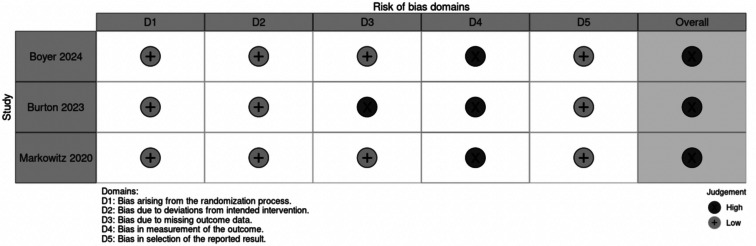
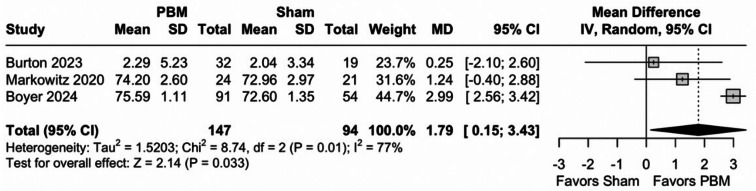
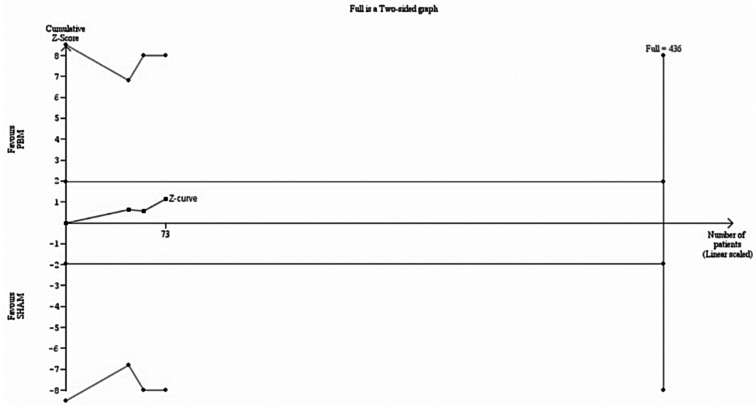
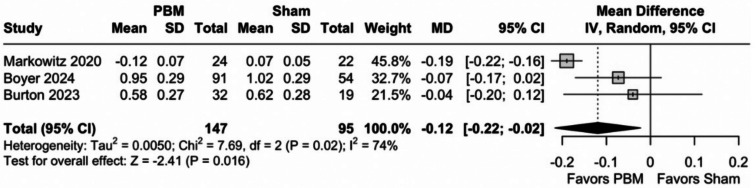
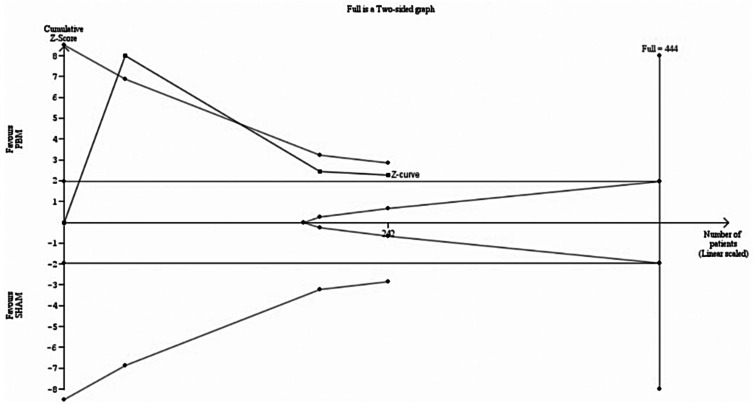
We included three RCTs comprising 247 eyes. The pooled analysis showed that PBM significant improved BCVA (MD 1.76 letters; 95% CI: 0.04 to 3.48) and drusen volume (MD -0.12 mm³; 95% CI: -0.22 to -0.02) as compared with a sham control. However, the TSA indicated that the current sample sizes were insufficient for reliable conclusions. No significant differences were observed in GA area. The MCID analysis suggested that the statistically significant results did not translate into clinically significant benefits. In the quality assessment, all studies were deemed to have a high risk of bias.
This meta-analysis points limitations in the current evidence base for PBM in dry AMD treatment, with issues around small sample sizes. Statistically significant improvements do not translate into clinical benefits. The research underscores need for larger RCTs to validate PBM's therapeutic potential for dry AMD.
年龄相关性黄斑变性(AMD)是视力丧失的主要原因。光生物调节(PBM)为干性AMD的治疗提供了一种存在争议的方法,旨在通过调节线粒体活性来阻止或逆转病情进展。然而,PBM作为干性AMD潜在治疗方法的疗效和临床相关性仍存在争议。
我们系统检索了PubMed、Embase和Cochrane数据库,以查找比较PBM与假治疗对干性AMD患者疗效的随机对照试验(RCT)。我们进行了试验序贯分析(TSA)和最小临床重要差异(MCID)计算,以采用95%置信区间(CI)的随机效应模型评估统计和临床意义。
我们纳入了3项RCT,共247只眼。汇总分析显示,与假对照组相比,PBM显著改善了最佳矫正视力(MD 1.76字母;95% CI:0.04至3.48)和玻璃膜疣体积(MD -0.12 mm³;95% CI:-0.22至-0.02)。然而,TSA表明当前样本量不足以得出可靠结论。在地理萎缩面积方面未观察到显著差异。MCID分析表明,具有统计学意义的结果并未转化为具有临床意义的益处。在质量评估中,所有研究均被认为存在高偏倚风险。
这项荟萃分析指出了目前PBM治疗干性AMD证据基础的局限性,存在样本量小的问题。具有统计学意义的改善并未转化为临床益处。该研究强调需要进行更大规模的RCT来验证PBM对干性AMD的治疗潜力。