Scuteri Damiana, Pagliaro Martina, Mantia Isabel, Contrada Marianna, Pignolo Loris, Tonin Paolo, Nicotera Pierluigi, Bagetta Giacinto, Corasaniti Maria Tiziana
Department of Health Sciences, University "Magna Graecia" of Catanzaro, Catanzaro, Italy.
Preclinical and Translational Pharmacology, Department of Pharmacy, Health Science and Nutrition, University of Calabria, Cosenza, Italy.
Front Pharmacol. 2024 Aug 1;15:1417851. doi: 10.3389/fphar.2024.1417851. eCollection 2024.
An estimated 57.4 million people live with dementia worldwide, with the social burden of the disease steadily growing. Despite the approval of lecanemab and ongoing trials, there is still a lack of effective and safe treatments for behavioral and psychological symptoms of dementia (BPSD), which affect 99% of patients. Agitation is one of the most disabling BPSD, with a cross-sectional prevalence of ≥50% in nursing homes, and refers to help-seeking behavior in response to various sources of discomfort, among which pain is a crucial component.
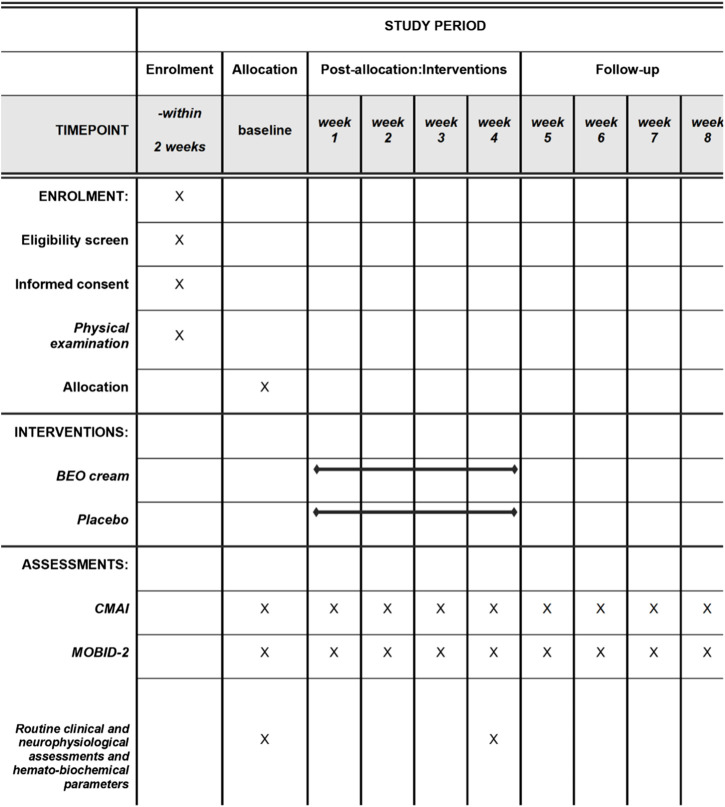
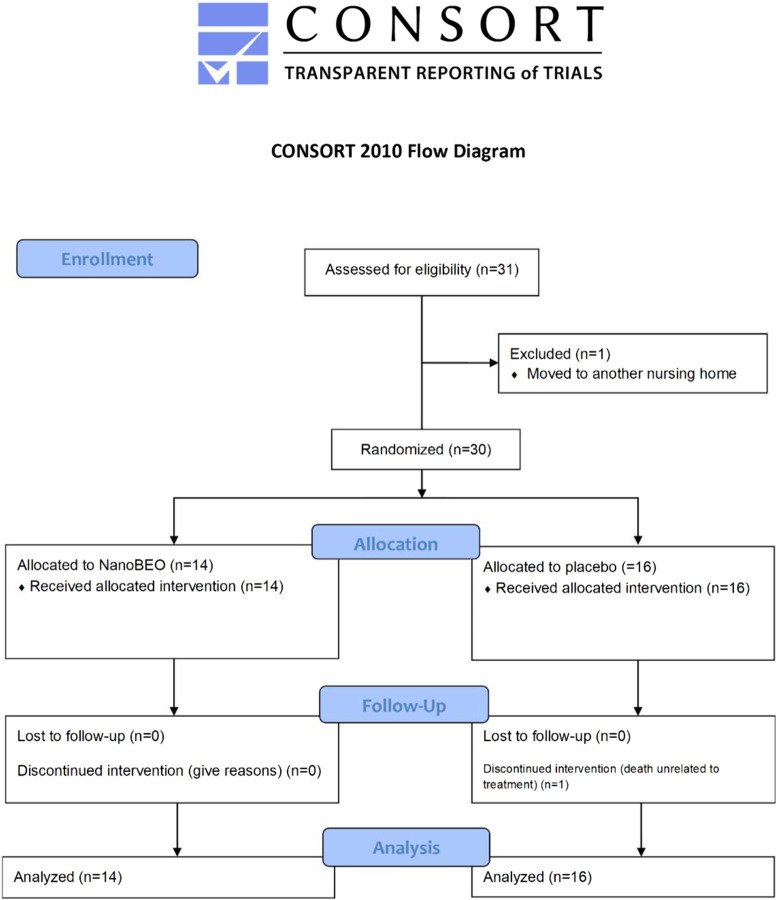
This pilot phase of the BRAINAID (NCT04321889) trial aimed to assess the effectiveness of the patented nanotechnological device NanoBEO in older (≥65 years) people with severe dementia. This randomized placebo-controlled trial, with quadruple masking that involved all operators and participants, followed the SPIRIT and CONSORT statements. A total of 29 patients completed the trial. The patients were randomly allocated in a 1:1 ratio to the NanoBEO or placebo group, and the corresponding product was applied on both arms once daily for 4 weeks, with a 4-week follow-up period. The primary endpoint was efficacy against agitation. The secondary endpoints were efficacy against agitation at follow-up and efficacy against pain. Any adverse events were reported, and biochemical analyses were performed.
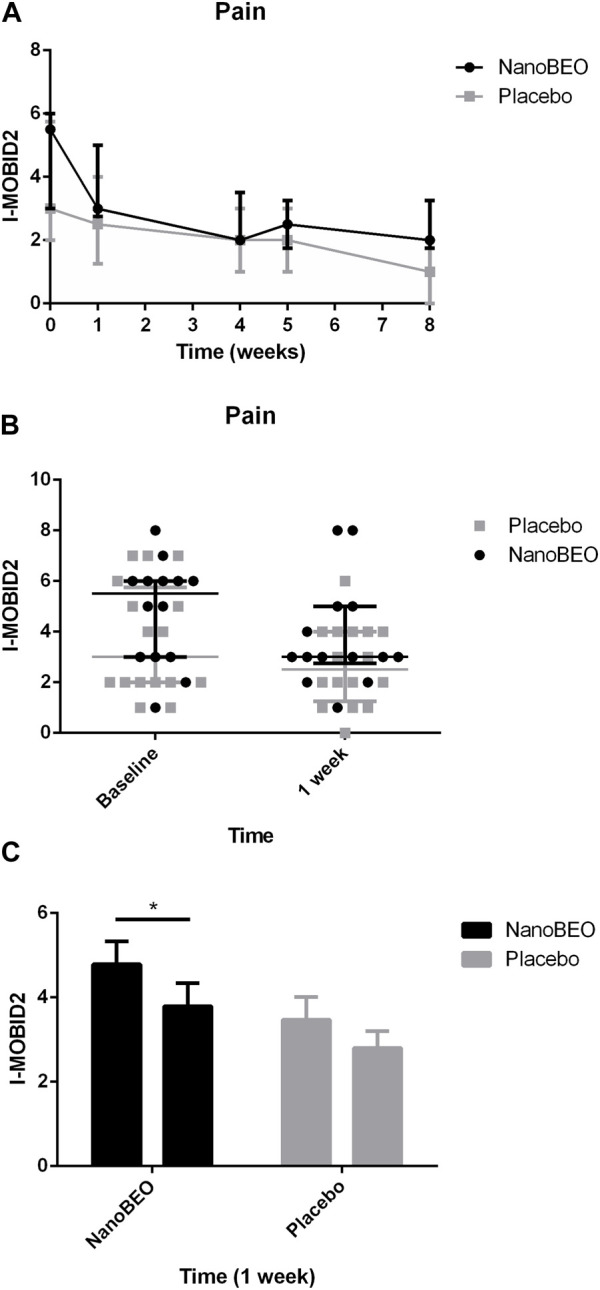
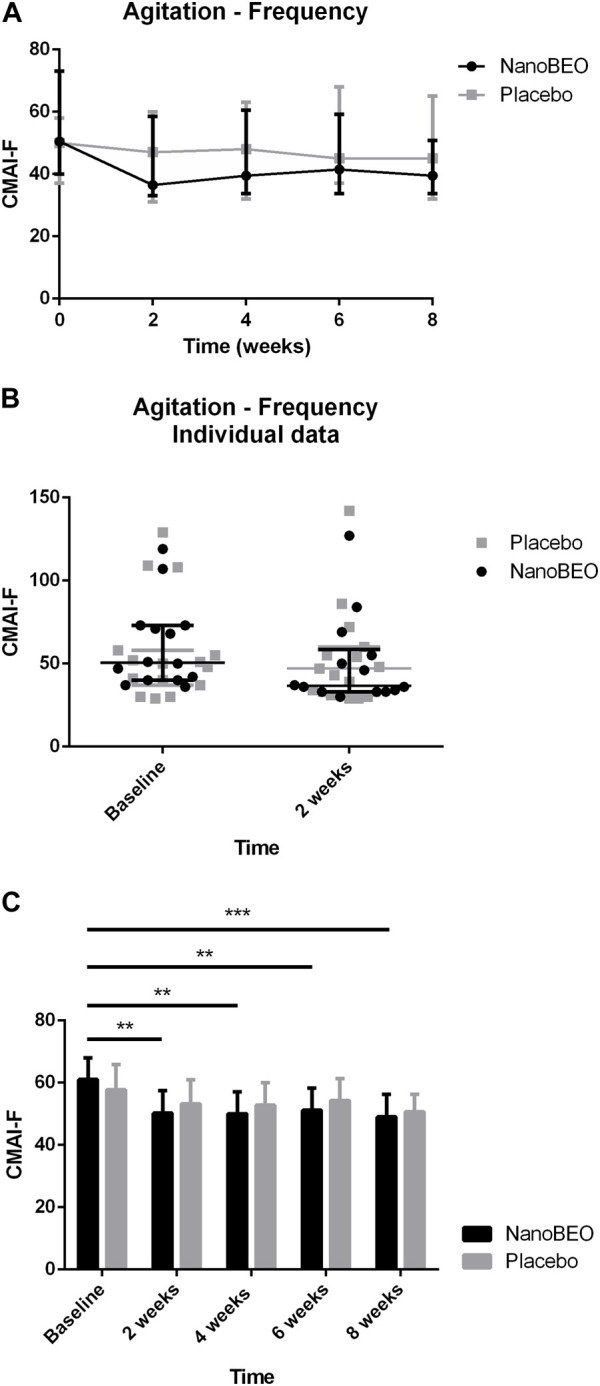
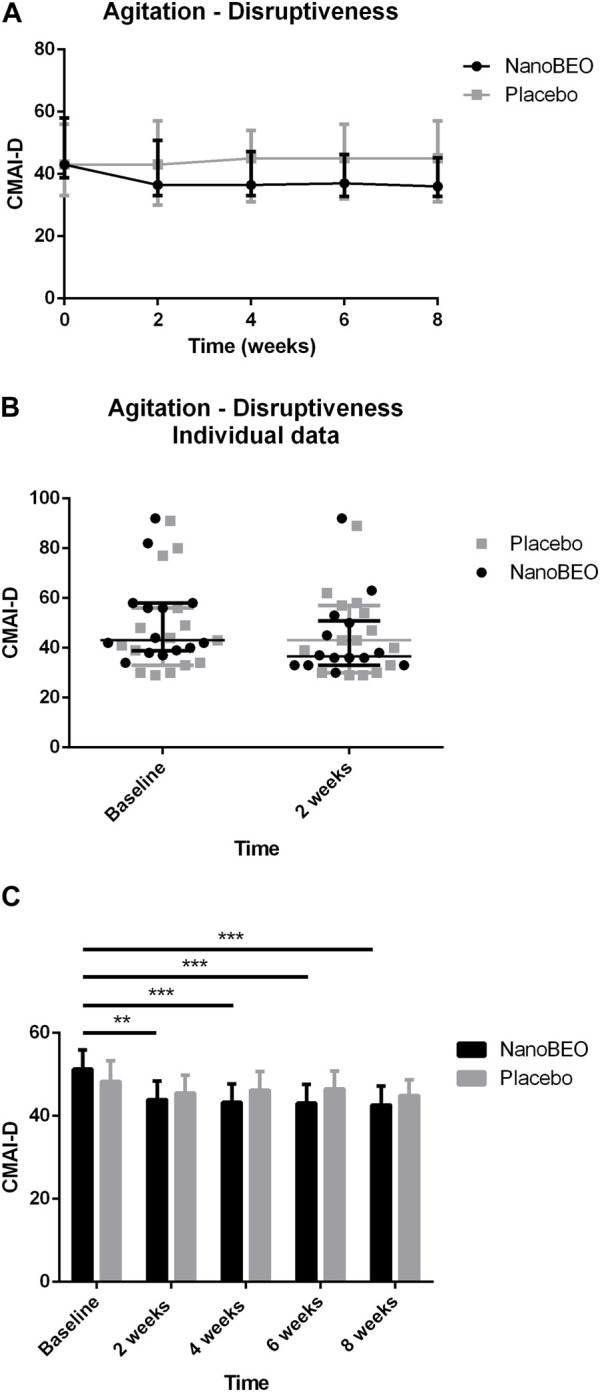
The NanoBEO intervention reduced the frequency (28%) and level of disruptiveness of agitated behaviors. The effect on frequency was statistically significant after 2 weeks of treatment. The efficacy of NanoBEO on agitated behaviors lasted for the entire 4-week treatment period. No additional psychotropic drugs were prescribed throughout the study duration. The results after 1 week of treatment demonstrated that NanoBEO had statistically significant analgesic efficacy (45.46% improvement in pain intensity). The treatment was well tolerated.
This trial investigated the efficacy of NanoBEO therapy in managing agitation and pain in dementia. No need for rescue medications was recorded, strengthening the efficacy of NanoBEO in prolonged therapy for advanced-stage dementia and the usefulness of the intervention in the deprescription of potentially harmful drugs. This study provided a robust rationale for the application of NanoBEO in a subsequent large-scale pivotal trial to allow clinical translation of the product. ClinicalTrials.gov, identifier NCT04321889.
据估计,全球有5740万人患有痴呆症,且该疾病的社会负担在持续加重。尽管仑卡奈单抗已获批且相关试验仍在进行,但对于影响99%患者的痴呆症行为和心理症状(BPSD),仍缺乏有效且安全的治疗方法。激越行为是最具致残性的BPSD之一,在养老院中的横断面患病率≥50%,是指个体因各种不适源而寻求帮助的行为,其中疼痛是一个关键因素。
BRAINAID试验(NCT04321889)的这一试点阶段旨在评估专利纳米技术设备NanoBEO对老年(≥65岁)重度痴呆患者的有效性。这项随机安慰剂对照试验采用了四重盲法,涉及所有操作人员和参与者,遵循了SPIRIT和CONSORT声明。共有29名患者完成了试验。患者按1:1的比例随机分配至NanoBEO组或安慰剂组,相应产品每天在双臂各应用一次,持续4周,并进行4周的随访。主要终点是针对激越行为的疗效。次要终点是随访时针对激越行为的疗效以及针对疼痛的疗效。记录任何不良事件,并进行生化分析。
NanoBEO干预降低了激越行为的频率(28%)和干扰程度。治疗2周后,对频率的影响具有统计学意义。NanoBEO对激越行为的疗效在整个4周治疗期内持续存在。在整个研究期间未额外开具精神药物。治疗1周后的结果表明,NanoBEO具有统计学意义的镇痛疗效(疼痛强度改善45.46%)。该治疗耐受性良好。
本试验研究了NanoBEO疗法在管理痴呆症激越行为和疼痛方面的疗效。未记录到需要急救药物的情况,这强化了NanoBEO在晚期痴呆症长期治疗中的疗效以及该干预措施在停用潜在有害药物方面的作用。本研究为在后续大规模关键试验中应用NanoBEO提供了有力依据,以便该产品能够实现临床转化。ClinicalTrials.gov标识符:NCT04321889。