Kishikawa Hiroshi, Takarabe Sakiko, Ichikawa Masataka, Sasaki Aya, Nishida Jiro
Gastroenterology, Tokyo Dental College Ichikawa General Hospital, Chiba, JPN.
Clinical Laboratory, Tokyo Dental College Ichikawa General Hospital, Chiba, JPN.
Cureus. 2024 Aug 15;16(8):e66910. doi: 10.7759/cureus.66910. eCollection 2024 Aug.
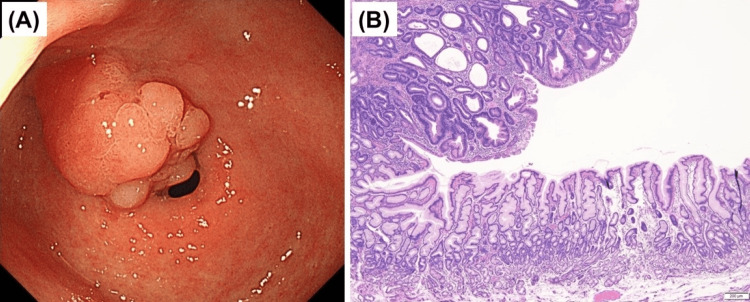
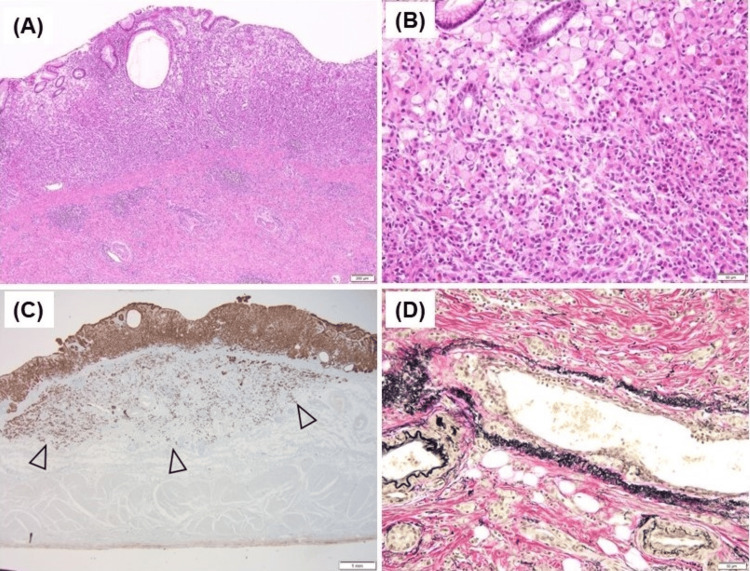
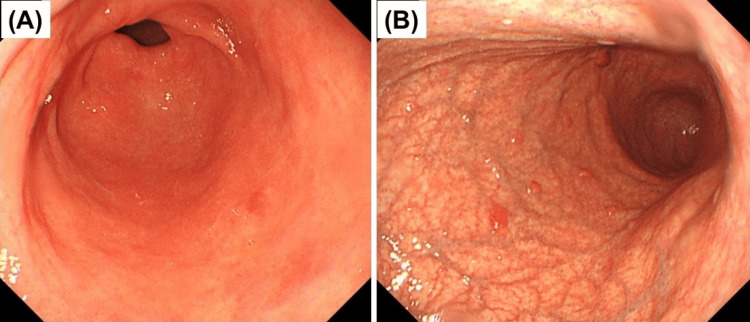
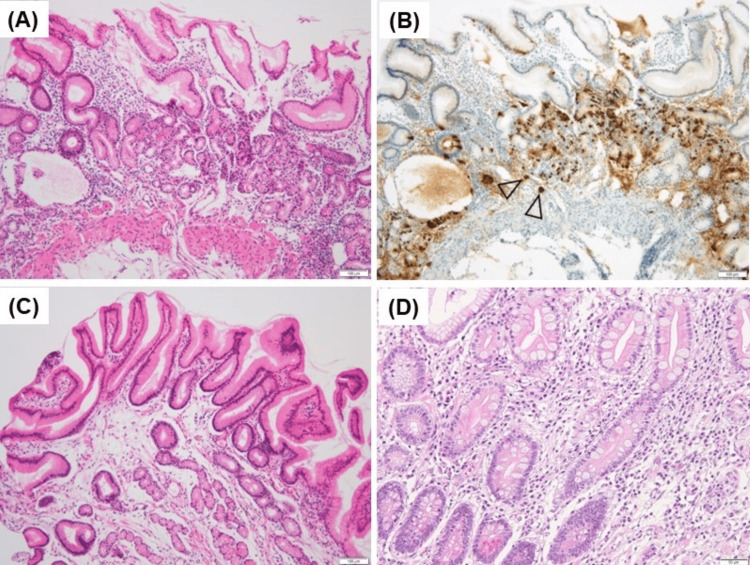
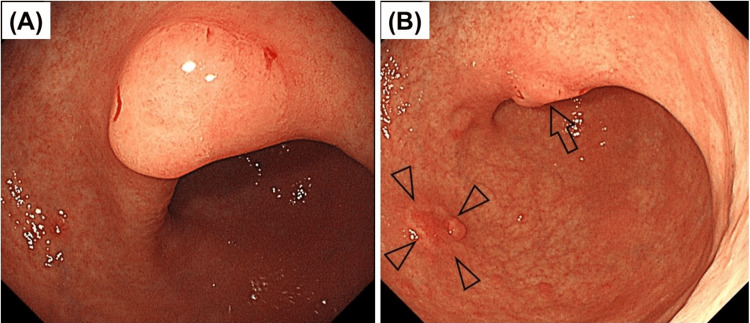
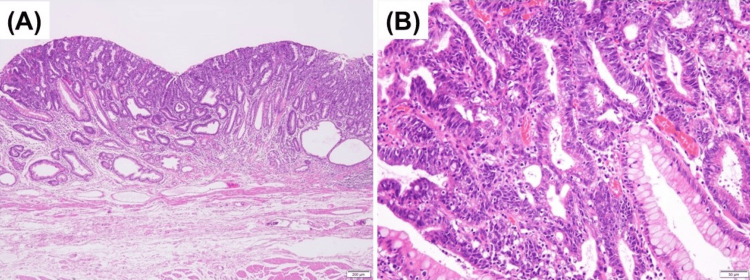
Recent studies have suggested that gastric cancer does not occur in patients with negative autoimmune gastritis (AIG); however, this notion is controversial. We encountered a case of gastric cancer associated with AIG in which infection was excluded. A woman in her 70s was referred to our hospital for endoscopic resection of an antral adenoma. An antibodies test, stool antigens test, culture, and histological analysis using Giemsa staining yielded negative results. AIG was suspected because the antrum was endoscopically normal but the body was severely atrophic, which are typical findings of AIG. Anti-parietal cell antibodies were 40-fold positive, the gastrin level was 2950 pg/ml, and the pepsinogen I level, pepsinogen II level, and pepsinogen I/II ratio were 6.3 ng/ml, 5.7 ng/ml, and 1.1, respectively. A pathological examination of the gastric body revealed severe oxyntic atrophy with hyperplasia of enterochromaffin-like cells, whereas the antrum showed no pyloric gland atrophy or inflammation. These findings indicated that the patient had -negative AIG. Four years later, a depressed lesion in the lower body and a flat lesion at the angle were observed; the former was a poorly cohesive carcinoma, and the latter was a differentiated adenocarcinoma. Surgical resection revealed that the lesion in the lower body was a poorly cohesive carcinoma invading the submucosa with vascular involvement, whereas the lesion in the angle was an intramucosal differentiated adenocarcinoma. A review of previous studies of gastric cancer with -negative AIG suggested that patients with histologically and serologically advanced gastritis are at high risk for carcinogenesis. Even in -negative cases, severe gastric mucosal atrophy in AIG cases may indicate a carcinogenic risk; therefore, surveillance for gastric cancer is especially recommended for these cases. Large cohort studies on the association between -negative AIG and gastric cancer are warranted.
近期研究表明,自身免疫性胃炎(AIG)阴性的患者不会发生胃癌;然而,这一观点存在争议。我们遇到一例与AIG相关的胃癌病例,排除了感染因素。一名70多岁的女性因胃窦腺瘤接受内镜切除被转诊至我院。抗体检测、粪便抗原检测、培养以及吉姆萨染色的组织学分析结果均为阴性。怀疑为AIG,因为内镜检查显示胃窦正常但胃体严重萎缩,这是AIG的典型表现。抗壁细胞抗体呈40倍阳性,胃泌素水平为2950 pg/ml,胃蛋白酶原I水平、胃蛋白酶原II水平及胃蛋白酶原I/II比值分别为6.3 ng/ml、5.7 ng/ml和1.1。胃体病理检查显示严重的泌酸腺萎缩伴嗜银样细胞增生,而胃窦未显示幽门腺萎缩或炎症。这些发现表明该患者为AIG阴性。四年后,观察到胃体下部有一凹陷性病变,胃角有一扁平病变;前者为低黏附性癌,后者为分化型腺癌。手术切除显示,胃体下部病变为低黏附性癌,侵犯黏膜下层并伴有血管受累,而胃角病变为黏膜内分化型腺癌。对以往AIG阴性的胃癌研究进行回顾发现,组织学和血清学上有进展性胃炎的患者发生癌变的风险较高。即使在AIG阴性的病例中,AIG患者严重的胃黏膜萎缩也可能提示致癌风险;因此,特别建议对这些病例进行胃癌监测。有必要开展关于AIG阴性与胃癌之间关联的大型队列研究。