Saltoun Karin, Yeo B T Thomas, Paul Lynn, Diedrichsen Jorn, Bzdok Danilo
The Neuro - Montreal Neurological Institute (MNI), McConnell Brain Imaging Centre, Department of Biomedical Engineering, Faculty of Medicine, School of Computer Science, McGill University, Montreal, Canada.
Mila - Quebec Artificial Intelligence Institute, Montreal, QC, Canada.
Res Sq. 2024 Aug 8:rs.3.rs-4798448. doi: 10.21203/rs.3.rs-4798448/v1.
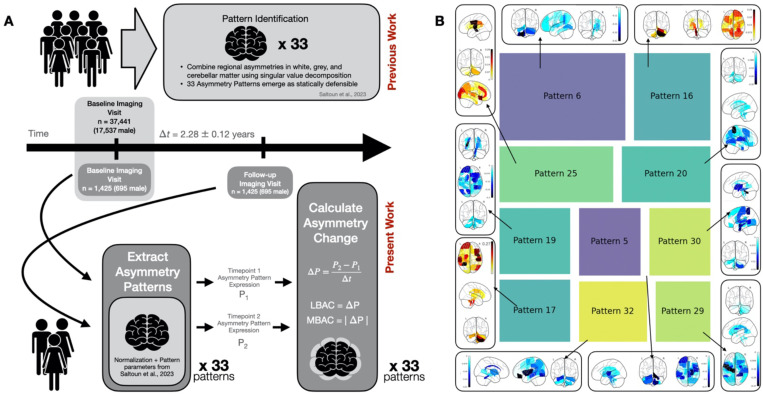
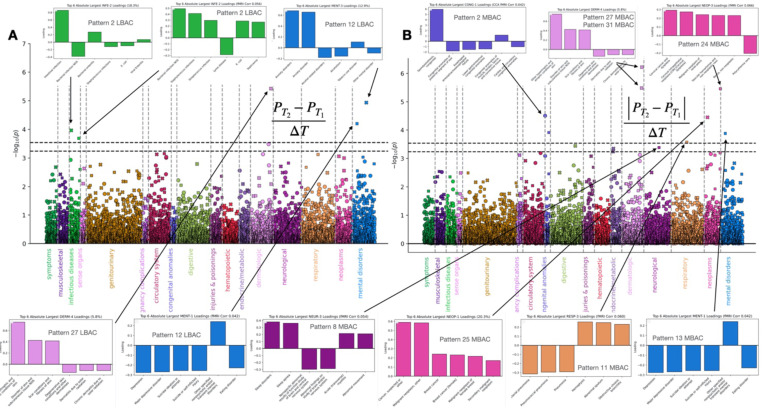
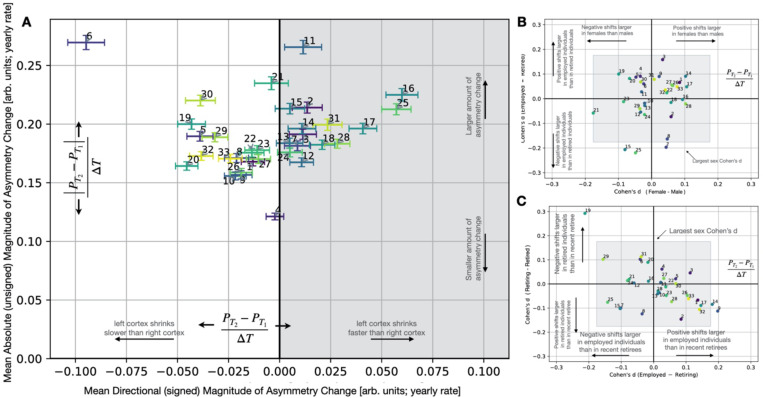
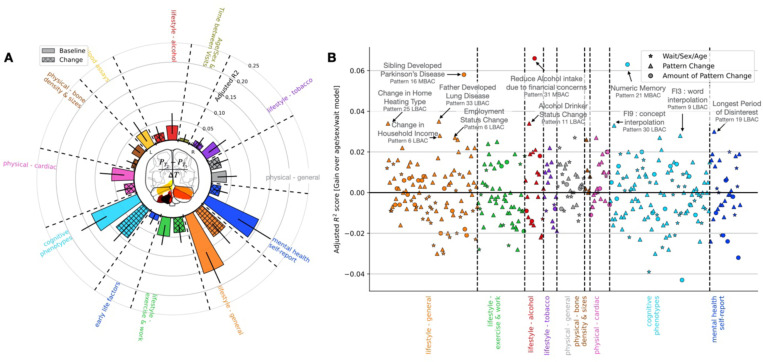
Human beings may have evolved the largest asymmetries of brain organization in the animal kingdom. Hemispheric left-vs-right specialization is especially pronounced in our species-unique capacities. Yet, brain asymmetry features appear to be strongly shaped by non-genetic influences. We hence charted the largest longitudinal brain-imaging adult resource, yielding evidence that brain asymmetry changes continuously in a manner suggestive of neural plasticity. In the UK Biobank population cohort, we demonstrate that asymmetry changes show robust associations across 959 distinct phenotypic variables spanning 11 categories. We also find that in brain asymmetry over years co-occur with among specific lifestyle markers. Finally, we reveal relevance of brain asymmetry changes to major disease categories across thousands of medical diagnoses. Our results challenge the tacit assumption that asymmetrical neural systems are highly conserved throughout adulthood.
人类可能进化出了动物界中最大的大脑组织不对称性。半球左右特化在我们物种独有的能力中尤为明显。然而,大脑不对称特征似乎受到非遗传影响的强烈塑造。因此,我们绘制了最大的纵向脑成像成人资源,得出证据表明大脑不对称以暗示神经可塑性的方式持续变化。在英国生物银行人群队列中,我们证明不对称变化在跨越11个类别的959个不同表型变量中显示出强烈关联。我们还发现,多年来大脑不对称的变化与特定生活方式标志物中的变化同时出现。最后,我们揭示了大脑不对称变化与数千种医学诊断中的主要疾病类别之间的相关性。我们的结果挑战了一种默认假设,即不对称神经系统在整个成年期高度保守。