Pac Cristina-Patricia, Munteanu Mihnea, Sánchez-González José-María, Rocha-de-Lossada Carlos, Mercea Nadina, Ferrari Francis, Stanca Horia T, Cosnita Dan Andrei Radu, Ionica Mihaela, Boruga Ovidiu, Danielescu Ciprian, Blidisel Alexandru
Department of Ophthalmology, "Victor Babes" University of Medicine and Pharmacy, 300041, Timisoara, Romania.
Oftalmo Sensory-Tumor Research Center-ORL (EYE-ENT), Timisoara, Romania.
Ophthalmol Ther. 2024 Oct;13(10):2715-2730. doi: 10.1007/s40123-024-01017-7. Epub 2024 Aug 16.
To evaluate the long-term effects of intense pulsed light (IPL) therapy on patients with dry eye disease (DED) associated with meibomian gland dysfunction (MGD).
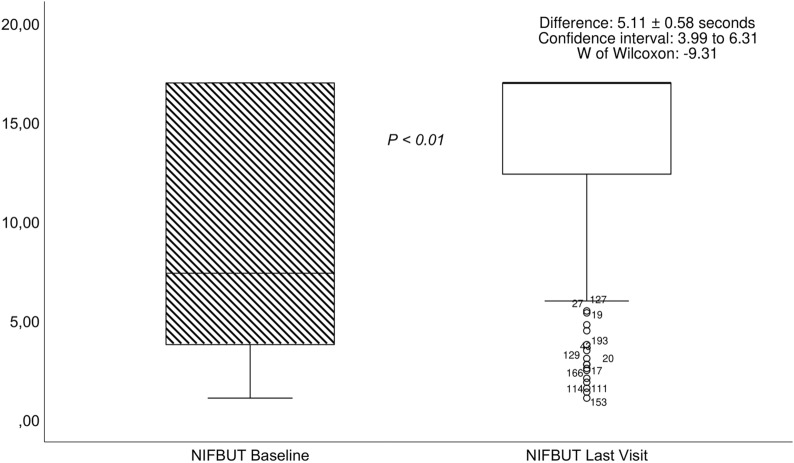
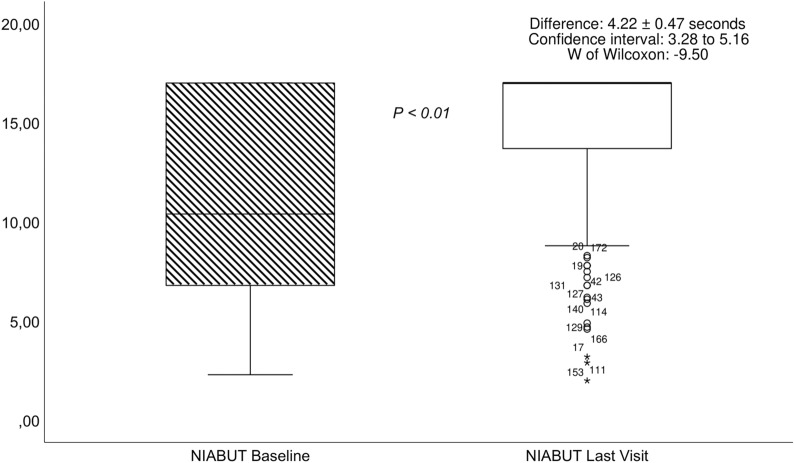
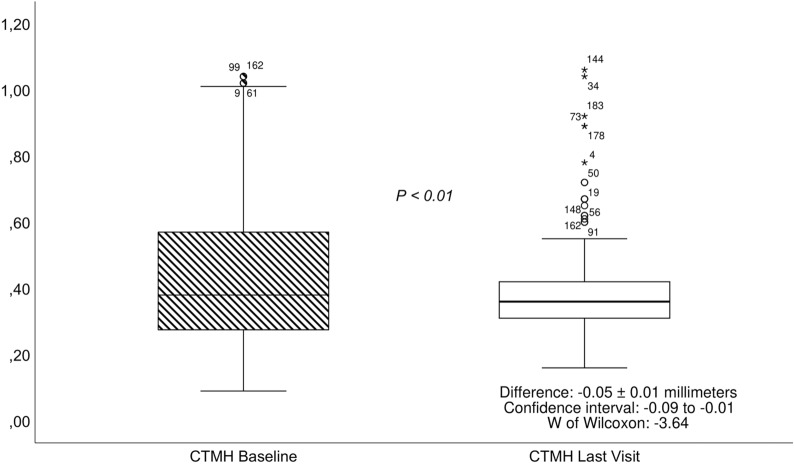
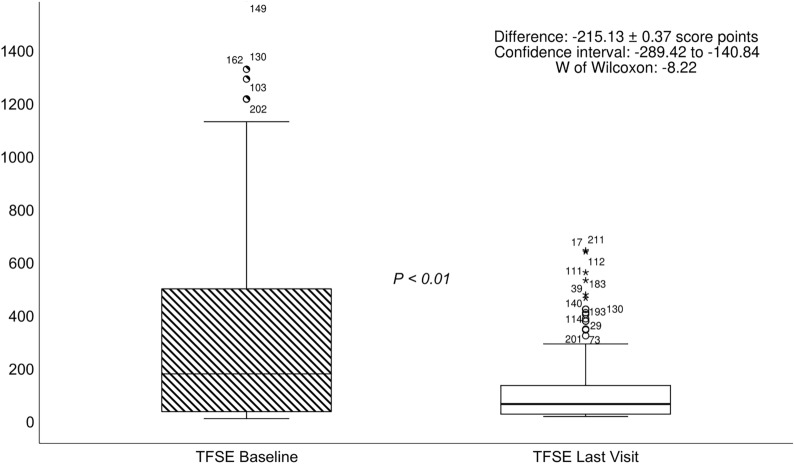
A retrospective case series was performed with 110 participants undergoing IPL therapy. Assessments included the eye fitness test (EFT) to gauge subjective symptoms, along with objective measures using the Tearcheck device (ESW Vision, Houdan, France) noninvasive first breakup time (NIFBUT), noninvasive average breakup time (NIABUT), central tear meniscus height (CTMH), thinnest tear meniscus height (TTMH), and ocular surface inflammatory risk evaluation (OSIE) assessed using the SCHWIND SIRIUS device (SCHWIND eye-tech-solutions GmbH, Kleinostheim, Germany).
This study documented significant improvements in subjective and objective symptoms associated with DED and MGD. Subjective symptoms measured by the EFT showed an average increase of 9.74 points (range -10 to 28, standard deviation [SD] ± 7.54), indicating reduced symptoms. Objective measures of tear film stability, represented by NIABUT, increased by an average of 4.04 s (range -15.00 to 14.40, SD ± 4.91). Tear film stability evaluation (TFSE) scores decreased by 229.12 points on average (range -1775 to 528, SD ± 384.94), suggesting enhanced tear film stability. OSIE type 1 showed a reduction in inflammation, with a percentage decrease of 4.98% (range -45 to 5, SD ± 7.33). Additionally, OSIE capture time decreased by 3.25 s on average (range -27 to 22, SD ± 10.35), further indicating an improvement in ocular surface health.
IPL therapy was shown to be a promising, noninvasive approach for improving quality of life in patients with DED by effectively managing symptoms and stabilizing tear film. The findings support the use of IPL as a sustainable treatment modality for DED associated with MGD.
评估强脉冲光(IPL)疗法对睑板腺功能障碍(MGD)相关干眼疾病(DED)患者的长期影响。
对110名接受IPL治疗的参与者进行回顾性病例系列研究。评估包括用于评估主观症状的眼部健康测试(EFT),以及使用Tearcheck设备(法国胡丹ESW视觉公司)进行的客观测量,即无创首次泪膜破裂时间(NIFBUT)、无创平均泪膜破裂时间(NIABUT)、中央泪河高度(CTMH)、最薄泪河高度(TTMH),以及使用施温德天狼星设备(德国克莱诺施泰姆施温德眼科技术解决方案有限公司)评估的眼表炎症风险评估(OSIE)。
本研究记录了与DED和MGD相关的主观和客观症状的显著改善。通过EFT测量的主观症状平均增加了9.74分(范围为-10至28,标准差[SD]±7.54),表明症状减轻。以NIABUT表示的泪膜稳定性客观测量值平均增加了4.04秒(范围为-15.00至14.40,SD±4.91)。泪膜稳定性评估(TFSE)分数平均下降了229.12分(范围为-1775至528,SD±384.94),表明泪膜稳定性增强。OSIE 1型炎症有所减轻,百分比下降了4.98%(范围为-45至5,SD±7.33)。此外,OSIE捕捉时间平均减少了3.25秒(范围为-27至22,SD±10.35),进一步表明眼表健康状况有所改善。
IPL疗法被证明是一种有前景的无创方法,可通过有效管理症状和稳定泪膜来改善DED患者的生活质量。这些发现支持将IPL用作与MGD相关的DED的可持续治疗方式。