State Key Laboratory of Molecular Oncology, National Cancer Center/National Clinical Research Center for Cancer/Cancer Hospital, Chinese Academy of Medical Sciences and Peking Union Medical College, Beijing, China.
Department of Breast Surgical Oncology, National Cancer Center/National Clinical Research Center for Cancer/Cancer Hospital, Chinese Academy of Medical Sciences and Peking Union Medical College, Beijing, China.
Cell Death Dis. 2024 Aug 17;15(8):597. doi: 10.1038/s41419-024-06942-w.
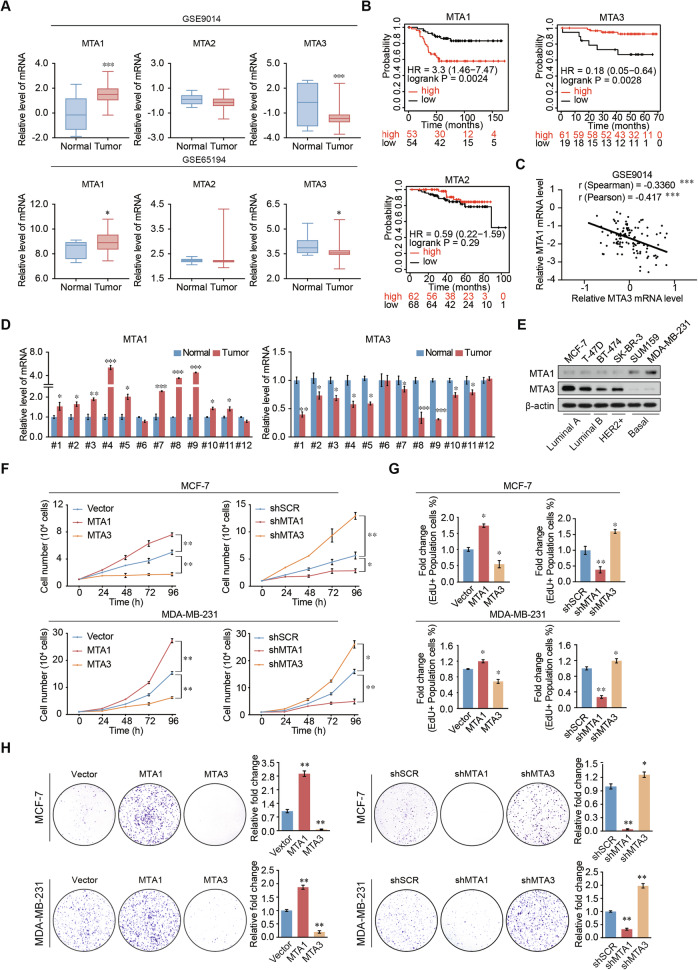
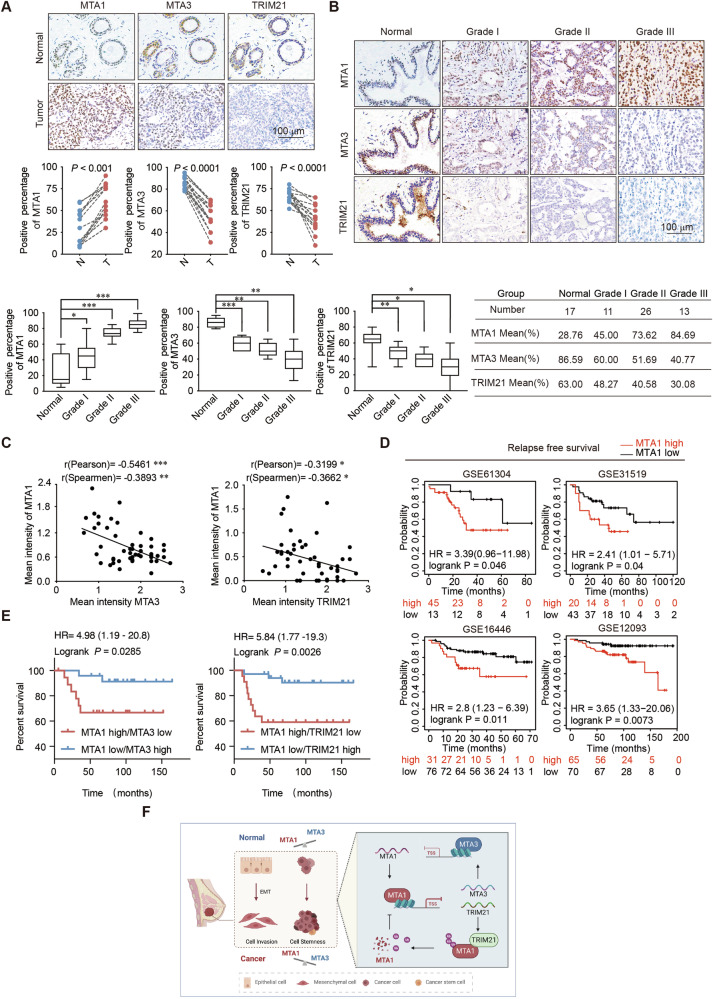
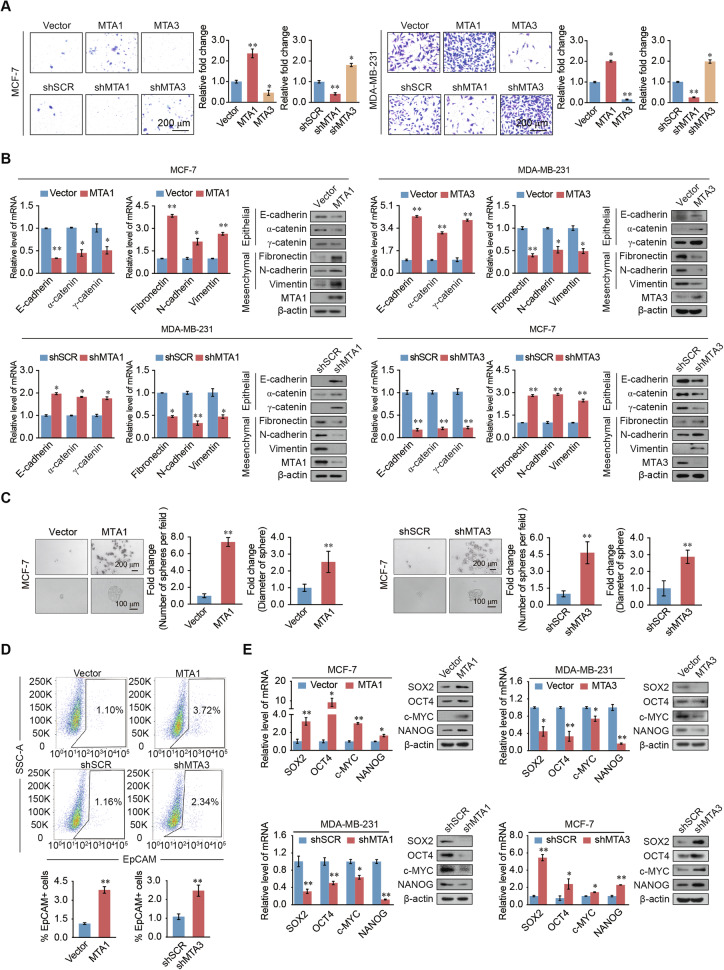
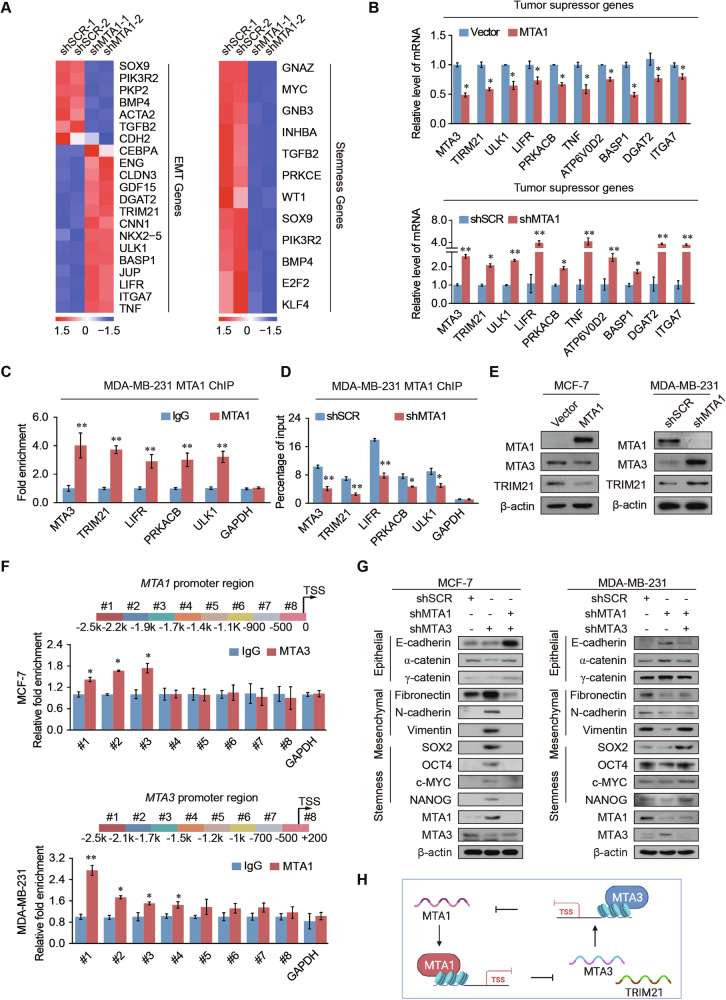
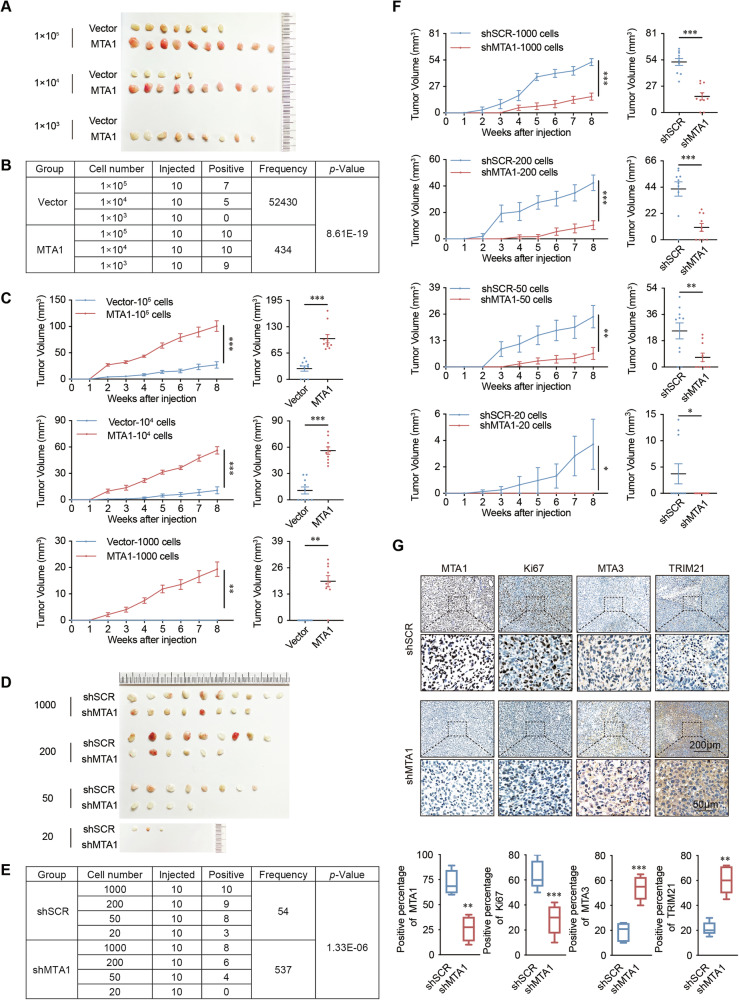
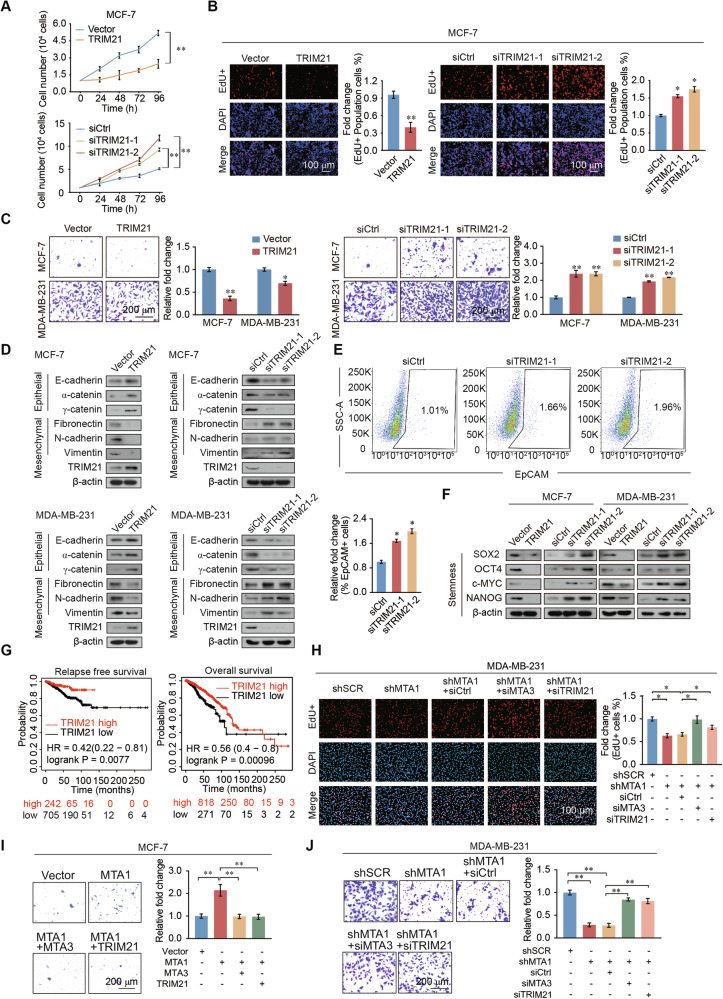
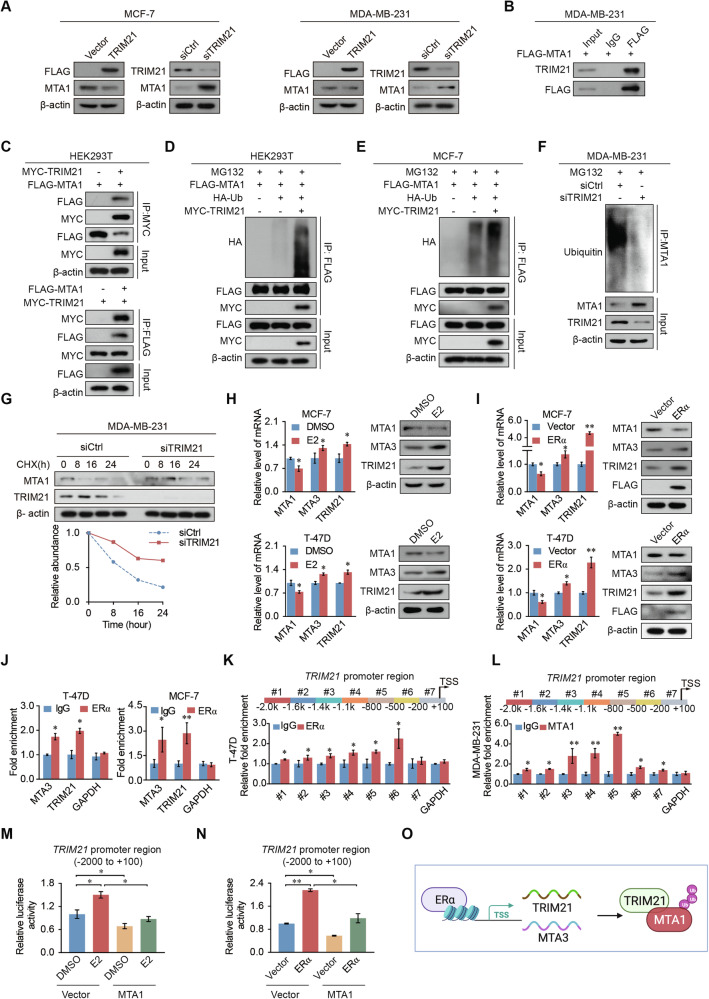
The metastasis-associated protein (MTA) family plays a crucial role in the development of breast cancer, a common malignancy with a high incidence rate among women. However, the mechanism by which each member of the MTA family contributes to breast cancer progression is poorly understood. In this study, we aimed to investigate the roles of MTA1, MTA3, and tripartite motif-containing 21 (TRIM21) in the proliferation, invasion, epithelial-mesenchymal transition (EMT), and stem cell-like properties of breast cancer cells in vivo and in vitro. The molecular mechanisms of the feedback loop between MTA1 and MTA3/TRIM21 regulated by estrogen were explored using Chromatin immunoprecipitation (ChIP), luciferase reporter, immunoprecipitation (IP), and ubiquitination assays. These findings demonstrated that MTA1 acts as a driver to promote the progression of breast cancer by repressing the transcription of tumor suppressor genes, including TRIM21 and MTA3. Conversely, MTA3 inhibited MTA1 transcription and TRIM21 regulated MTA1 protein stability in breast cancer. Estrogen disrupted the balance between MTA1 and MTA3, as well as between MTA1 and TRIM21, thereby affecting stemness and the EMT processes in breast cancer. These findings suggest that MTA1 plays a vital role in stem cell fate and the hierarchical regulatory network of EMT through negative feedback loops with MTA3 or TRIM21 in response to estrogen, supporting MTA1, MTA3, and TRIM21 as potential prognostic biomarkers and MTA1 as a treatment target for future breast cancer therapies.
转移相关蛋白(MTA)家族在乳腺癌的发生发展中起着至关重要的作用,乳腺癌是一种女性中发病率较高的常见恶性肿瘤。然而,MTA 家族的每个成员如何促进乳腺癌的进展,其机制尚不清楚。在这项研究中,我们旨在研究 MTA1、MTA3 和三结构域包含蛋白 21(TRIM21)在乳腺癌细胞体内和体外增殖、侵袭、上皮间质转化(EMT)和干细胞样特性中的作用。通过染色质免疫沉淀(ChIP)、荧光素酶报告、免疫沉淀(IP)和泛素化测定等方法探讨了 MTA1 和 MTA3/TRIM21 受雌激素调控的反馈环的分子机制。这些发现表明,MTA1 作为一种驱动因子,通过抑制肿瘤抑制基因,包括 TRIM21 和 MTA3 的转录,促进乳腺癌的进展。相反,MTA3 抑制 MTA1 转录,TRIM21 调节 MTA1 蛋白在乳腺癌中的稳定性。雌激素破坏了 MTA1 和 MTA3 之间以及 MTA1 和 TRIM21 之间的平衡,从而影响乳腺癌的干性和 EMT 过程。这些发现表明,MTA1 通过与 MTA3 或 TRIM21 形成负反馈回路,对雌激素作出反应,在干细胞命运和 EMT 的层次调节网络中发挥重要作用,支持 MTA1、MTA3 和 TRIM21 作为潜在的预后生物标志物和 MTA1 作为未来乳腺癌治疗的治疗靶点。