Department of Clinical Laboratory, Zhejiang Hospital of Integrated Traditional Chinese and Western Medicine, Hangzhou, Zhejiang, China.
Department of Respiratory and Critical Care Medicine, Zhejiang Hospital of Integrated Traditional Chinese and Western Medicine, Hangzhou, Zhejiang, China.
Clin Respir J. 2024 Aug;18(8):e13826. doi: 10.1111/crj.13826.
Traditional Chinese medicinal plant, safflower, shows effective for treating pulmonary arterial hypertension (PAH), yet the underlying mechanisms remain largely unexplored. This study is aimed at exploring the potential molecular mechanisms of safflower in the treatment of PAH.
Network pharmacology approach and molecular docking were applied to identify the core active compounds, therapeutic targets, and potential signaling pathways of safflower against PAH. Meanwhile, high-performance liquid chromatography (HPLC) assay was performed to determine the core compounds from safflower. Further, the mechanism of action of safflower on PAH was verified by in vivo and in vitro experiments.
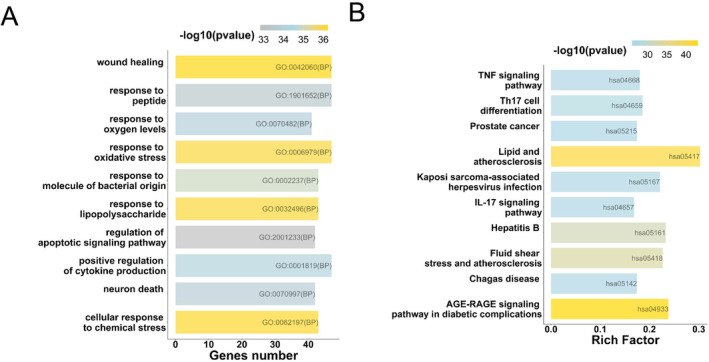
A total of 15 active compounds and 177 targets were screened from safflower against PAH. Enrichment analysis indicated that these therapeutic targets were mainly involved in multiple key pathways, such as TNF signaling pathway and Th17 cell differentiation. Notably, molecular docking revealed that quercetin (core compound in safflower) displayed highest binding capacity with NLRP3. In vivo, safflower exerted therapeutic effects on PAH by inhibiting right ventricular hypertrophy, inflammatory factor release, and pulmonary vascular remodeling. Mechanistically, it significantly reduced the expression of proangiogenesis-related factors (MMP-2, MMP-9, Collagen 1, and Collagen 3) and NLRP3 inflammasome components (NLRP3, ASC, and Caspase-1) in PAH model. Similarly, these results were observed in vitro. Besides, we further confirmed that NLRP3 inhibitor had the same therapeutic effect as safflower in vitro.
Our findings suggest that safflower mitigates PAH primarily by inhibiting NLRP3 inflammasome activation. This provides novel insights into the potential use of safflower as an alternative therapeutic approach for PAH.
传统中药红花对肺动脉高压(PAH)有显著疗效,但作用机制仍未完全阐明。本研究旨在探讨红花治疗 PAH 的潜在分子机制。
采用网络药理学方法和分子对接技术,鉴定红花治疗 PAH 的核心活性化合物、治疗靶点和潜在信号通路。同时,采用高效液相色谱法(HPLC)测定红花中的核心化合物。进一步通过体内和体外实验验证红花治疗 PAH 的作用机制。
从红花治疗 PAH 中筛选出 15 种活性化合物和 177 个靶点。富集分析表明,这些治疗靶点主要涉及 TNF 信号通路和 Th17 细胞分化等多个关键通路。值得注意的是,分子对接显示,槲皮素(红花中的核心化合物)与 NLRP3 具有最高的结合能力。体内实验表明,红花通过抑制右心室肥厚、炎症因子释放和肺血管重构对 PAH 发挥治疗作用。机制上,它显著降低了 PAH 模型中促血管生成相关因子(MMP-2、MMP-9、胶原 1 和胶原 3)和 NLRP3 炎症小体成分(NLRP3、ASC 和 Caspase-1)的表达。同样,在体外也观察到了这些结果。此外,我们进一步证实 NLRP3 抑制剂在体外也具有与红花相同的治疗效果。
本研究结果表明,红花通过抑制 NLRP3 炎症小体的激活来减轻 PAH,为红花作为 PAH 替代治疗方法的潜在用途提供了新的见解。