Hu Tingting, Zhou Zhan, Zha Jiajia, Williams Gareth R, Wu Zhikang, Zhao Wei, Shen Weicheng, Li Hai, Weng Xisheng, Liang Ruizheng, Tan Chaoliang
State Key Laboratory of Chemical Resource Engineering, Beijing Advanced Innovation Center for Soft Matter Science and Engineering, Beijing University of Chemical Technology, Beijing 100029, China.
College of Chemistry and Chemical Engineering, Henan Key Laboratory of Function-Oriented Porous Materials, Luoyang Normal University, Luoyang 471934, China.
Fundam Res. 2022 Jun 11;4(4):926-933. doi: 10.1016/j.fmre.2022.06.001. eCollection 2024 Jul.
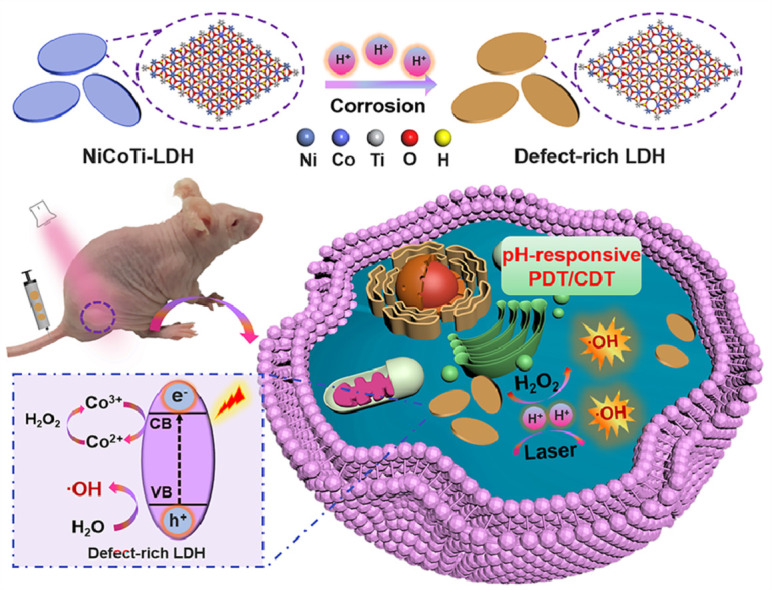
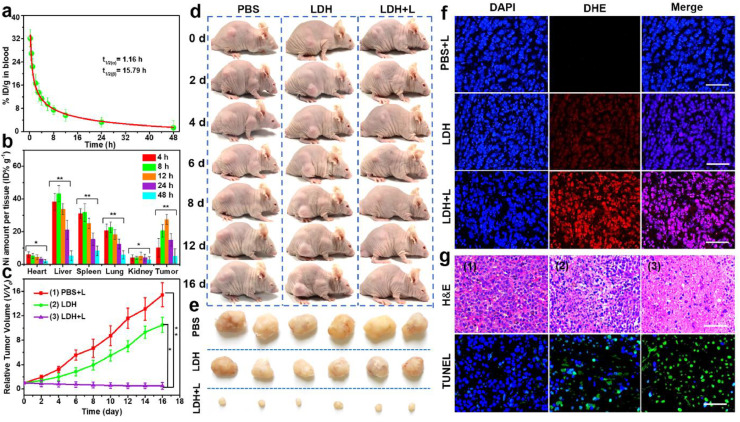
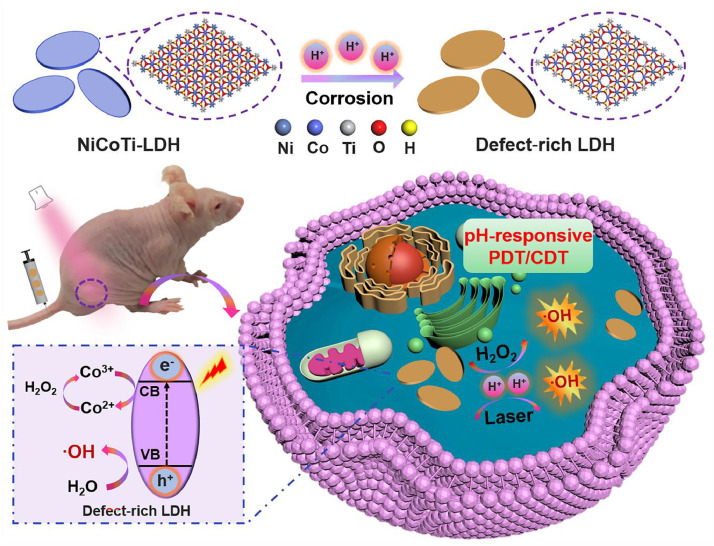
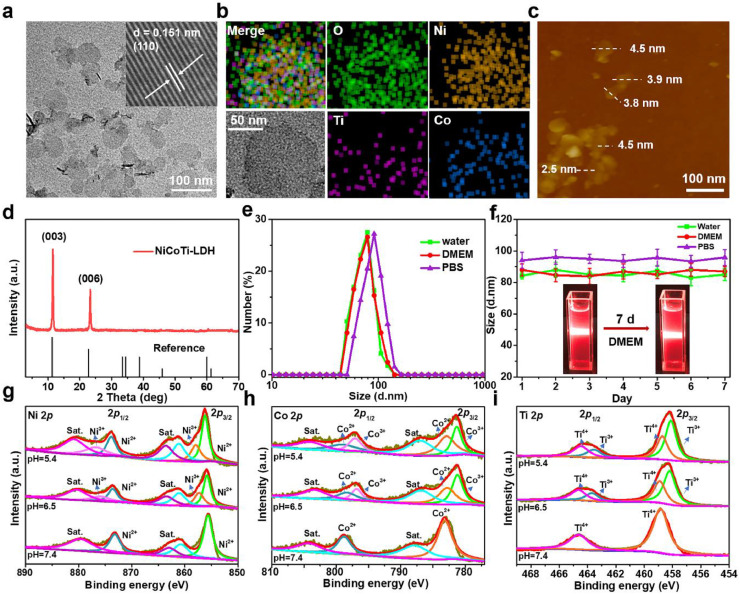
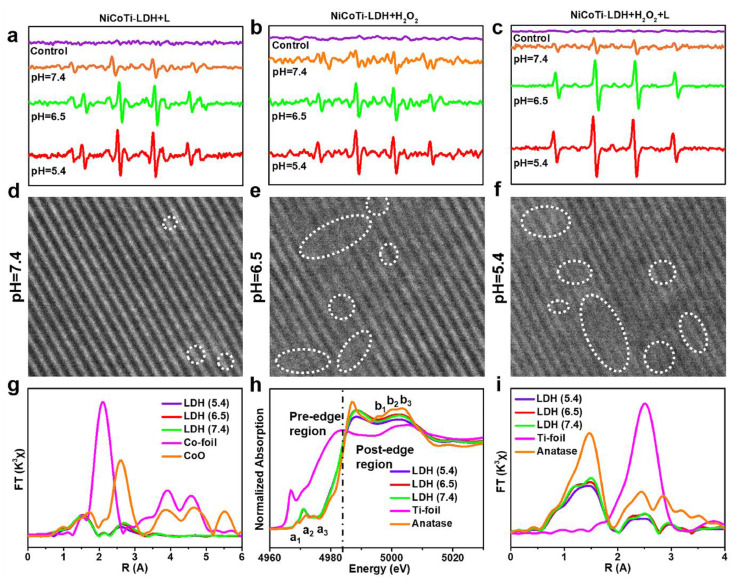
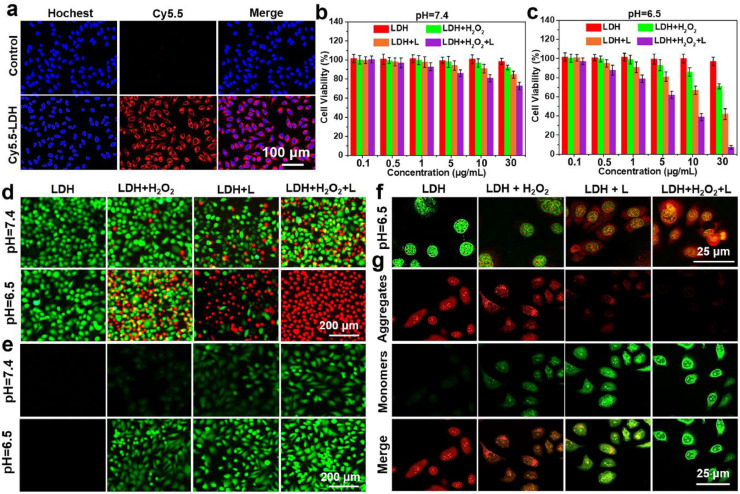
Combining photodynamic therapy (PDT) with chemodynamic therapy (CDT) has been proven to be a promising strategy to improve the treatment efficiency of cancer, because of the synergistic therapeutic effect arising between the two modalities. Herein, we report an inorganic nanoagent based on ternary NiCoTi-layered double hydroxide (NiCoTi-LDH) nanosheets to realize highly efficient photodynamic/chemodynamic synergistic therapy. The NiCoTi-LDH nanosheets exhibit oxygen vacancy-promoted electron-hole separation and photogenerated hole-induced O-independent reactive oxygen species (ROS) generation under acidic circumstances, realizing pH-responsive PDT. Moreover, due to the effective conversion between Co and Co caused by photogenerated electrons, the NiCoTi-LDH nanosheets catalyze the release of hydroxyl radicals (·OH) from HO through Fenton reactions, resulting in CDT. Laser irradiation enhances the catalyzed ability of the NiCoTi-LDH nanosheets to promote the ROS generation, resulting in a better performance than TiO nanoparticles at pH 6.5. and experimental results show conclusively that NiCoTi-LDH nanosheets plus irradiation lead to efficient cell apoptosis and significant inhibition of tumor growth. This study reports a new pH-responsive inorganic nanoagent with oxygen vacancy-promoted photodynamic/chemodynamic synergistic performance, offering a potentially appealing clinical strategy for selective tumor elimination.
将光动力疗法(PDT)与化学动力疗法(CDT)相结合已被证明是一种提高癌症治疗效率的有前景的策略,因为这两种疗法之间会产生协同治疗效果。在此,我们报道了一种基于三元镍钴钛层状双氢氧化物(NiCoTi-LDH)纳米片的无机纳米剂,以实现高效的光动力/化学动力协同治疗。NiCoTi-LDH纳米片在酸性环境下表现出氧空位促进的电子-空穴分离以及光生空穴诱导的非氧依赖性活性氧(ROS)生成,从而实现pH响应性光动力疗法。此外,由于光生电子导致的钴离子(Co)和钴离子(Co)之间的有效转化,NiCoTi-LDH纳米片通过芬顿反应催化从过氧化氢(H₂O₂)中释放羟基自由基(·OH),从而实现化学动力疗法。激光照射增强了NiCoTi-LDH纳米片促进ROS生成的催化能力,在pH 6.5时表现出比二氧化钛(TiO₂)纳米颗粒更好的性能。实验结果确凿地表明,NiCoTi-LDH纳米片加照射可导致有效的细胞凋亡并显著抑制肿瘤生长。本研究报道了一种具有氧空位促进的光动力/化学动力协同性能的新型pH响应性无机纳米剂,为选择性肿瘤消除提供了一种潜在有吸引力的临床策略。