Chen Xiaodong, Xue Changguo, Li Kuanxin, Mu Kecheng, Yao Cheng, Wang Zhiyan, Chen Hongzhi, Zhang Jun
Anhui Key Laboratory of Tissue Transformation, Department of Orthopedics, The First Affiliated Hospital of Bengbu Medical University, Bengbu Medical University, Bengbu, Anhui, China.
School of Material Science and Engineering, Anhui University of Science and Technology, Huainan, China.
Front Bioeng Biotechnol. 2024 Aug 2;12:1438839. doi: 10.3389/fbioe.2024.1438839. eCollection 2024.
The main purpose of this study was to explore the mechanical properties of the anterior cruciate ligament and its attachments following reconstruction with the all-inside technique after anterior cruciate ligament injury.
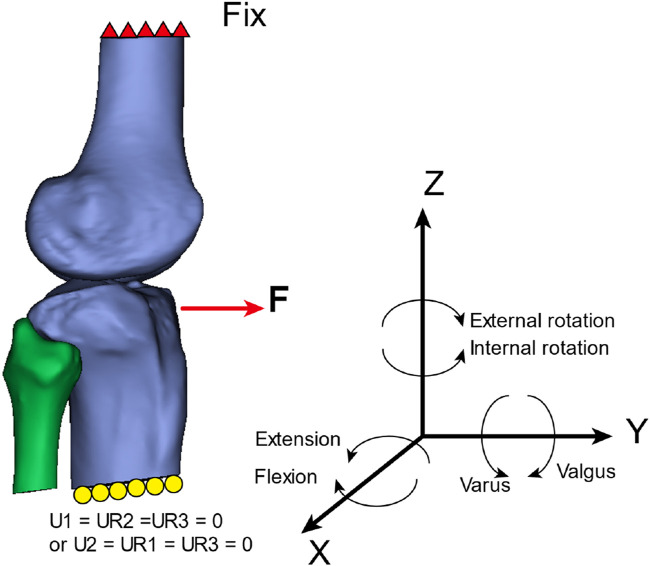
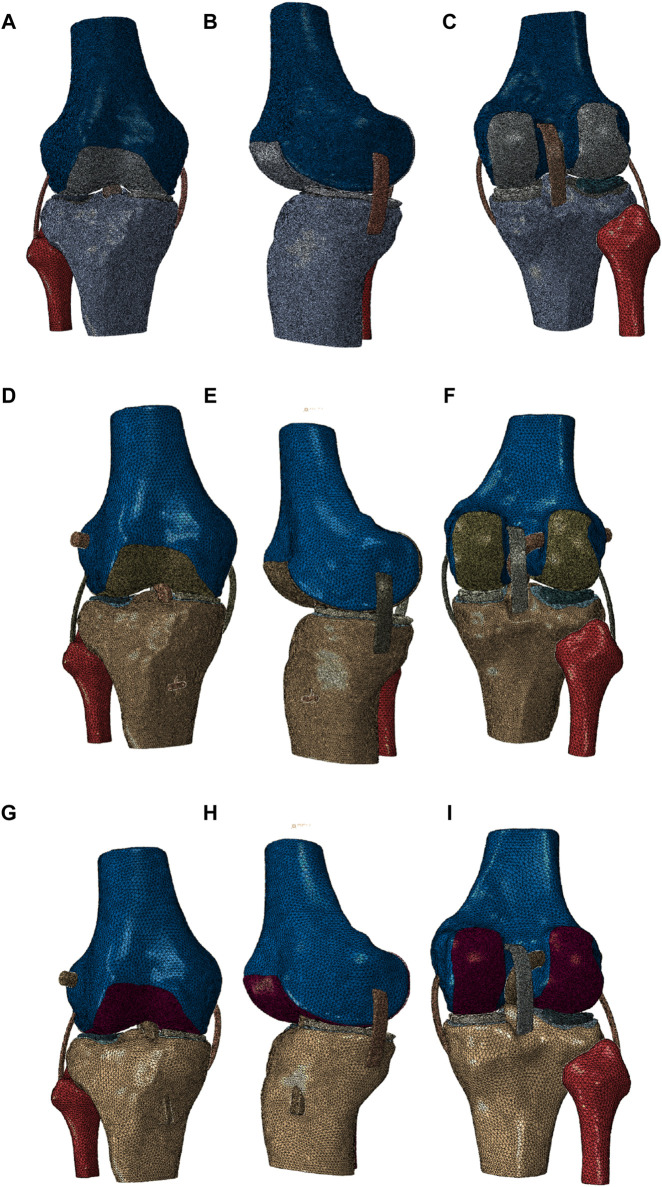
Knee joint computed tomography data were collected from healthy volunteers, and knee joint models were created using Mimics software. A normal knee joint model, an all-inside reconstructed anterior cruciate ligament model, and a traditional reconstructed anterior cruciate ligament model were established. A tensile force of 134 N and a bending moment of 5 N/m were applied at the anterior aspect of the proximal tibia in these three models. The knee joint was subjected to external rotation, internal rotation, varus, valgus, flexion, and extension under this bending moment. The magnitude and distribution of stress on the ligament or graft and the magnitude and distribution of stress on the graft attachments were observed under different loading conditions.
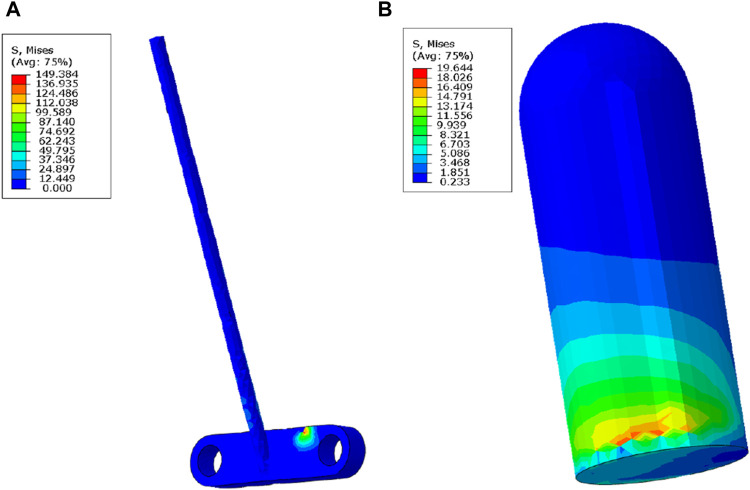
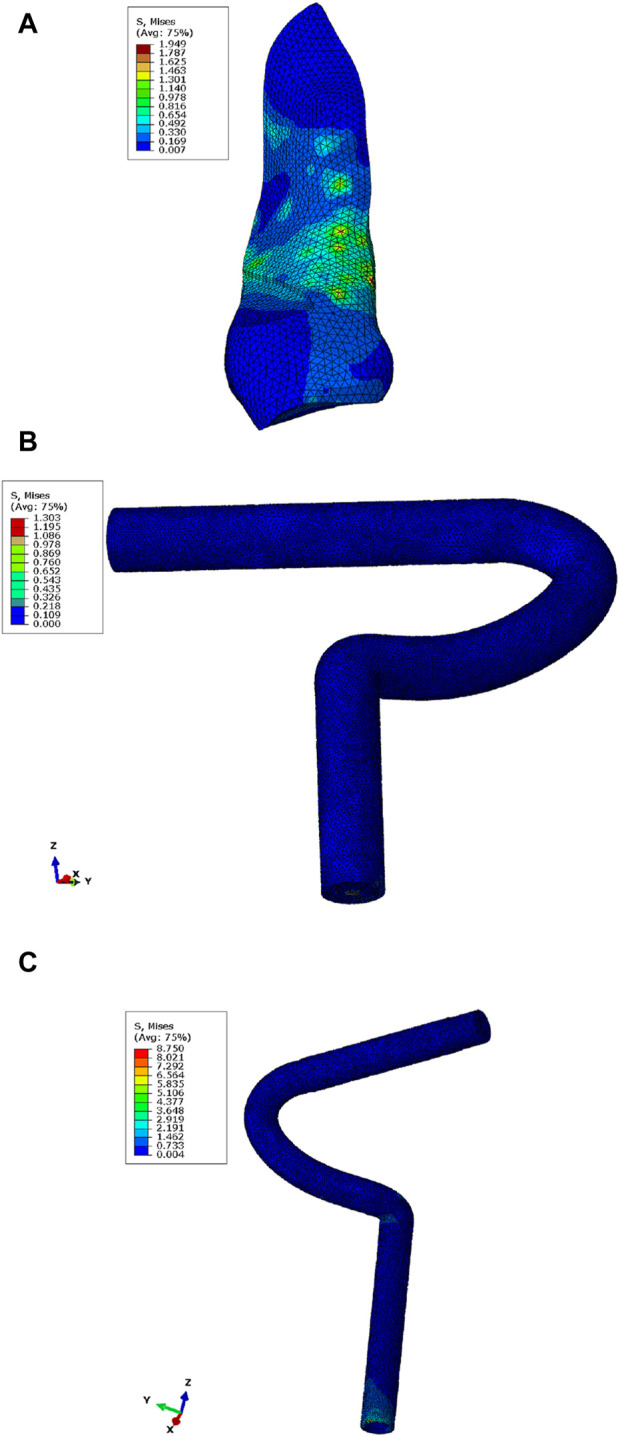
Under different external forces, the maximum stress on the ligament in the normal model fluctuated from 1.949 to 18.302 MPa, with an uncertain distribution of maximum stress. The maximum stress on the graft in the all-inside reconstructed anterior cruciate ligament model fluctuated from 0.705 to 3.465 MPa and was mainly distributed at the junction of the graft and the tibial footprint. In the traditional reconstructed anterior cruciate ligament model, the maximum stress on the graft fluctuated from 5.012 to 59.269 MPa and was primarily distributed at the junction of the interference screw and the graft. The concentration of stress on the loop and plate in the all-inside reconstructed anterior cruciate ligament model fluctuated from 70.461 to 346.363 MPa, with maximum stress distributed at the junction of the loop and the tibial surface. The maximum stress on the interference screw in the traditional reconstructed anterior cruciate ligament model fluctuated from 10.184 to 92.298 MPa, with maximum stress primarily distributed at the end of the interference screw.
Under different external forces, the graft used in all-inside anterior cruciate ligament reconstruction is subjected to fewer external forces than that used in traditional anterior cruciate ligament reconstruction, which may indicate a relatively stable mechanical environment. The strength of the loop and plate can theoretically tolerate daily knee joint movements of patients without injury.
本研究的主要目的是探讨前交叉韧带损伤后采用全内置技术重建后前交叉韧带及其附着点的力学性能。
收集健康志愿者的膝关节计算机断层扫描数据,使用Mimics软件创建膝关节模型。建立正常膝关节模型、全内置重建前交叉韧带模型和传统重建前交叉韧带模型。在这三个模型的胫骨近端前方施加134 N的拉力和5 N/m的弯矩。在该弯矩作用下,膝关节进行外旋、内旋、内翻、外翻、屈曲和伸展。观察不同加载条件下韧带或移植物上应力的大小和分布以及移植物附着点上应力的大小和分布。
在不同外力作用下,正常模型中韧带的最大应力在1.949至18.302 MPa之间波动,最大应力分布不确定。全内置重建前交叉韧带模型中移植物的最大应力在0.705至3.465 MPa之间波动,主要分布在移植物与胫骨足迹的交界处。在传统重建前交叉韧带模型中,移植物的最大应力在5.012至59.269 MPa之间波动,主要分布在干涉螺钉与移植物的交界处。全内置重建前交叉韧带模型中袢板上的应力集中在70.461至346.363 MPa之间波动,最大应力分布在袢与胫骨表面的交界处。传统重建前交叉韧带模型中干涉螺钉的最大应力在10.184至92.298 MPa之间波动,最大应力主要分布在干涉螺钉的末端。
在不同外力作用下,全内置前交叉韧带重建中使用的移植物比传统前交叉韧带重建中使用的移植物受到的外力更小,这可能表明力学环境相对稳定。袢板的强度理论上可以耐受患者日常膝关节活动而不受损伤。