Department of Pharmacy, the Second Xiangya Hospital, Central South University, Changsha, China.
Institute of Clinical Pharmacy, Central South University, Changsha, China.
Cell Death Dis. 2024 Aug 19;15(8):600. doi: 10.1038/s41419-024-06993-z.
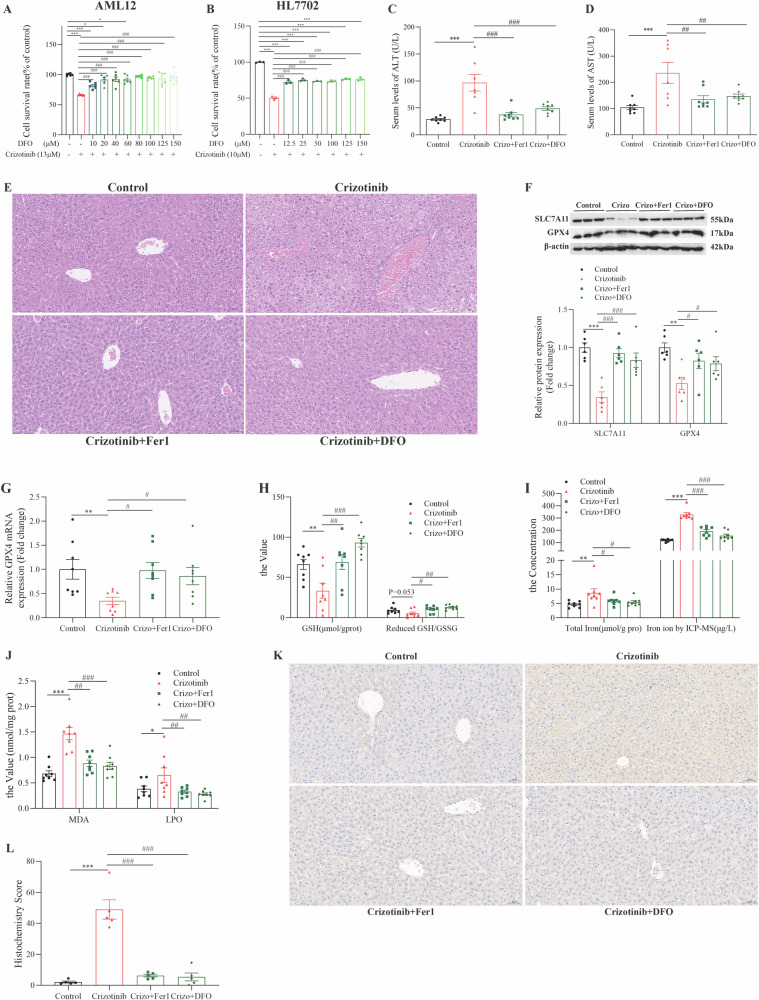
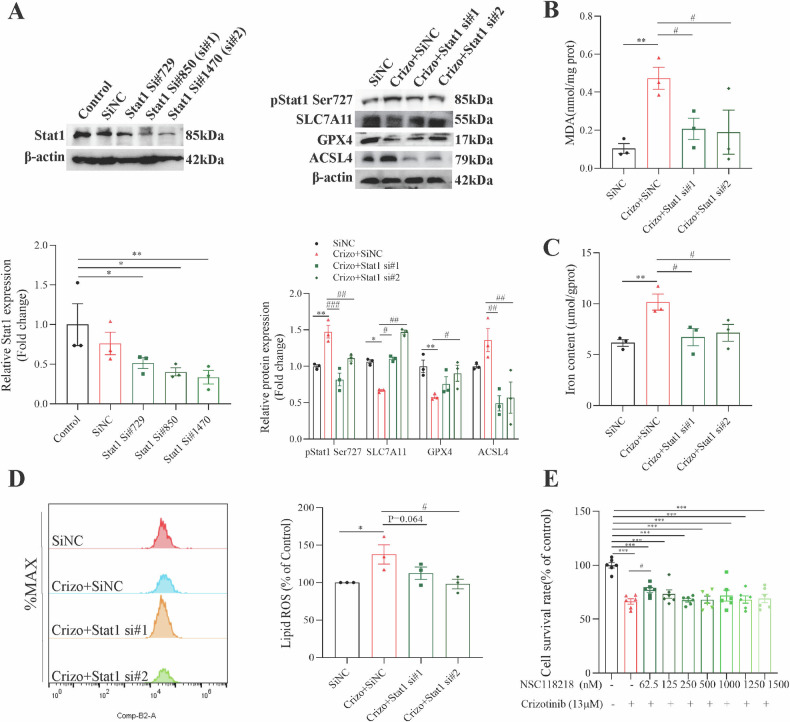
Crizotinib carries an FDA hepatotoxicity warning, yet analysis of the FAERS database suggests that the severity of its hepatotoxicity risks, including progression to hepatitis and liver failure, might be underreported. However, the underlying mechanism remains poorly understood, and effective intervention strategies are lacking. Here, mRNA-sequencing analysis, along with KEGG and GO analyses, revealed that DEGs linked to Crizotinib-induced hepatotoxicity predominantly associate with the ferroptosis pathway which was identified as the principal mechanism behind Crizotinib-induced hepatocyte death. Furthermore, we found that ferroptosis inhibitors, namely Ferrostatin-1 and Deferoxamine mesylate, significantly reduced Crizotinib-induced hepatotoxicity and ferroptosis in both in vivo and in vitro settings. We have also discovered that overexpression of AAV8-mediated Nrf2 could mitigate Crizotinib-induced hepatotoxicity and ferroptosis in vivo by restoring the imbalance in glutathione metabolism, iron homeostasis, and lipid peroxidation. Additionally, both Stat1 deficiency and the Stat1 inhibitor NSC118218 were found to reduce Crizotinib-induced ferroptosis. Mechanistically, Crizotinib induces the phosphorylation of Stat1 at Ser727 but not Tyr701, promoting the transcriptional inhibition of Nrf2 expression after its entry into the nucleus to promote ferroptosis. Meanwhile, we found that MgIG and GA protected against hepatotoxicity to counteract ferroptosis without affecting or compromising the anti-cancer activity of Crizotinib, with a mechanism potentially related to the Stat1/Nrf2 pathway. Overall, our findings identify that the phosphorylation activation of Stat1 Ser727, rather than Tyr701, promotes ferroptosis through transcriptional inhibition of Nrf2, and highlight MgIG and GA as potential therapeutic approaches to enhance the safety of Crizotinib-based cancer therapy.
克唑替尼有 FDA 肝毒性警告,但 FAERS 数据库的分析表明,其肝毒性风险的严重程度,包括进展为肝炎和肝功能衰竭,可能被低估了。然而,其潜在机制仍不清楚,也缺乏有效的干预策略。在这里,mRNA 测序分析,以及 KEGG 和 GO 分析,揭示了与克唑替尼诱导的肝毒性相关的 DEGs 主要与铁死亡途径相关,该途径被确定为克唑替尼诱导肝细胞死亡的主要机制。此外,我们发现铁死亡抑制剂,即 Ferrostatin-1 和甲磺酸去铁胺,可显著降低体内和体外克唑替尼诱导的肝毒性和铁死亡。我们还发现,AAV8 介导的 Nrf2 的过表达可以通过恢复谷胱甘肽代谢、铁平衡和脂质过氧化的失衡来减轻体内克唑替尼诱导的肝毒性和铁死亡。此外,Stat1 缺乏和 Stat1 抑制剂 NSC118218 都被发现可以减少克唑替尼诱导的铁死亡。从机制上讲,克唑替尼诱导 Stat1 在 Ser727 上的磷酸化,但不诱导 Tyr701 磷酸化,促进 Nrf2 表达的转录抑制,进入细胞核后促进铁死亡。同时,我们发现 MgIG 和 GA 可防止肝毒性以抵抗铁死亡,而不影响或损害克唑替尼的抗癌活性,其机制可能与 Stat1/Nrf2 途径有关。总的来说,我们的研究结果表明,Stat1 Ser727 的磷酸化激活,而不是 Tyr701,通过 Nrf2 的转录抑制促进铁死亡,并强调 MgIG 和 GA 可能是增强基于克唑替尼的癌症治疗安全性的潜在治疗方法。