Sotozono Akiko, Namekata Kazuhiko, Guo Xiaoli, Shinozaki Youichi, Harada Chikako, Noro Takahiko, Nakano Tadashi, Harada Takayuki
Visual Research Project, Tokyo Metropolitan Institute of Medical Science, Tokyo, Japan.
Department of Ophthalmology, The Jikei University School of Medicine, Tokyo, Japan.
Biochem Biophys Rep. 2024 Jul 26;39:101799. doi: 10.1016/j.bbrep.2024.101799. eCollection 2024 Sep.
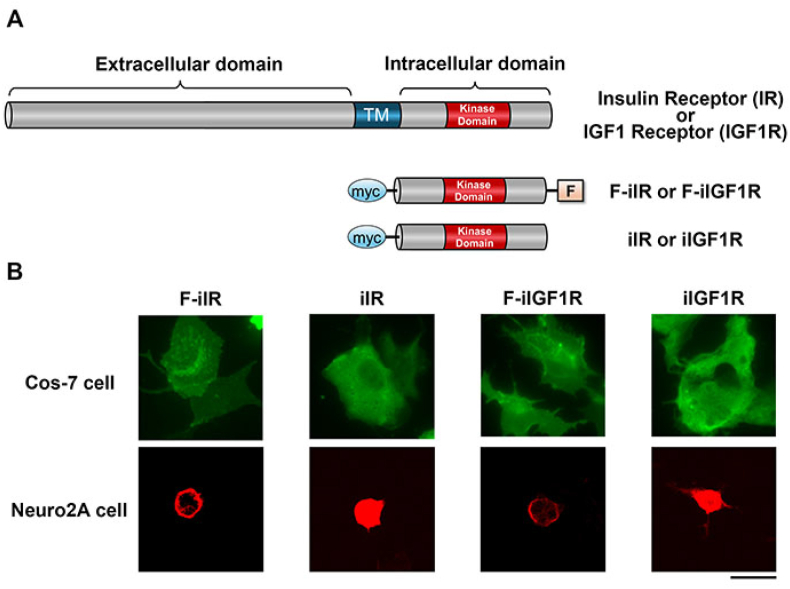
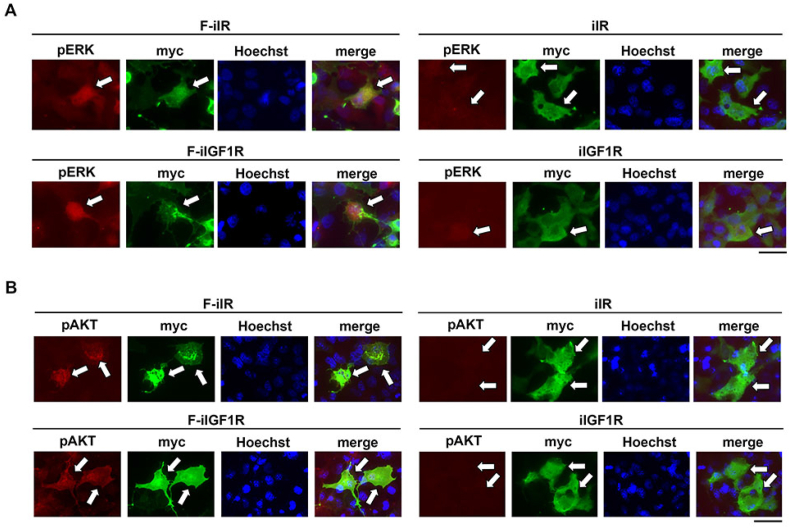
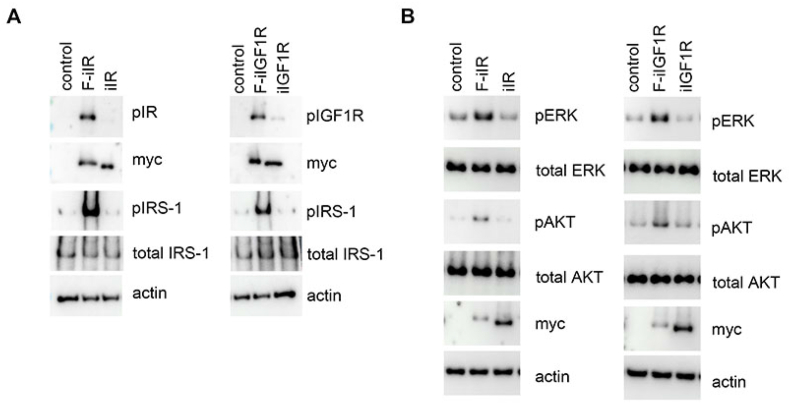
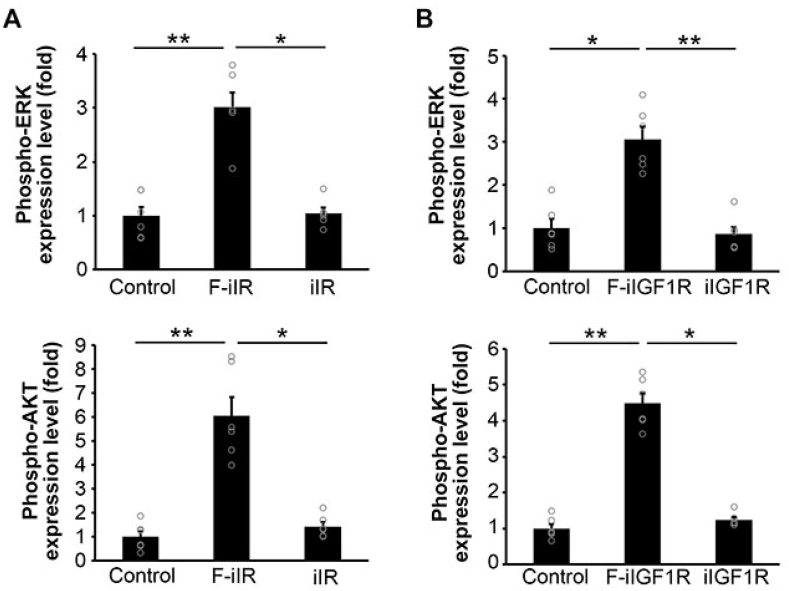
Neurodegenerative diseases including glaucoma affect insulin signaling, and insulin treatment has been shown to reverse the neurodegenerative loss of dendritic complexity in retinal ganglion cells. Therefore, strategies for enhancing or maintaining insulin signaling are worth pursuing to establish new therapies for these diseases. In the present study, we generated constitutively active insulin receptor (F-iIR) and insulin-like growth factor-1 receptor (F-iIGF1R) using a system that forces membrane localization of the intracellular domains of these receptors by farnesylation. Immunohistochemistry and Western blot analysis revealed that F-iIR and F-iIGF1R caused the activation of ERK and AKT in the absence of ligands . Our results suggest that effects of F-iIR and F-iIGF1R on the progression of neurodegenerative diseases should be investigated in the future.
包括青光眼在内的神经退行性疾病会影响胰岛素信号传导,并且已证明胰岛素治疗可逆转视网膜神经节细胞中树突复杂性的神经退行性丧失。因此,增强或维持胰岛素信号传导的策略值得探索,以便为这些疾病建立新的治疗方法。在本研究中,我们使用一种通过法尼基化迫使这些受体的细胞内结构域定位于膜上的系统,生成了组成型活性胰岛素受体(F-iIR)和胰岛素样生长因子-1受体(F-iIGF1R)。免疫组织化学和蛋白质印迹分析表明,F-iIR和F-iIGF1R在没有配体的情况下会导致ERK和AKT的激活。我们的结果表明,未来应该研究F-iIR和F-iIGF1R对神经退行性疾病进展的影响。