Department of Biological Sciences, Columbia University, New York, New York, USA.
Department of Dentistry, National Yang Ming Chiao Tung University, Taipei, Taiwan.
mBio. 2024 Sep 11;15(9):e0085224. doi: 10.1128/mbio.00852-24. Epub 2024 Aug 20.
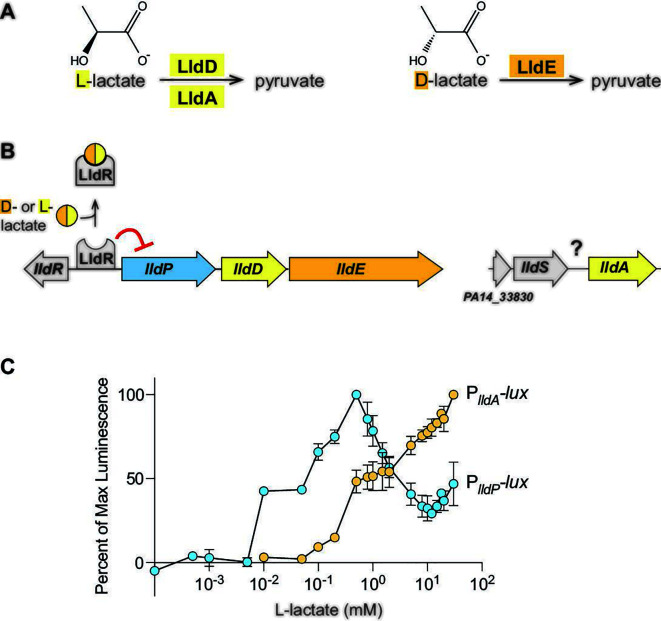
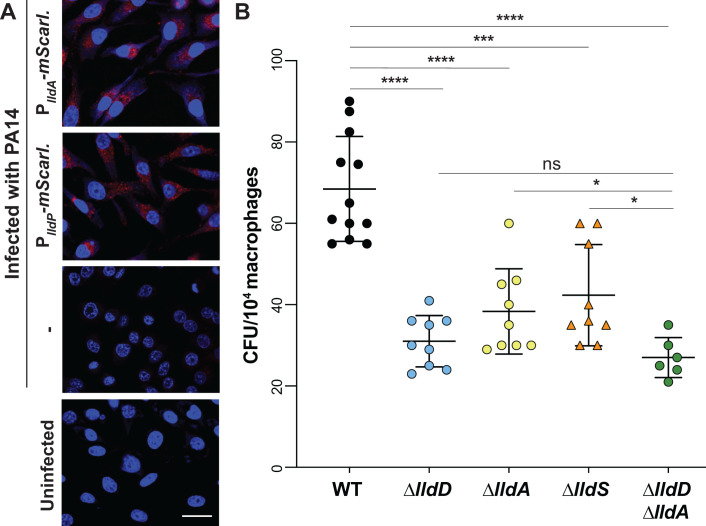
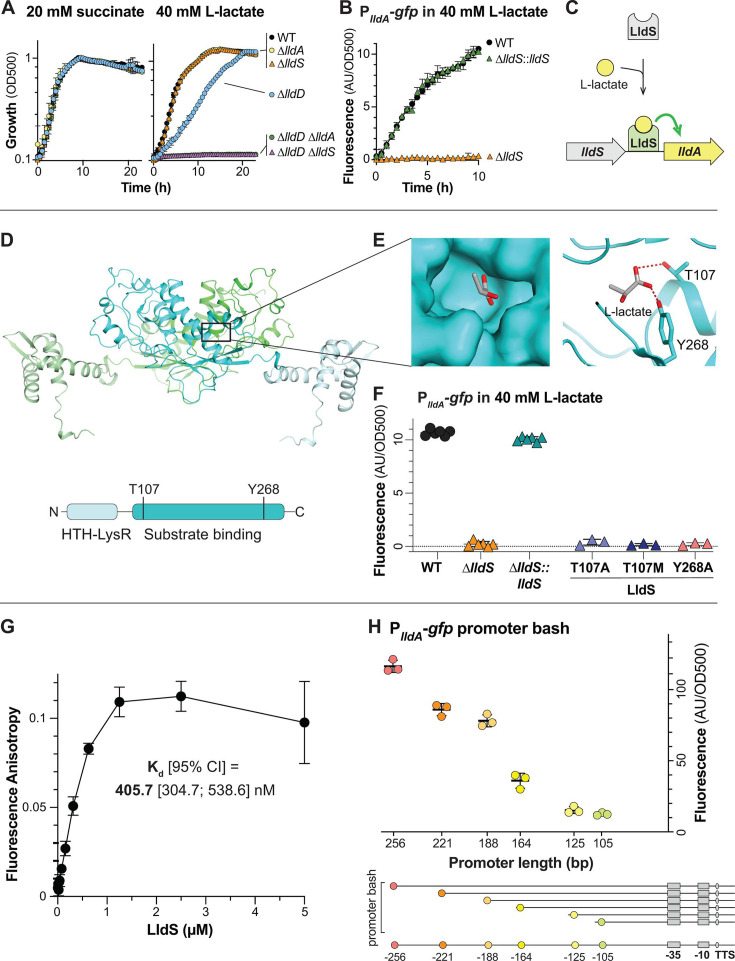
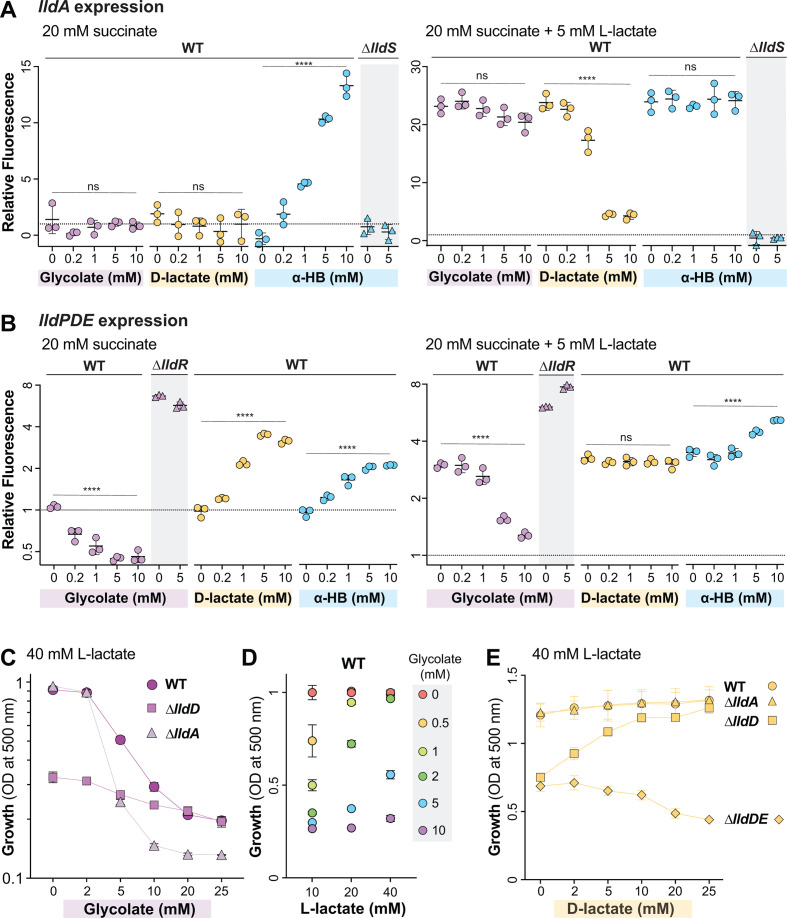
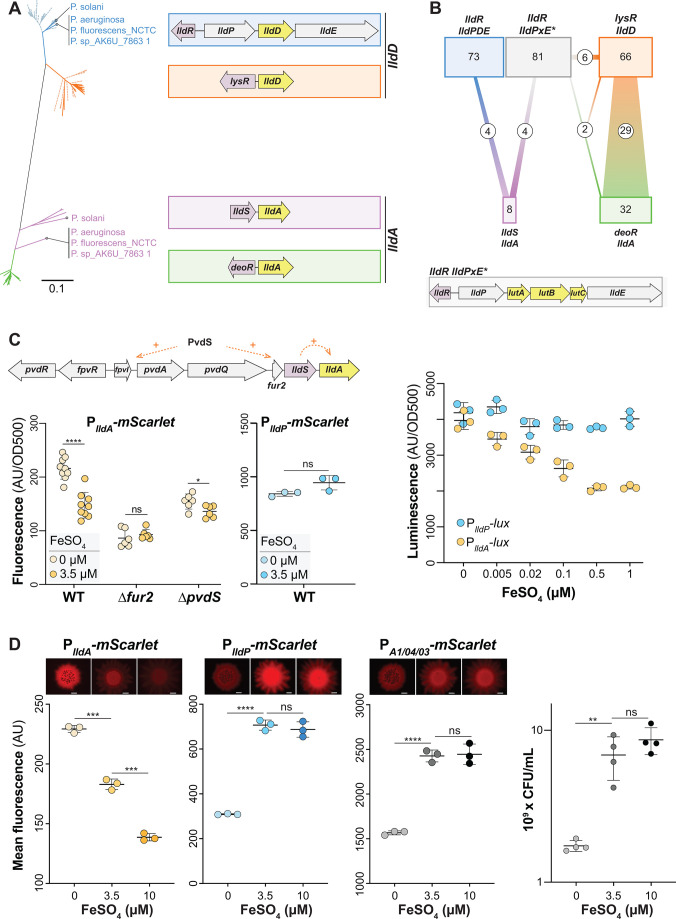
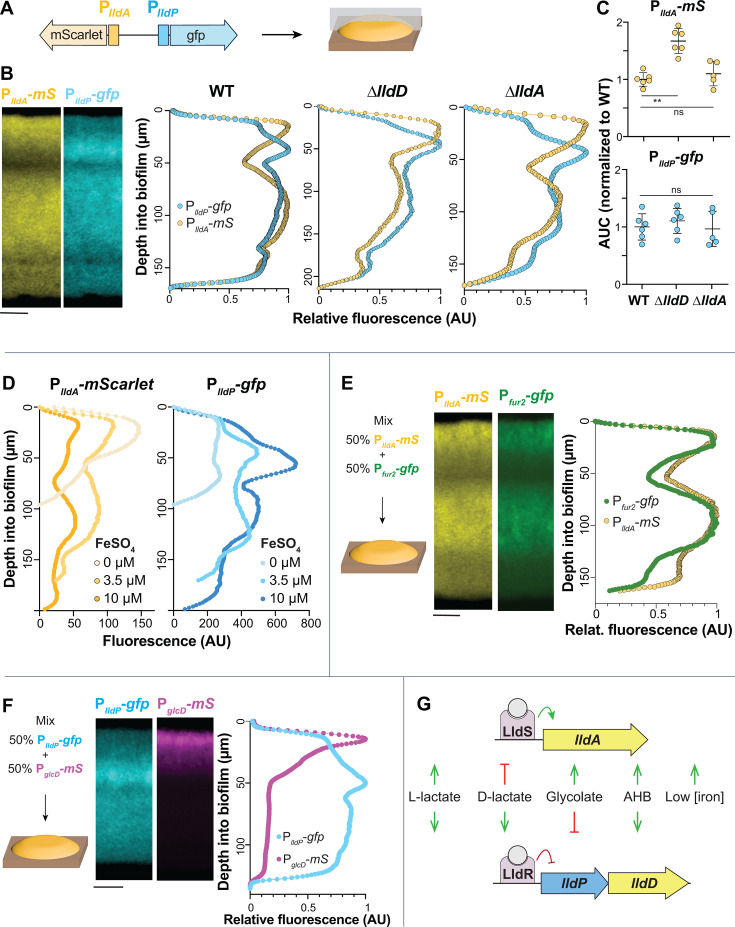
is an opportunistic pathogen that thrives in environments associated with human activity, including soil and water altered by agriculture or pollution. Because L-lactate is a significant product of plant and animal metabolism, it can serve as a carbon source for in the diverse settings that it inhabits. In this study, we evaluate the production and use of two redundant L-lactate dehydrogenases, termed LldD and LldA. We confirm that the protein LldR represses and identify a new transcription factor, called LldS, that activates ; these distinct regulators and the genomic contexts of and contribute to their differential expression. We demonstrate that the and genes are conditionally controlled in response to lactate isomers as well as to glycolate and ɑ-hydroxybutyrate, which, like lactate, are ɑ-hydroxycarboxylates. We also show that is induced when iron availability is low. Our examination of and expression across depth in biofilms indicates a complex pattern that is consistent with the effects of glycolate production, iron availability, and cross-regulation on enzyme preference. Finally, macrophage infection assays reveal that both and contribute to persistence within host cells, underscoring the potential role of L-lactate as a carbon source during eukaryote interactions. Together, these findings help us understand the metabolism of a key resource that may promote 's success as a resident of contaminated environments and animal hosts.IMPORTANCE is a major cause of lung infections in people with cystic fibrosis, of hospital-acquired infections, and of wound infections. It consumes L-lactate, which is found at substantial levels in human blood and tissues. In this study, we investigated the spatial regulation of two redundant enzymes, called LldD and LldA, which enable L-lactate metabolism in biofilms. We uncovered mechanisms and identified compounds that control the preference of for LldD versus LldA. We also showed that both enzymes contribute to its ability to survive within macrophages, a behavior that is thought to augment the chronicity and recalcitrance of infections. Our findings shed light on a key metabolic strategy used by and have the potential to inform the development of therapies targeting bacterial metabolism during infection.
是一种机会性病原体,在与人类活动相关的环境中茁壮成长,包括受农业或污染影响的土壤和水。由于 L-乳酸是植物和动物代谢的重要产物,因此它可以作为其栖息的各种环境中的 的碳源。在这项研究中,我们评估了两种冗余 L-乳酸脱氢酶(分别称为 LldD 和 LldA)的产生和利用。我们证实蛋白 LldR 抑制 并鉴定了一种新的转录因子,称为 LldS,它激活 ;这些不同的调节剂和 的基因组背景有助于它们的差异表达。我们证明 和 基因受到乳酸异构体以及甘醇酸和 ɑ-羟基丁酸的条件控制,就像乳酸一样,它们是 ɑ-羟基羧酸。我们还表明,当铁供应不足时, 会被诱导。我们对生物膜中深度的 和 表达的检查表明,一种复杂的模式与甘醇酸产生、铁可用性和交叉调节对酶偏好的影响一致。最后,巨噬细胞感染实验表明, 和 都有助于在宿主细胞内持续存在,这突显了 L-乳酸作为真核生物相互作用过程中碳源的潜在作用。总之,这些发现有助于我们了解可能促进 作为污染环境和动物宿主居民成功的关键资源的代谢。