Chu Chia-Yu, Chan Yung, Wananukul Siriwan, Cheng Hao, Chandran Nisha Suyien, Bhat Ramesh, Son Sang Wook, Liao Han-Fang, Gardiner Sean, Ng Qi Qing, Yeo See-Hwee, Chen Sophie Bozhi, Kataoka Yoko
Department of Dermatology, National Taiwan University Hospital, National Taiwan University College of Medicine, Taipei, Taiwan.
Apex Dermatology Institute, Hong Kong, China.
Dermatol Ther (Heidelb). 2024 Sep;14(9):2559-2576. doi: 10.1007/s13555-024-01246-5. Epub 2024 Aug 20.
Limited evidence is available on real-world management of atopic dermatitis (AD) among Asian adults. This cross-sectional study aimed to assess current approaches in AD diagnosis and management in Asia.
Practising dermatologists regularly treating patients with moderate-to-severe AD were recruited from eight Asia-Pacific territories, namely Mainland China, Hong Kong, India, Japan, Singapore, South Korea, Taiwan, and Thailand. A survey was administered to eligible dermatologists after screening and taking informed consent. Data from fully completed submissions were analysed using descriptive statistics. The study was reviewed by the institutional review board in each territory.
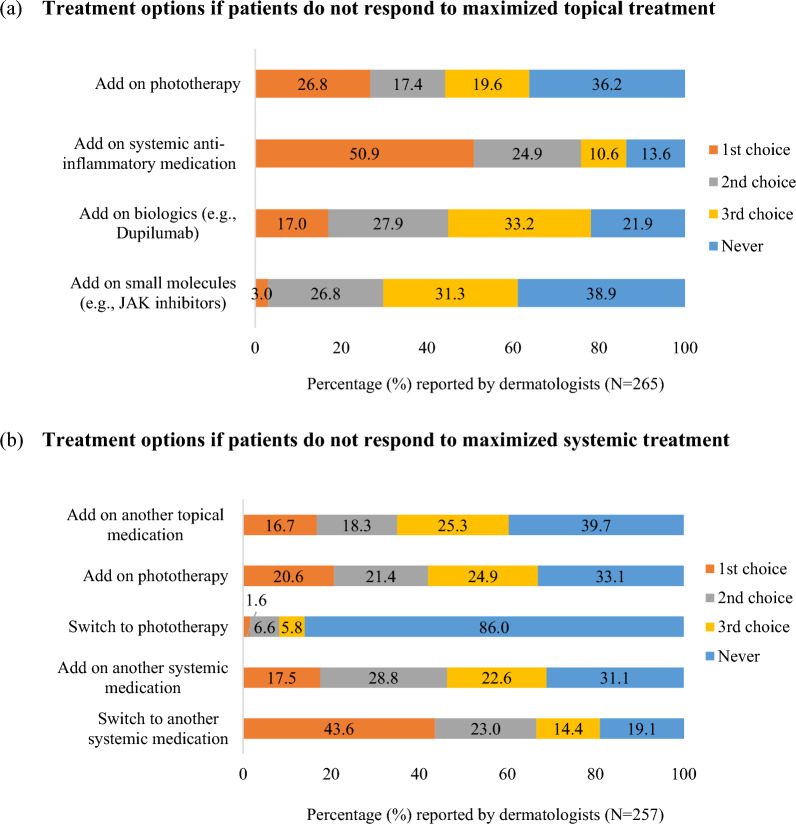
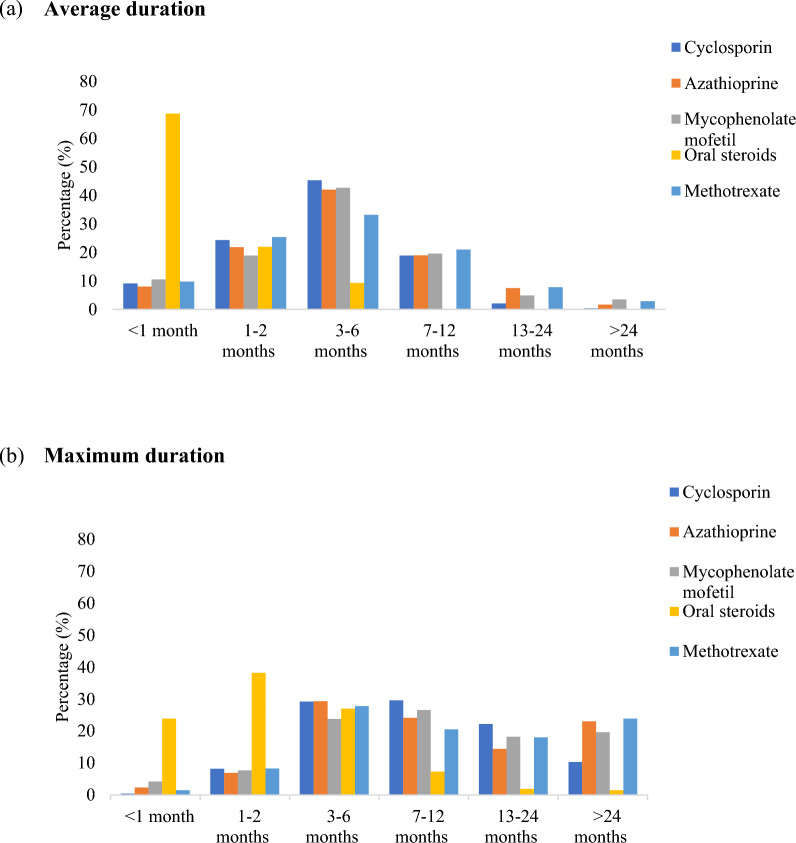
Data from 271 dermatologists were included for analysis. About one-third (31.7%) reported that they referred to the Hanifin and Rajka criteria during diagnosis. The majority of dermatologists used clinical impression when assessing AD severity and treatment response. Reduction of eczema and pruritus was the primary treatment objective when managing both acute (98.1%) and chronic (69.1%) AD. More than half of dermatologists preferred adding systemic anti-inflammatory medication for patients who did not respond to maximized topical treatment, while 43.6% would switch to another systemic medication for those failing to respond to maximized systemic treatment. Topical corticosteroids were frequently selected by dermatologists. For systemic therapies, oral corticosteroids were most frequently used, followed by cyclosporin and dupilumab. Narrow-band ultraviolet B was the most common phototherapy reported (84.9%). There was considerable variation in estimated average and maximum durations of therapies used to treat AD.
This study has provided insights on the real-world management of moderate-to-severe AD in the Asia-Pacific region. The diverse approaches in diagnosis and treatment highlight the multifactorial nature of AD, reliance on clinical judgement, and importance of personalized care. To improve outcomes in patients with AD, it will be crucial to develop biomarkers for diagnosis, reduce subjectivity in assessment, as well as promote access to newer and effective therapies.
关于亚洲成年人特应性皮炎(AD)实际治疗情况的证据有限。这项横断面研究旨在评估亚洲AD诊断和治疗的当前方法。
从八个亚太地区招募定期治疗中度至重度AD患者的皮肤科医生,这些地区包括中国大陆、中国香港、印度、日本、新加坡、韩国、中国台湾和泰国。在筛选并获得知情同意后,对符合条件的皮肤科医生进行问卷调查。对完整提交的数据进行描述性统计分析。本研究在每个地区均经过机构审查委员会审核。
纳入271名皮肤科医生的数据进行分析。约三分之一(31.7%)的医生报告称在诊断时会参考汉密芬和拉杰卡标准。大多数皮肤科医生在评估AD严重程度和治疗反应时使用临床判断。在治疗急性(98.1%)和慢性(69.1%)AD时,减轻湿疹和瘙痒是主要治疗目标。超过一半的皮肤科医生倾向于为对最大剂量局部治疗无反应的患者加用全身性抗炎药物,而43.6%的医生会为对最大剂量全身性治疗无反应的患者换用另一种全身性药物。皮肤科医生经常选择外用糖皮质激素。对于全身性治疗,最常用的是口服糖皮质激素,其次是环孢素和度普利尤单抗。窄谱中波紫外线是最常报告的光疗方法(84.9%)。用于治疗AD的各种疗法的估计平均和最长疗程存在很大差异。
本研究为亚太地区中度至重度AD的实际治疗提供了见解。诊断和治疗方法的多样性凸显了AD的多因素性质、对临床判断的依赖以及个性化护理的重要性。为改善AD患者的治疗效果,开发诊断生物标志物、减少评估的主观性以及促进使用更新和有效的疗法至关重要。