Department of Visceral, Transplant, Thoracic and Vascular Surgery, University Hospital of Leipzig, Liebigstraße 20, 04103, Leipzig, Germany.
Department of Medical Psychology and Sociology, University of Leipzig, Leipzig, Germany.
Langenbecks Arch Surg. 2024 Aug 20;409(1):255. doi: 10.1007/s00423-024-03447-0.
Complications are common after major visceral surgery. Besides the patients, also surgeons may experience negative feelings by the patients suffering. Some studies have evaluated the mental burden caused by complications, mainly focusing on residents in different surgical specialties. No evidence exists on the mental burden of board-qualified visceral surgeons in Germany.
A point prevalence study was conducted using an online questionnaire. For the inclusion of participants, all departments of visceral surgery at German university hospitals were addressed. The objective of the online questionnaire was to elaborate the perception of complications and the coping mechanisms used by the surgeons with the aim to characterize the mental burden and possible improvement strategies.
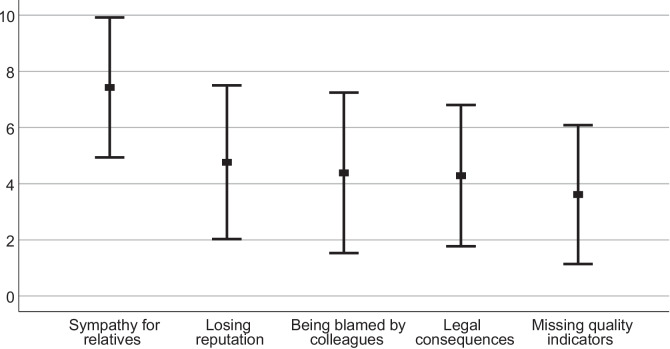
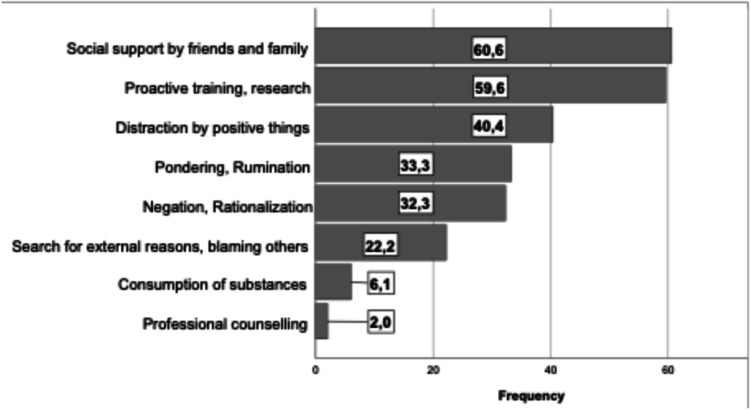
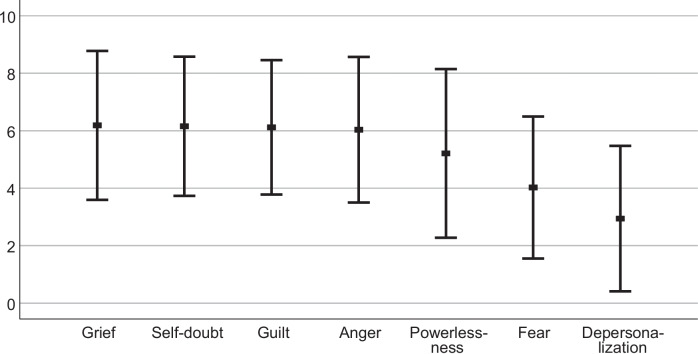
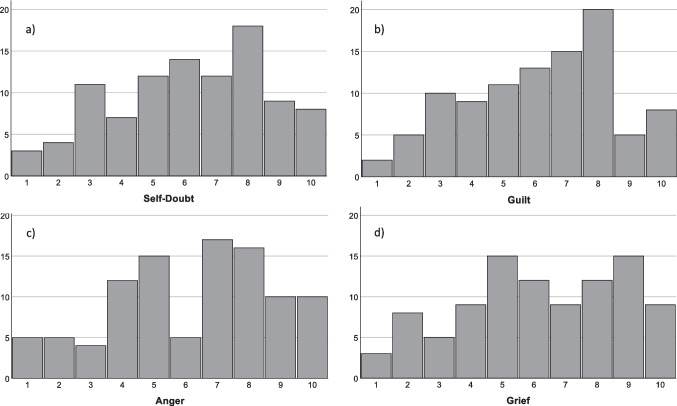
A total of 113 questionnaires were answered, 98 being complete. 73.2% of the participants were male, 46.9% were consultants and had a working experience of 11-20 years. Most common specialties were colorectal and general surgery and 91.7% claimed to have caused complications Clavien-Dindo grade IV or V. Subsequently, predominant feelings were anger, grief, self-doubt and guilt. The fear of being blamed by colleagues or to lose reputation were high. Especially female and younger surgeons showed those fears. Coping mechanisms used to overcome those negative feelings were interaction with friends and family (60.6%) or proactive training (59.6%). Only 17.2% of the institutions offered professional support. In institutions where no support was offered, 71.6% of the surgeons asked for support.
Surgical complications cause major psychological burden in surgeons in German university hospitals. Main coping mechanisms are communication with friends and families and professional education. Vulnerable subgroups, such as younger surgeons, may be at risk of suffering more from perceived mental distress. Nonetheless, the majority did not receive but asked for professional counselling. Thus, structured institutional support may ameliorate care for both surgeon and patient.
大型内脏手术后常见并发症。除了患者,外科医生也可能因患者的痛苦而感到负面情绪。一些研究评估了并发症引起的精神负担,主要集中在不同外科专业的住院医师上。目前尚无德国认证的内脏外科医生精神负担的证据。
采用在线问卷调查进行点现况研究。为了纳入参与者,德国大学医院的所有内脏外科系均被纳入研究。在线问卷的目的是详细阐述外科医生对并发症的看法以及他们使用的应对机制,旨在描述精神负担和可能的改善策略。
共回答了 113 份问卷,其中 98 份完整。73.2%的参与者为男性,46.9%为顾问,工作经验为 11-20 年。最常见的专业是结直肠和普通外科,91.7%的人声称已经造成了 Clavien-Dindo 分级 IV 或 V 的并发症。随后,主要的感觉是愤怒、悲伤、自我怀疑和内疚。害怕被同事指责或失去声誉的情况很高。特别是女性和年轻的外科医生更会有这种恐惧。用来克服这些负面情绪的应对机制是与朋友和家人互动(60.6%)或积极主动的培训(59.6%)。只有 17.2%的机构提供专业支持。在没有提供支持的机构中,71.6%的外科医生寻求支持。
外科并发症给德国大学医院的外科医生带来了重大的心理负担。主要的应对机制是与朋友和家人沟通以及专业教育。脆弱的亚组,如年轻的外科医生,可能面临更多的精神困扰风险。尽管如此,大多数人没有得到但要求提供专业咨询。因此,有针对性的机构支持可能会改善外科医生和患者的护理。