Department of Fisheries, Wildlife, and Conservation Sciences, Coastal Oregon Marine Experiment Station, Hatfield Marine Science Center, Oregon State University, 2030 SE Marine Science Drive, Newport, OR, 97365, USA.
Cornell Biological Field Station, Department of Natural Resources and the Environment, Cornell University, 900 Shackelton Point Road, Bridgeport, NY, 13030, USA.
Sci Rep. 2024 Aug 20;14(1):19313. doi: 10.1038/s41598-024-69915-1.
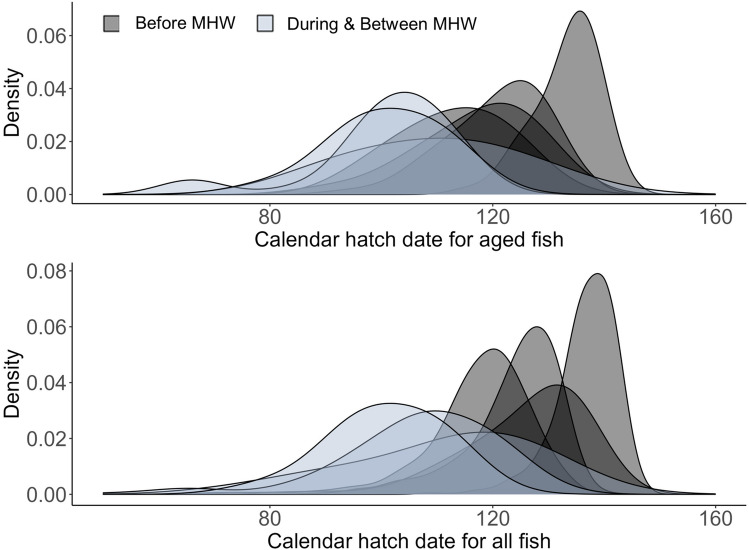
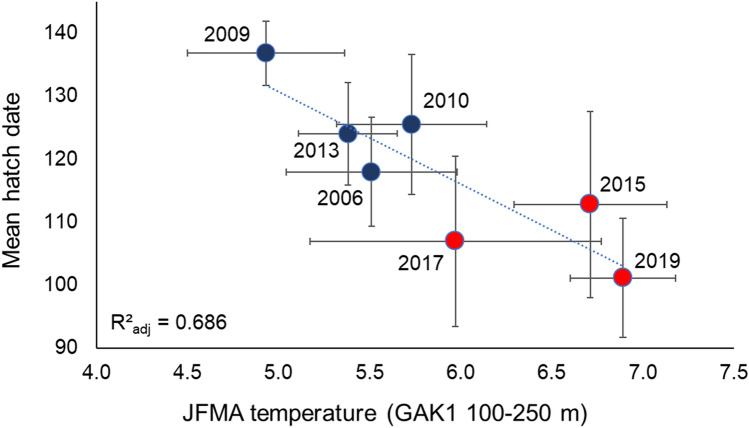
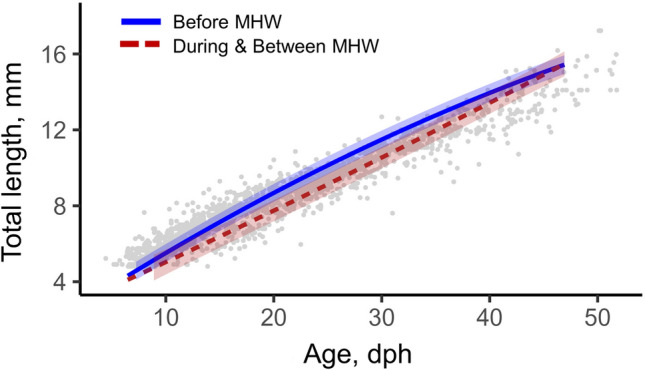
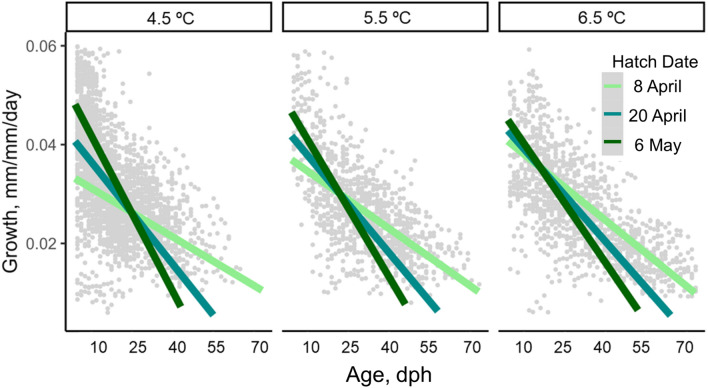
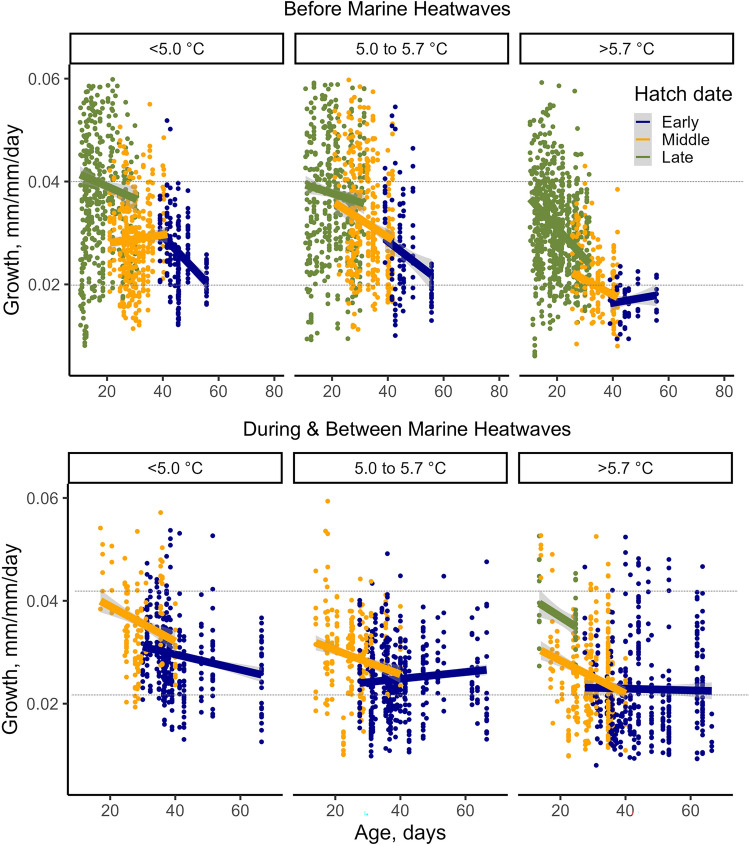
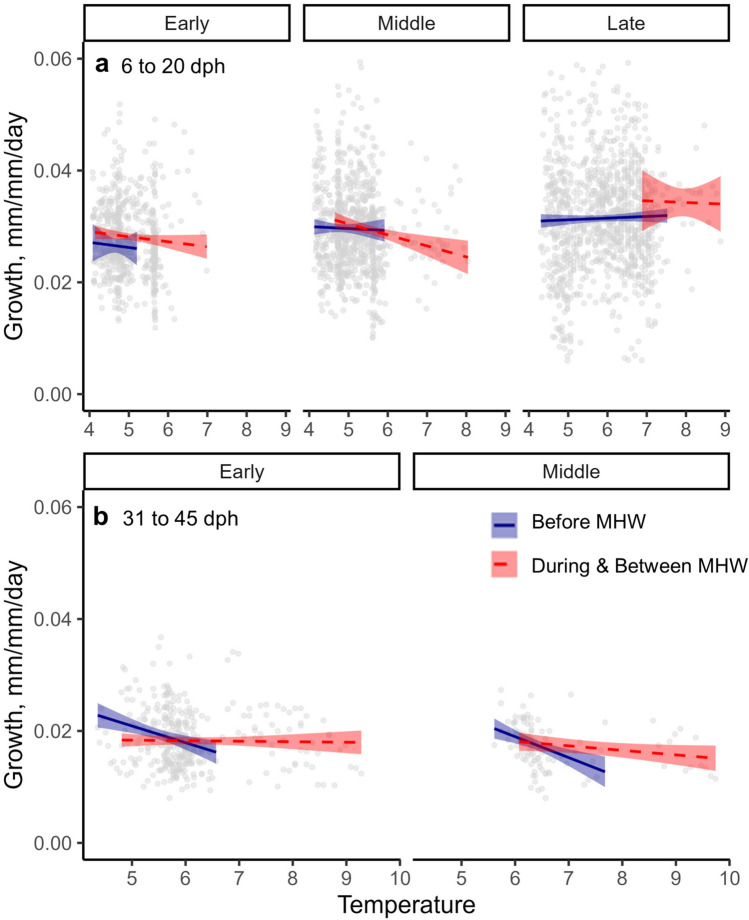
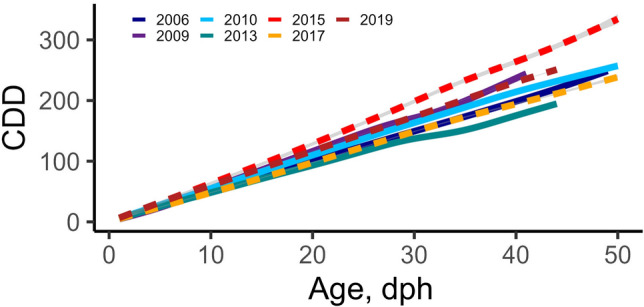
Marine heatwaves (MHWs) are often associated with physiological changes throughout biological communities but can also result in biomass declines that correspond with shifts in phenology. We examined the response of larval Pacific cod (Gadus macrocephalus) to MHWs in the Gulf of Alaska across seven years to evaluate the effects of MHWs on hatch phenology, size-at-age, and daily growth and identify potential regulatory mechanisms. Hatch dates were, on average, 19 days earlier since the onset of MHWs, shifting a mean of 15 days earlier per 1 ℃ increase. Size-at-capture was larger during & between MHWs but, contrary to expectations, larvae grew slower and were smaller in size-at-age. The larger size during & between MHWs can be entirely explained by older ages due to earlier hatching. Daily growth variation was well-explained by an interaction among age, temperature, and hatch date. Under cool conditions, early growth was fastest for the latest hatchers. However, this variation converged at warmer temperatures, due to faster growth of earlier hatchers. Stage-specific growth did not vary with temperature, remaining relatively similar from 4 to 8 ℃. Temperature-related demographic changes were more predictable based on phenological shifts rather than changes in growth, which could affect population productivity after MHWs.
海洋热浪(MHWs)通常与整个生物群落的生理变化有关,但也会导致生物量下降,从而导致物候期发生变化。我们在 7 年的时间里,研究了阿拉斯加湾幼体太平洋鳕鱼(Gadus macrocephalus)对海洋热浪的反应,以评估海洋热浪对孵化物候、年龄大小、日生长的影响,并确定潜在的调节机制。自海洋热浪开始以来,孵化日期平均提前了 19 天,每升高 1°C,平均提前 15 天。在海洋热浪期间和之间,被捕捞的幼鱼体型更大,但与预期相反,幼鱼的生长速度较慢,年龄大小也较小。在海洋热浪期间和之间体型较大的原因可以完全归因于更早的孵化,从而导致年龄更大。日生长变化可以很好地通过年龄、温度和孵化日期之间的相互作用来解释。在凉爽的条件下,最晚孵化的幼鱼生长最快。然而,在较温暖的温度下,由于较早孵化的幼鱼生长速度更快,这种变化趋于收敛。特定阶段的生长与温度无关,在 4 到 8°C 之间相对相似。基于物候期的变化而不是生长变化,与温度相关的人口变化更具可预测性,这可能会影响海洋热浪后的种群生产力。