Alaska Fisheries Science Center, National Oceanic and Atmospheric Administration, Juneau, AK, USA.
U.S. Geological Survey, Alaska Science Center, Juneau, AK, USA.
Sci Rep. 2021 Mar 18;11(1):6235. doi: 10.1038/s41598-021-83818-5.
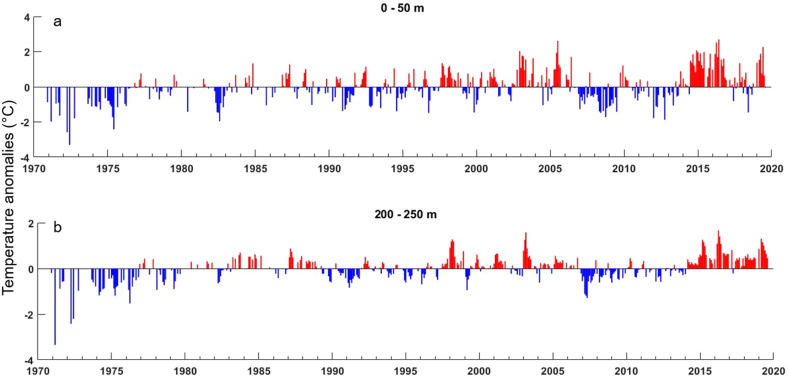
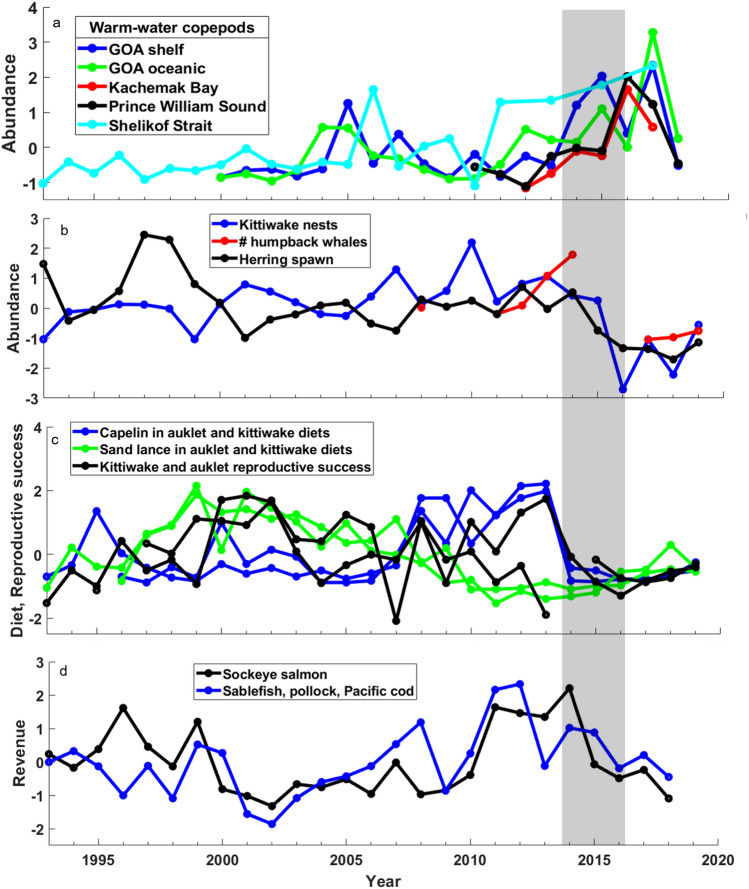
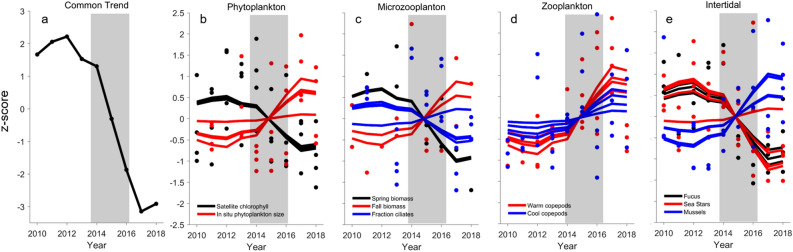
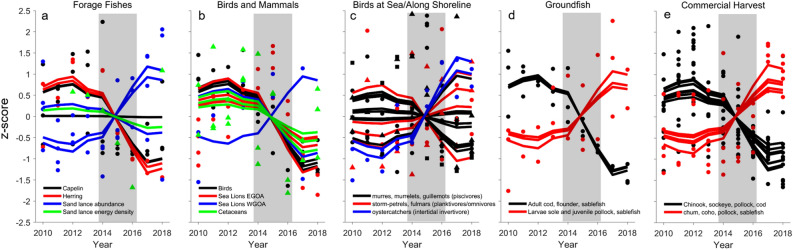
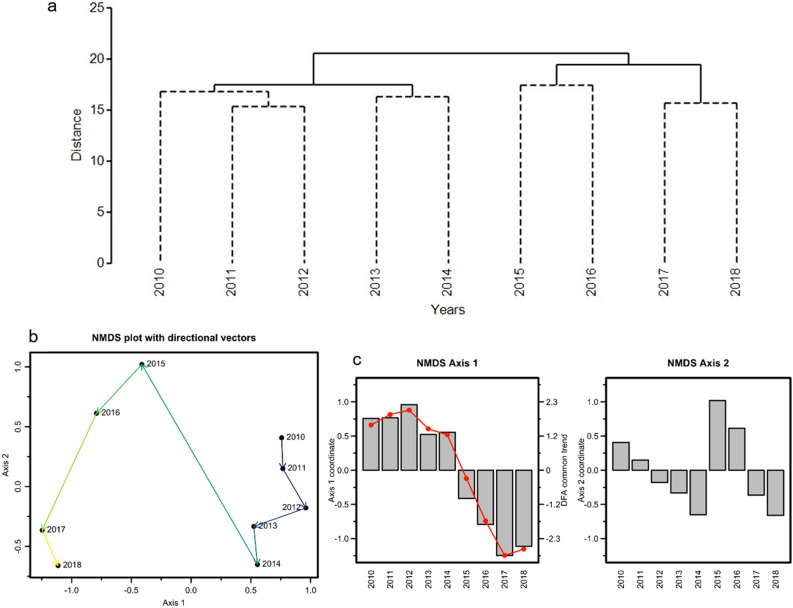
Some of the longest and most comprehensive marine ecosystem monitoring programs were established in the Gulf of Alaska following the environmental disaster of the Exxon Valdez oil spill over 30 years ago. These monitoring programs have been successful in assessing recovery from oil spill impacts, and their continuation decades later has now provided an unparalleled assessment of ecosystem responses to another newly emerging global threat, marine heatwaves. The 2014-2016 northeast Pacific marine heatwave (PMH) in the Gulf of Alaska was the longest lasting heatwave globally over the past decade, with some cooling, but also continued warm conditions through 2019. Our analysis of 187 time series from primary production to commercial fisheries and nearshore intertidal to offshore oceanic domains demonstrate abrupt changes across trophic levels, with many responses persisting up to at least 5 years after the onset of the heatwave. Furthermore, our suite of metrics showed novel community-level groupings relative to at least a decade prior to the heatwave. Given anticipated increases in marine heatwaves under current climate projections, it remains uncertain when or if the Gulf of Alaska ecosystem will return to a pre-PMH state.
三十多年前,埃克森·瓦尔迪兹号溢油事件后,在阿拉斯加湾建立了一些最长和最全面的海洋生态系统监测计划。这些监测计划成功评估了溢油影响的恢复情况,几十年后继续进行监测,现在为评估海洋热浪这一新出现的全球威胁对生态系统的影响提供了前所未有的机会。阿拉斯加湾 2014-2016 年东北太平洋海洋热浪是过去十年中全球持续时间最长的热浪,虽然有一些降温,但在 2019 年仍持续保持温暖的条件。我们对从初级生产力到商业渔业以及近岸潮间带到近海海洋领域的 187 个时间序列的分析表明,营养级之间发生了突然变化,许多反应至少在热浪开始后的 5 年内仍在持续。此外,我们的一系列指标显示,与热浪发生前至少十年相比,群落水平出现了新的分组。考虑到当前气候预测下海洋热浪的预计增加,仍不确定阿拉斯加湾生态系统何时或是否会恢复到 PMH 之前的状态。