Key Laboratory of Xinjiang Phytomedicine Resource and Utilization, Ministry of Education, School of Pharmacy, Shihezi University, No. 59, North Second Road, Shihezi, 832002, Xinjiang Uygur Autonomous Region, People's Republic of China.
Department of Pharmacy, The Seventh Affiliated Hospital of Xinjiang Medical University, Urumqi, People's Republic of China.
Sci Rep. 2024 Aug 20;14(1):19323. doi: 10.1038/s41598-024-70253-5.
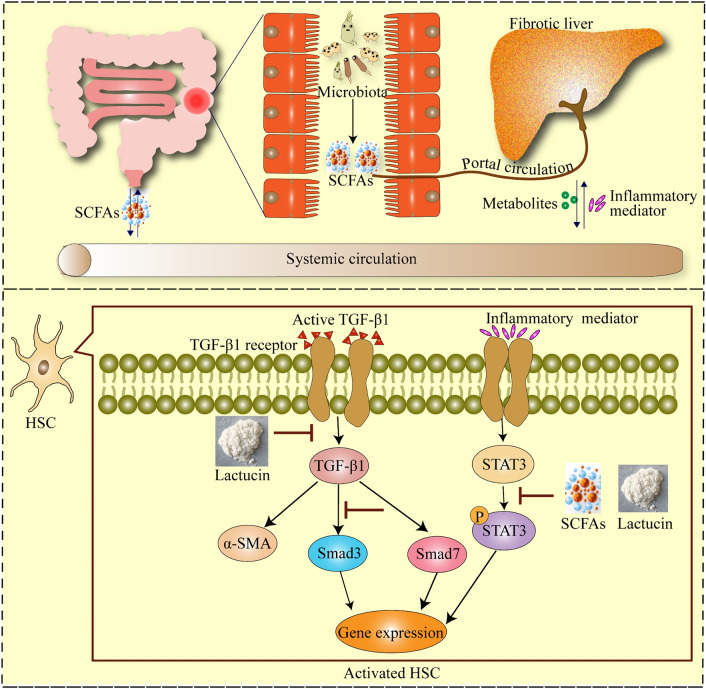
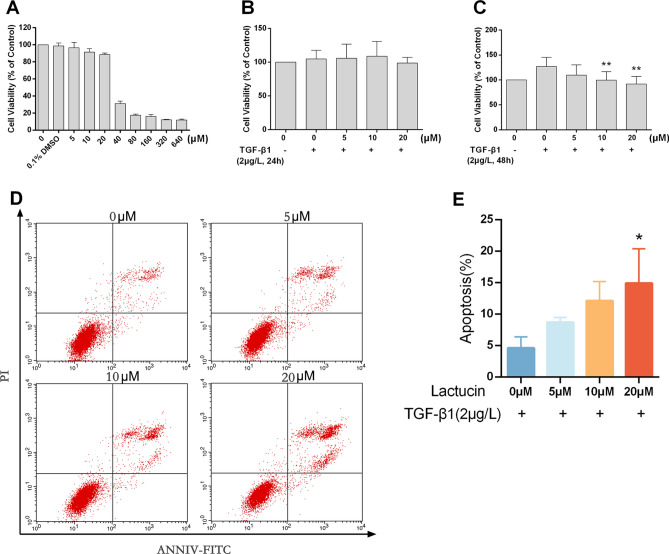
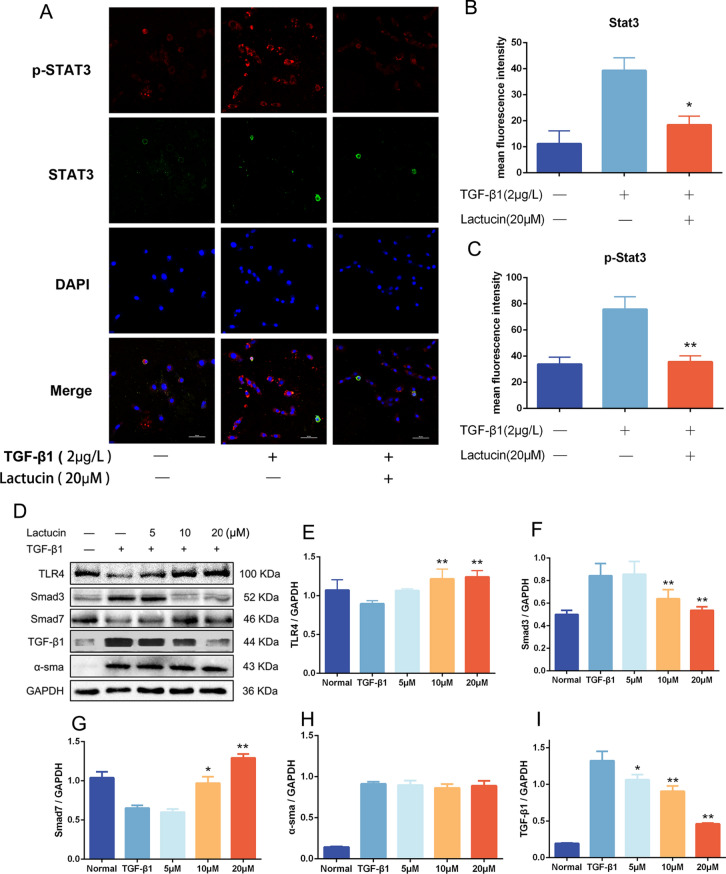
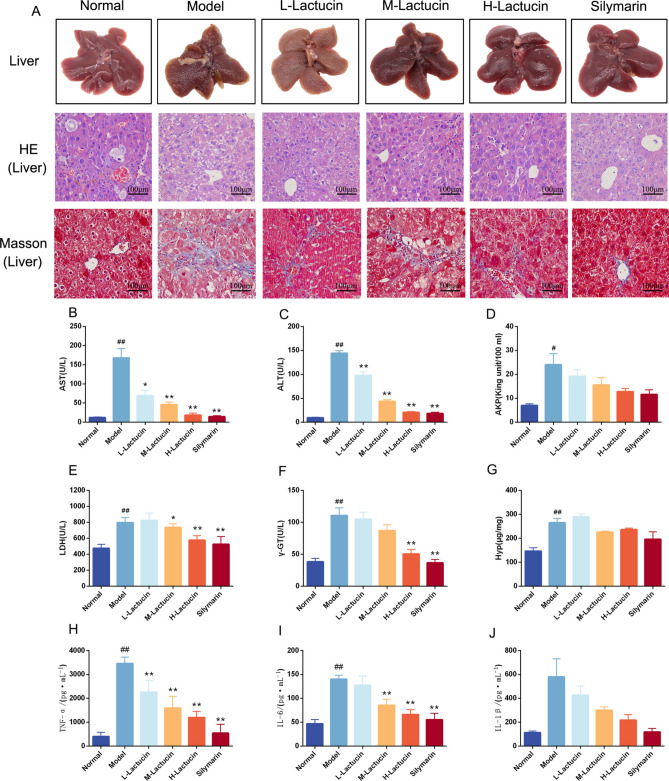
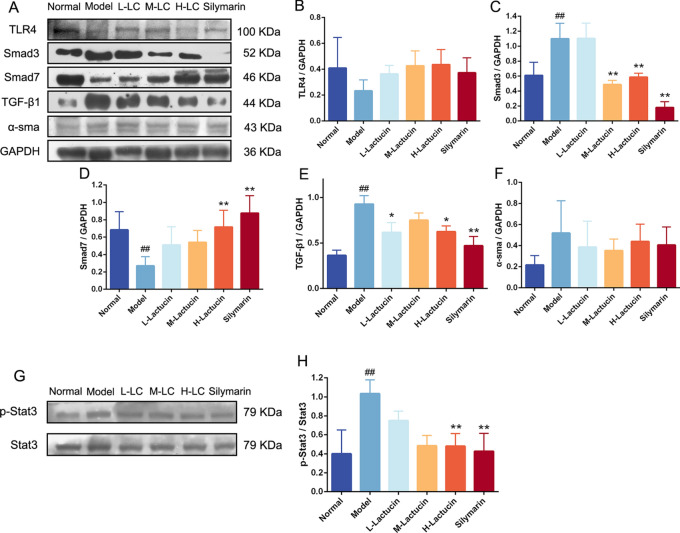
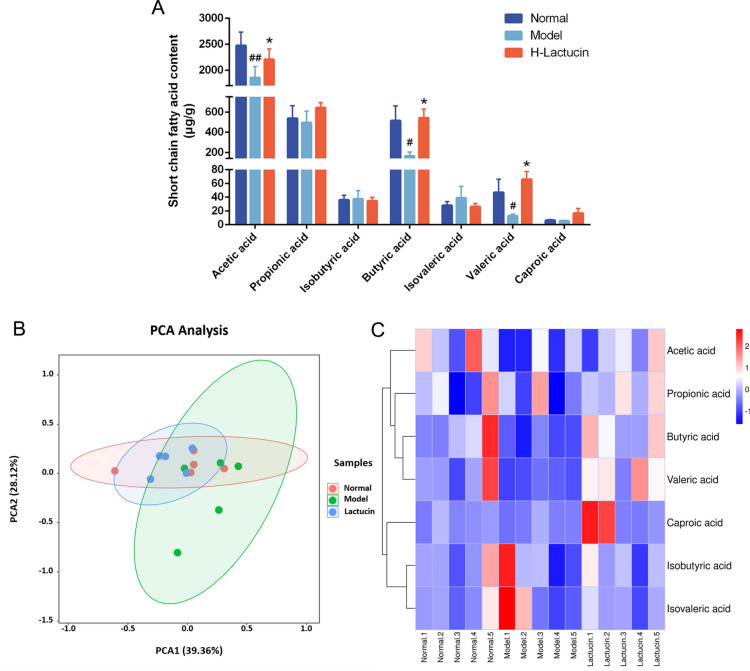
TGF-β1 activation of hepatic stellate cells (HSCs), transcriptional activator 3 (Stat3) activation and short chain fatty acids (SCFAs), metabolite of intestinal bacteria, is closely associated with hepatic fibrosis. Previous studies have shown that Lactucin has significant anti-inflammatory and hepatoprotective effects; however, the mechanism of Lactucin's role in liver fibrosis associated with SCFAs remains unknown. This study was intended to investigate whether effect of Lactucin on liver fibrosis was mediated by TGF-β1/Stat3 and SCFAs. We found that Lactucin induced apoptosis in HSC-T6 cells, and inhibition of nuclear translocation of Stat3 and p-Stat3. And Smad3 and TGF-β1 protein expression was significantly inhibited, while TLR4 and Smad7 protein expression was significantly enhanced. For in vivo experiments, we demonstrated that Lactucin alleviated liver fibrosis in mice, as evidenced by a reduction in inflammatory factors, collagen deposition, liver injury and fibrosis-related factors expression, especially the expression of Smad3 and TGF-β1 proteins was significantly suppressed and Smad7 protein expression was significantly increased in the liver. In addition, the levels of acetic acid, butyric acid and valeric acid in the intestine of Lactucin-treated mice were significantly higher than those in the intestine of liver fibrosis mice. In conclusion, based on the results of in vivo and in vitro experiments, preventive mechanism of Lactucin against liver fibrosis in mice may be to improve the enterohepatic circulation by regulating the metabolites of intestinal microorganisms, acetic acid and butyric acid, and to further regulate the Stat3 and TGF-β1 signaling pathway through the "gut-liver axis" to combat liver fibrosis.
TGF-β1 激活肝星状细胞 (HSCs)、转录激活因子 3 (Stat3) 激活和短链脂肪酸 (SCFAs),即肠道细菌的代谢产物,与肝纤维化密切相关。先前的研究表明,乳蓟素有显著的抗炎和保肝作用;然而,乳蓟素在与 SCFAs 相关的肝纤维化中的作用机制尚不清楚。本研究旨在探讨乳蓟素是否通过 TGF-β1/Stat3 和 SCFAs 发挥其对肝纤维化的作用。我们发现乳蓟素诱导 HSC-T6 细胞凋亡,并抑制 Stat3 和 p-Stat3 的核转位。同时,Smad3 和 TGF-β1 蛋白表达明显受到抑制,而 TLR4 和 Smad7 蛋白表达明显增强。在体内实验中,我们证明乳蓟素减轻了小鼠的肝纤维化,这表现在炎症因子、胶原沉积、肝损伤和纤维化相关因子表达的减少,特别是 Smad3 和 TGF-β1 蛋白的表达明显受到抑制,Smad7 蛋白的表达明显增加。此外,乳蓟素治疗组小鼠肠道中的乙酸、丁酸和戊酸水平明显高于肝纤维化小鼠肠道中的水平。总之,基于体内和体外实验结果,乳蓟素预防小鼠肝纤维化的机制可能是通过调节肠道微生物代谢产物乙酸和丁酸,改善肠肝循环,通过“肠肝轴”进一步调节 Stat3 和 TGF-β1 信号通路,从而对抗肝纤维化。