Sanofi-Aventis Deutschland GmbH, Lützowstr. 107, 10785, Berlin, Germany.
Sanofi Vaccines, Lyon, France.
BMC Infect Dis. 2024 Aug 20;24(1):844. doi: 10.1186/s12879-024-09758-3.
Respiratory syncytial virus (RSV) is a major cause of acute lower respiratory infection and hospitalizations among infants, young children, and the elderly. This systematic literature review aimed to summarize the epidemiological and economic burden estimates of RSV infection at any age in Germany.
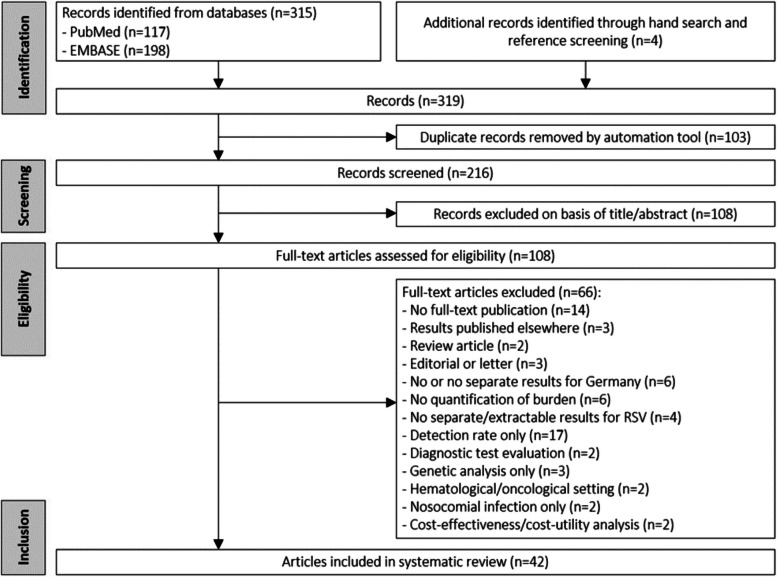
We conducted a systematic literature search to identify full-text articles published from 2003 to 2023 and reporting data on the epidemiological or economic burden of RSV in Germany. Based on pre-specified eligibility criteria, data on incidence, rates of hospital and intensive care unit (ICU) admission, clinical manifestation, underlying conditions, seasonality, health care resource use and costs were extracted.
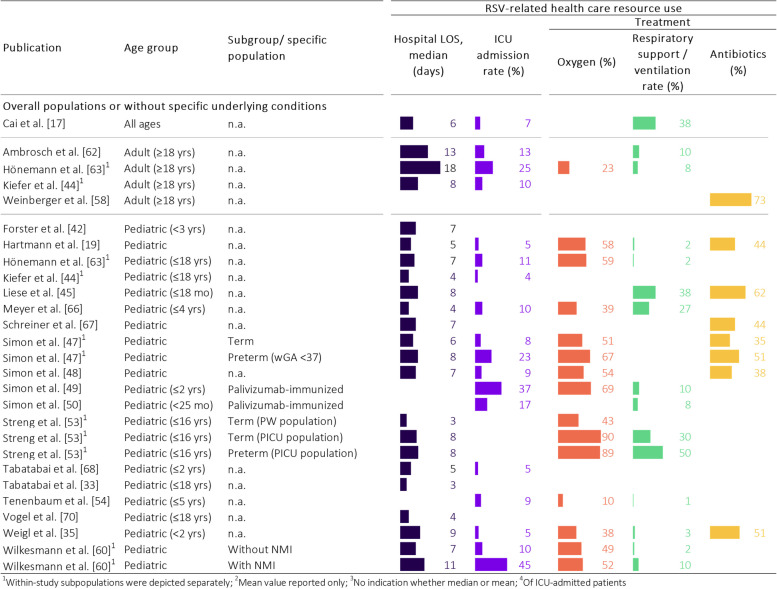
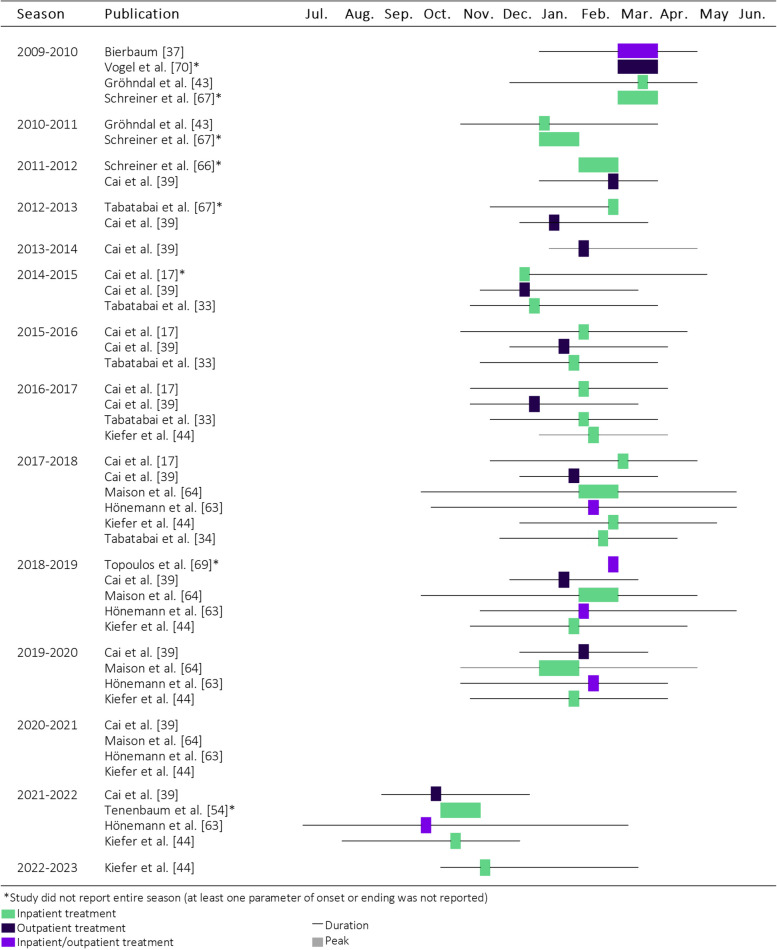
After screening 315 full-text articles, we included 42 articles in the review. The characteristics of the included studies were heterogenous regarding study population, setting, age groups and RSV-related outcome measures. The most frequently reported epidemiological outcome measures were RSV detection rate (n = 33), followed by clinical manifestation (n = 19), seasonality (n = 18), and underlying conditions of RSV infection (n = 13). RSV detection rates were reported across heterogenous study populations, ranging from 5.2 to 55.4% in pediatric inpatient cases and from 2.9 to 14% in adult inpatient cases. All articles that reported RSV detection rates across several age groups demonstrated the highest burden in infants and young children. Few articles reported RSV-related outcome measures distinctively for the outpatient setting. Health care resource use, such as hospital length of stay, ICU admission rate and treatment of patients with RSV infection were described in 23 articles, of which only one study quantified associated costs from 1999 to 2003 for children ≤ 3 years. In-hospital ICU admission rates varied between 3.6 and 45%, depending on population characteristics as age and underlying conditions.
This systematic review revealed that RSV imposes substantial disease burden in infants, young children, and the elderly in Germany, whereby infants are particularly affected. To date, there has been limited exploration of the impact of RSV infection on healthy children or the elderly in Germany. Given their notably high reported burden in studies, the medical and economic RSV burden in these groups should move more into focus.
呼吸道合胞病毒(RSV)是导致婴幼儿、儿童和老年人急性下呼吸道感染和住院的主要原因。本系统文献综述旨在总结德国任何年龄段 RSV 感染的流行病学和经济负担估计。
我们进行了系统的文献检索,以确定 2003 年至 2023 年发表的全文文章,并报告了德国 RSV 流行病学或经济负担的数据。根据预先确定的纳入标准,提取了发病率、住院和重症监护病房(ICU)入院率、临床表现、基础疾病、季节性、医疗资源使用和成本的数据。
在筛选了 315 篇全文文章后,我们共纳入了 42 篇文章进行综述。纳入研究的特征在研究人群、设置、年龄组和与 RSV 相关的结局测量方面存在异质性。最常报告的流行病学结局测量是 RSV 检出率(n=33),其次是临床表现(n=19)、季节性(n=18)和 RSV 感染的基础疾病(n=13)。RSV 检出率在异质的研究人群中报告,儿科住院病例为 5.2%至 55.4%,成人住院病例为 2.9%至 14%。所有报告跨多个年龄组 RSV 检出率的文章都表明婴儿和幼儿的负担最重。少数文章专门报告了门诊环境中与 RSV 相关的结局测量。医疗资源的使用,如住院时间、ICU 入院率和 RSV 感染患者的治疗,在 23 篇文章中有描述,其中只有一篇研究从 1999 年至 2003 年定量描述了 3 岁以下儿童相关的成本。住院 ICU 入院率因人口特征(如年龄和基础疾病)而异,范围为 3.6%至 45%。
本系统综述表明,RSV 在德国婴幼儿和老年人中造成了严重的疾病负担,其中婴儿受影响尤为严重。迄今为止,德国对 RSV 感染对健康儿童或老年人的影响的研究有限。鉴于这些人群的负担在研究中报告的负担显著较高,这些人群的 RSV 医疗和经济负担应更加受到关注。