Wetzke Martin, Schütz Katharina, Kopp Matthias Volkmar, Seidenberg Jürgen, Vogelberg Christian, Ankermann Tobias, Happle Christine, Voigt Gesche, Köster Holger, Illig Thomas, Lex Christiane, Schuster Antje, Maier Ralph, Panning Marcus, Barten Grit, Rohde Gernot, Welte Tobias, Hansen Gesine
Department of Paediatric Pneumology, Allergology and Neonatology, Hannover Medical School, Hannover, Germany.
Biomedical Research in End stage and Obstructive Lung Disease (BREATH) Hannover and Airway Research Center North (ARCN) Lübeck, Member of the German Center for Lung Research (DZL), Lübeck, Germany.
ERJ Open Res. 2023 Mar 13;9(2). doi: 10.1183/23120541.00286-2022. eCollection 2023 Mar.
Paediatric community-acquired pneumonia (CAP) is a leading cause of paediatric morbidity. However, particularly for outpatients with paediatric CAP, data on aetiology and management are scarce.
The prospective pedCAPNETZ study multicentrically enrols children and adolescents with outpatient-treated or hospitalised paediatric CAP in Germany. Blood and respiratory specimens were collected systematically, and comprehensive analyses of pathogen spectra were conducted. Follow-up evaluations were performed until day 90 after enrolment.
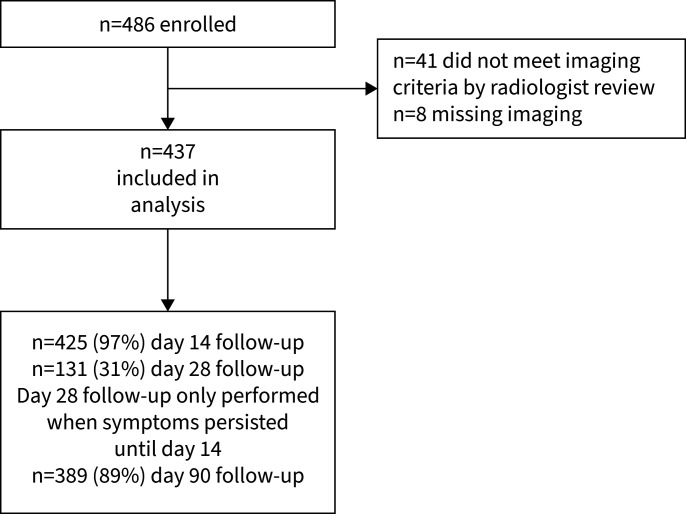
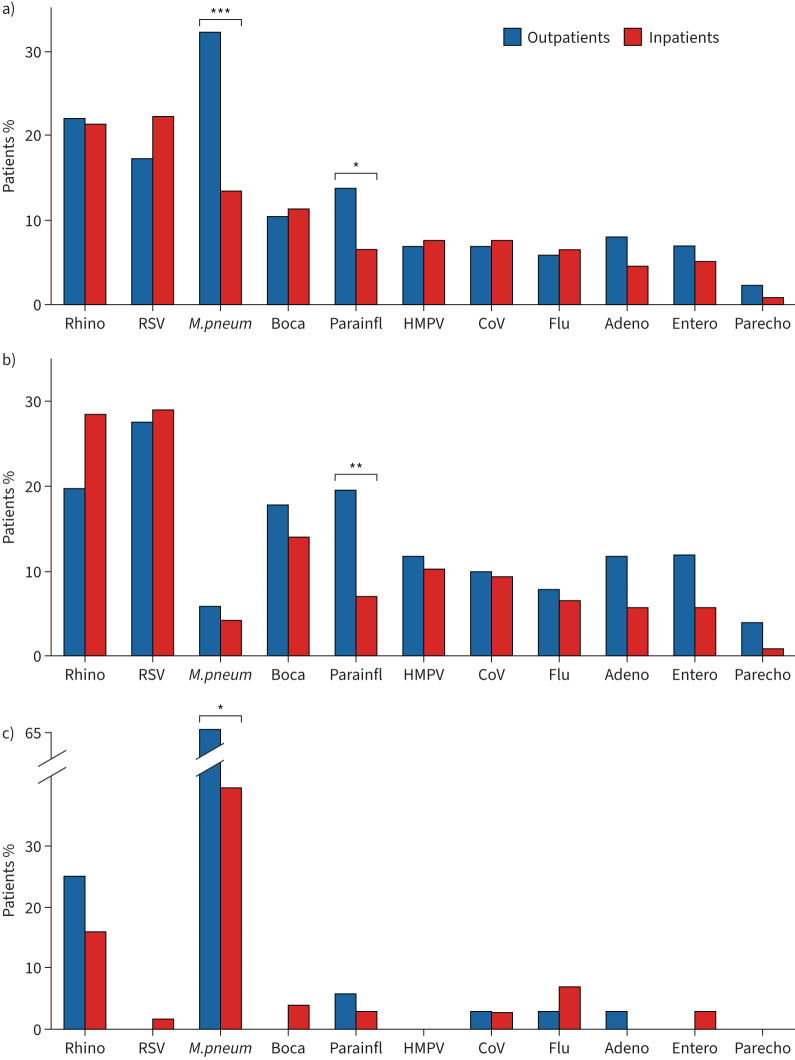
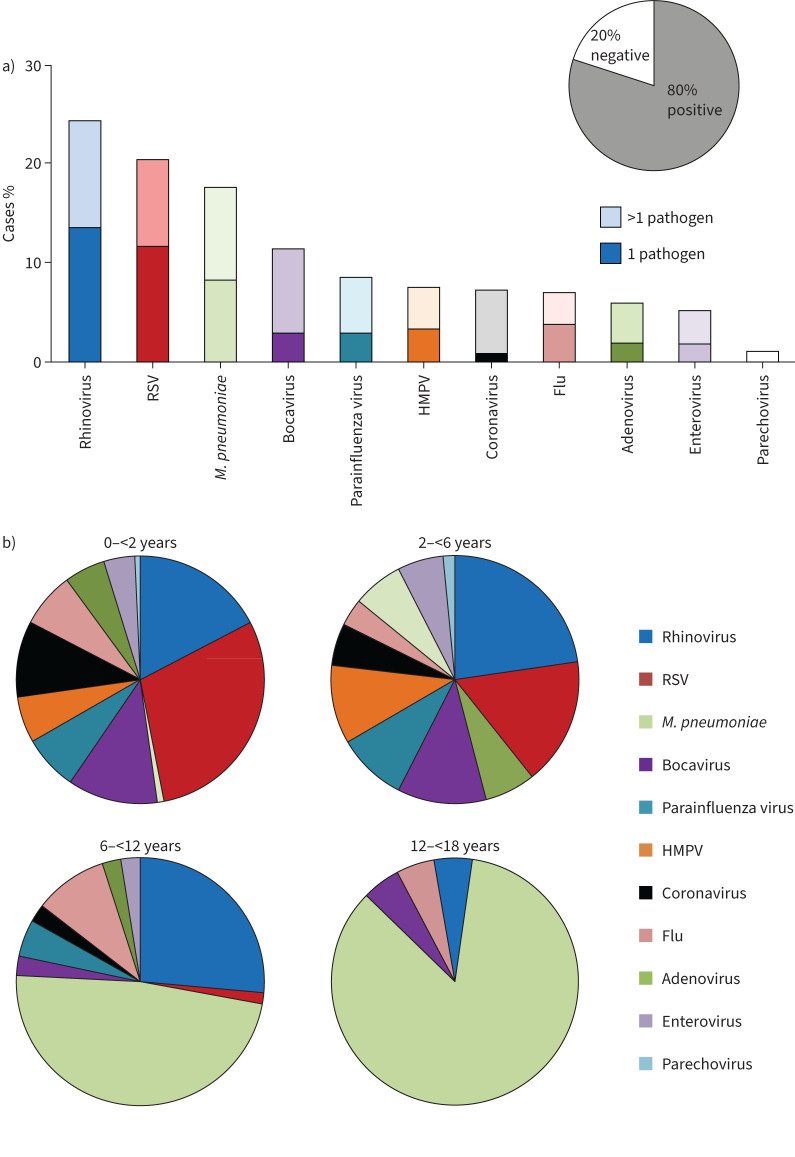
Between December 2014 and August 2020, we enrolled 486 children with paediatric CAP at eight study sites, 437 (89.9%) of whom had radiographic evidence of paediatric CAP. Median (interquartile range) age was 4.5 (1.6-6.6) years, and 345 (78.9%) children were hospitalised. The most prevalent symptoms at enrolment were cough (91.8%), fever (89.2%) and tachypnoea (62.0%). Outpatients were significantly older, displayed significantly lower C-reactive protein levels and were significantly more likely to be symptom-free at follow-up days 14 and 90. Pathogens were detected in 90.3% of all patients (one or more viral pathogens in 68.1%; one or more bacterial strains in 18.7%; combined bacterial/viral pathogens in 4.1%). Parainfluenza virus and were significantly more frequent in outpatients. The proportion of patients with antibiotic therapy was comparably high in both groups (92.4% of outpatients 86.2% of hospitalised patients).
We present first data on paediatric CAP with comprehensive analyses in outpatients and hospitalised cases and demonstrate high detection rates of viral pathogens in both groups. Particularly in young paediatric CAP patients with outpatient care, antibiotic therapy needs to be critically debated.
儿童社区获得性肺炎(CAP)是儿童发病的主要原因。然而,特别是对于儿科CAP门诊患者,病因和管理方面的数据稀缺。
前瞻性pedCAPNETZ研究在德国多中心招募接受门诊治疗或住院治疗的儿科CAP儿童和青少年。系统收集血液和呼吸道标本,并对病原体谱进行综合分析。在入组后第90天进行随访评估。
2014年12月至2020年8月期间,我们在8个研究地点招募了486例儿科CAP患儿,其中437例(89.9%)有儿科CAP的影像学证据。中位(四分位间距)年龄为4.5(1.6 - 6.6)岁,345例(78.9%)儿童住院。入组时最常见的症状是咳嗽(91.8%)、发热(89.2%)和呼吸急促(62.0%)。门诊患者年龄显著更大,C反应蛋白水平显著更低,在随访第14天和第90天无症状的可能性显著更高。90.3%的患者检测到病原体(68.1%为一种或多种病毒病原体;18.7%为一种或多种细菌菌株;4.1%为细菌/病毒混合病原体)。副流感病毒在门诊患者中显著更常见。两组接受抗生素治疗的患者比例都相当高(门诊患者为92.4%,住院患者为86.2%)。
我们提供了关于儿科CAP门诊和住院病例综合分析的首批数据,并证明两组中病毒病原体的检出率都很高。特别是在接受门诊治疗的年幼儿科CAP患者中,抗生素治疗需要进行严格辩论。