Department of Zoology, Entomology and Fisheries Sciences, College of Natural Sciences, Makerere University, P. O. Box 7062, Kampala, Uganda.
Uganda Wildlife Research and Training Institute, P. O. Box 173, Kasese, Uganda.
J Ethnobiol Ethnomed. 2024 Aug 20;20(1):78. doi: 10.1186/s13002-024-00720-w.
While bats are tremendously important to global ecosystems, they have been and continue to be threatened by loss of habitat, food, or roosts, pollution, bat diseases, hunting and killing. Some bat species have also been implicated in the transmission of infectious disease agents to humans. While One Health efforts have been ramped up recently to educate and protect human and bat health, such initiatives have been limited by lack of adequate data on the pathways to ensure their support. For instance, data on the role of bats in supporting different components of human welfare assets would be utilized as a stepping stone to champion conservation campaigns. Unfortunately, these data are limited and efforts to synthesize existing literature have majorly focused on few components human welfare leaving other important aspects.
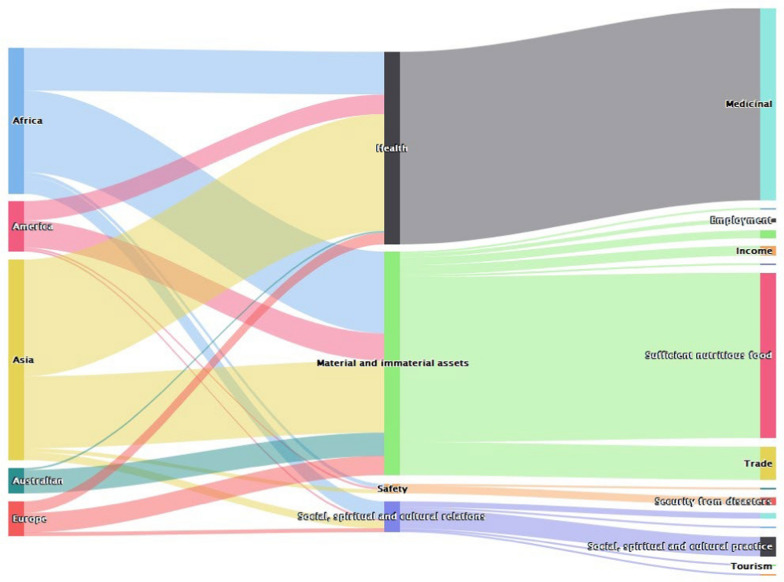
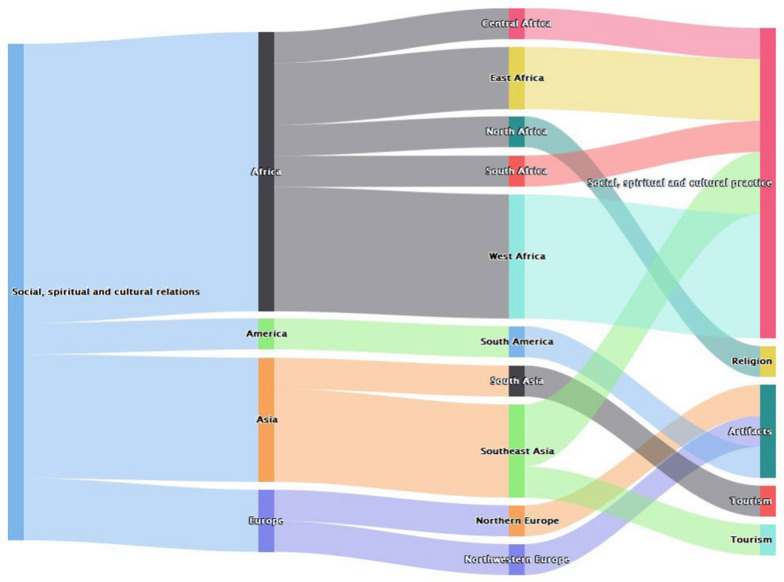
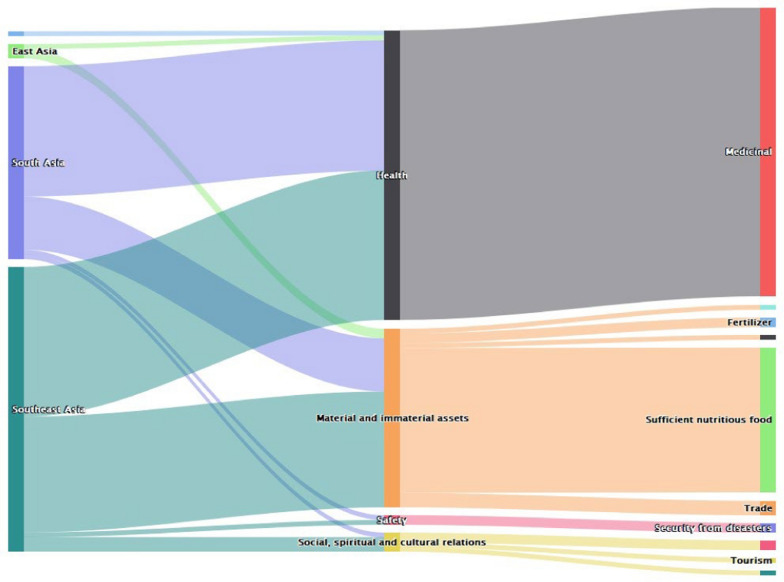
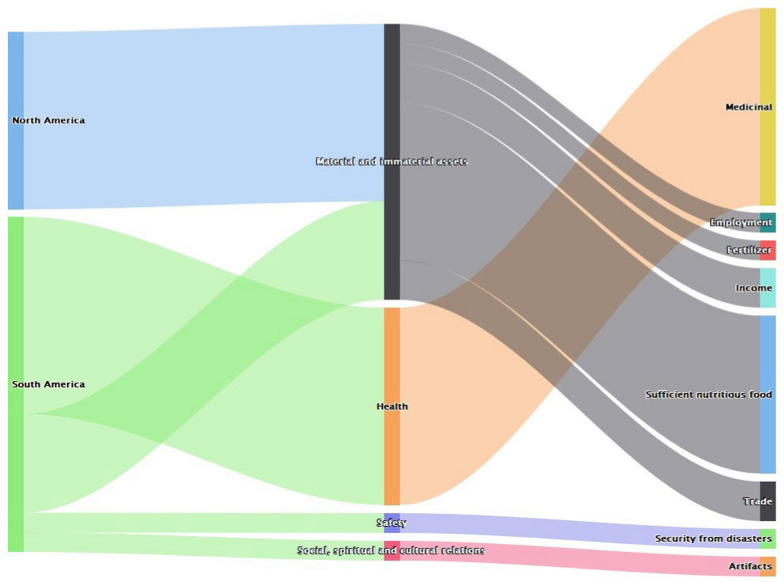
Here, we analyze benefits associated with bats in the context of welfare economics considering all the asset components. We surveyed scientific and gray literature platforms utilizing particular keywords. We then classified these values using integrated approaches to understand different values across human welfare assets of "health," "material and immaterial assets," "security or safety" and "social or cultural or spiritual relations".
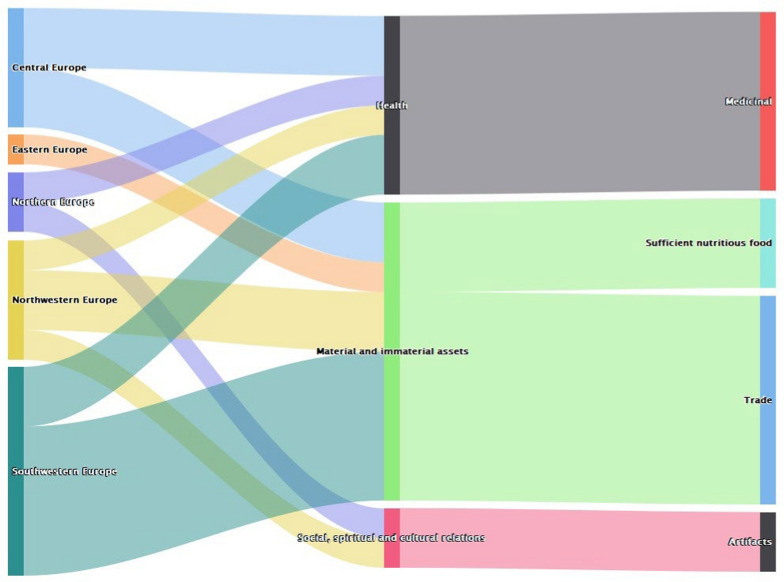
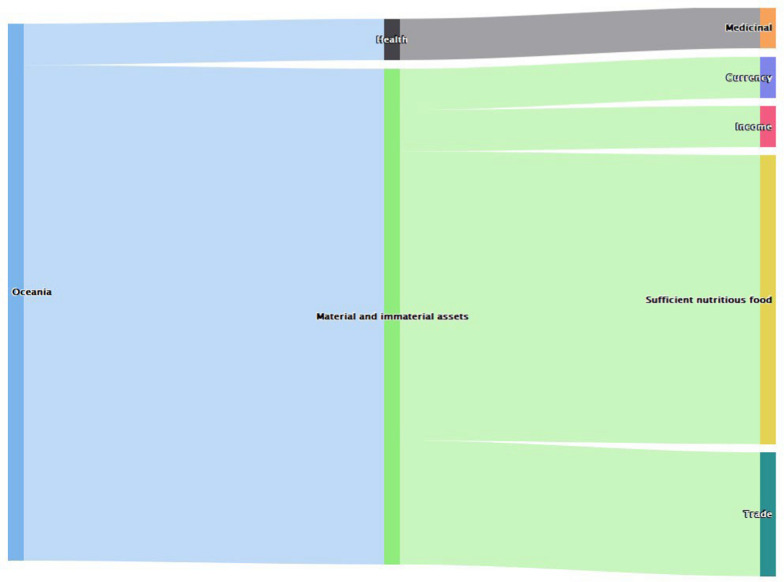
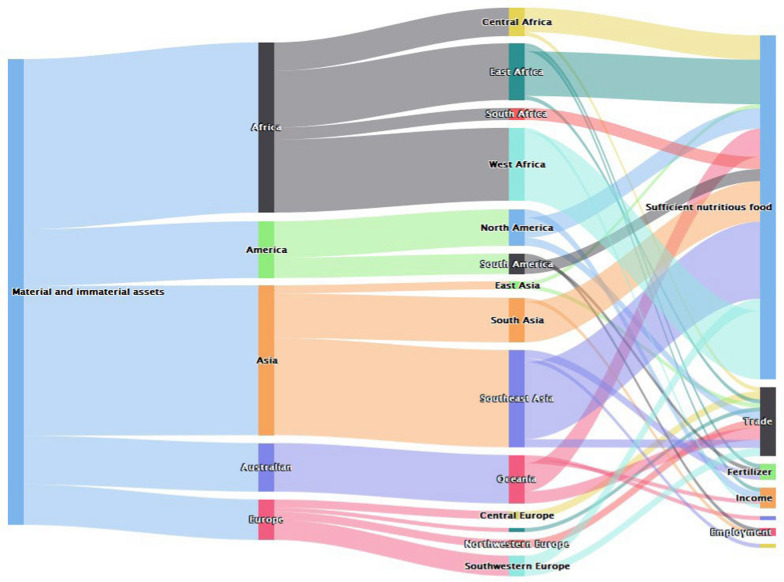
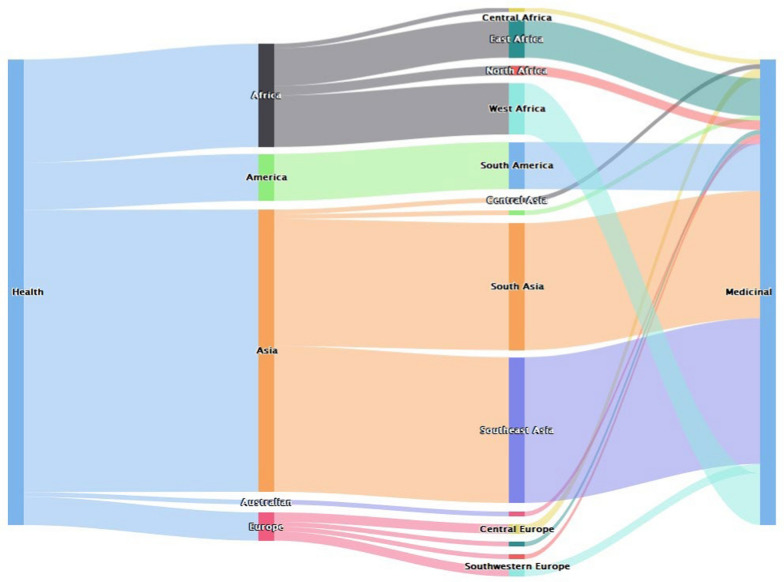
We found 235 papers from different countries indicating that bats play fundamental roles in supporting human welfare. These benefits were more prevalent in Asia and Africa. In terms of the use of bats to support welfare assets, bats were majorly utilized to derive material and immaterial benefits (n = 115), e.g., food and income. This was followed by their use in addressing health challenges (n = 99), e.g., treatment of ailments. There was a similarity in the benefits across different regions and countries.
These results indicate potential opportunities for strengthening bat conservation programs. We recommend more primary studies to enhance understanding of these benefits as well as their effectiveness in deriving the perceived outcomes.
虽然蝙蝠对全球生态系统至关重要,但它们一直且仍在受到栖息地、食物或栖息地丧失、污染、蝙蝠疾病、狩猎和捕杀的威胁。一些蝙蝠物种也被认为是传染病病原体传染给人类的媒介。虽然最近已经加大了“One Health”努力的力度来教育和保护人类和蝙蝠的健康,但由于缺乏确保支持的途径的足够数据,这些举措受到了限制。例如,关于蝙蝠在支持人类福利资产不同组成部分方面的作用的数据将被用作支持保护运动的垫脚石。不幸的是,这些数据有限,并且综合现有文献的努力主要集中在少数几个人类福利组成部分上,而忽略了其他重要方面。
在这里,我们考虑到福利经济学的所有资产组成部分,分析了蝙蝠相关的利益。我们利用特定的关键词,调查了科学和灰色文献平台。然后,我们使用综合方法对这些价值进行分类,以了解“健康”、“物质和非物质资产”、“安全或安全”和“社会或文化或精神关系”等人类福利资产的不同价值。
我们从不同国家找到了 235 篇论文,表明蝙蝠在支持人类福利方面发挥着重要作用。这些好处在亚洲和非洲更为普遍。就蝙蝠用于支持福利资产而言,蝙蝠主要用于获得物质和非物质利益(n=115),例如食物和收入。其次是它们在解决健康挑战方面的应用(n=99),例如治疗疾病。不同地区和国家的利益存在相似之处。
这些结果表明,加强蝙蝠保护计划的潜力巨大。我们建议进行更多的基础研究,以增强对这些利益及其在获得感知结果方面的有效性的理解。