Meleshko Olena, Martin Michael D, Flatberg Kjell Ivar, Stenøien Hans K, Korneliussen Thorfinn Sand, Szövényi Péter, Hassel Kristian
Department of Natural History, NTNU University Museum Norwegian University of Science and Technology Trondheim Norway.
Section for GeoGenetics, Globe Institute University of Copenhagen Copenhagen Denmark.
Evol Appl. 2024 Aug 19;17(8):e13767. doi: 10.1111/eva.13767. eCollection 2024 Aug.
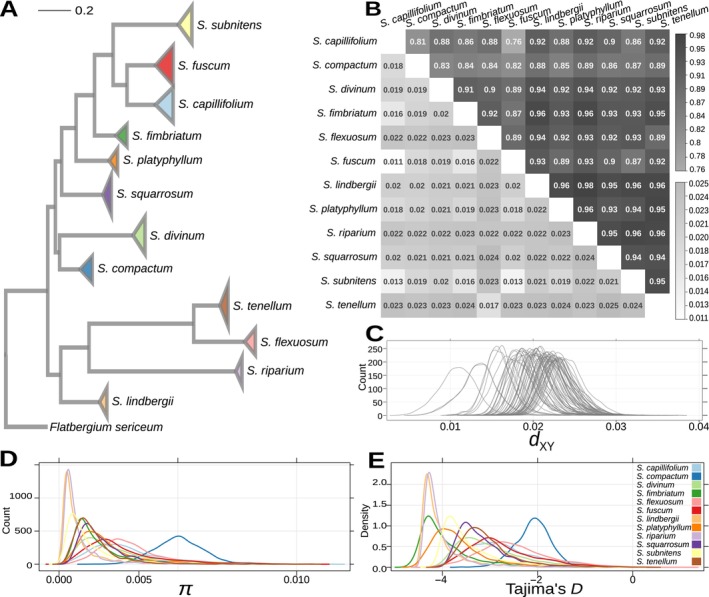
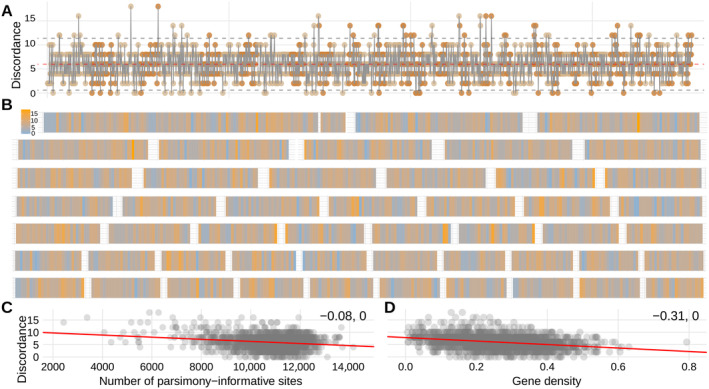
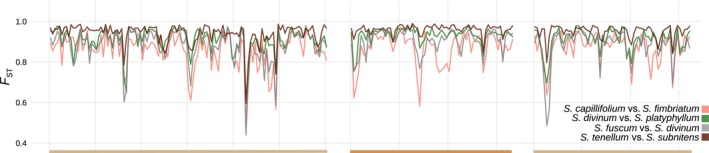
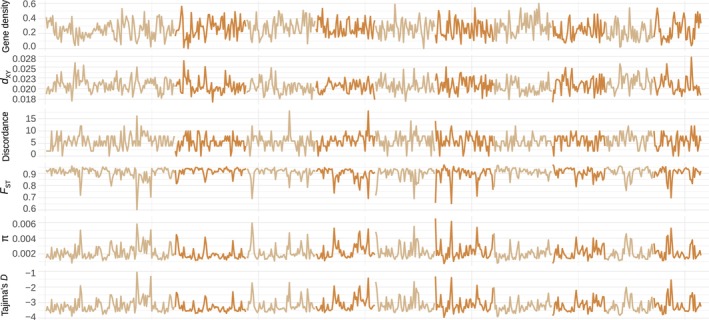
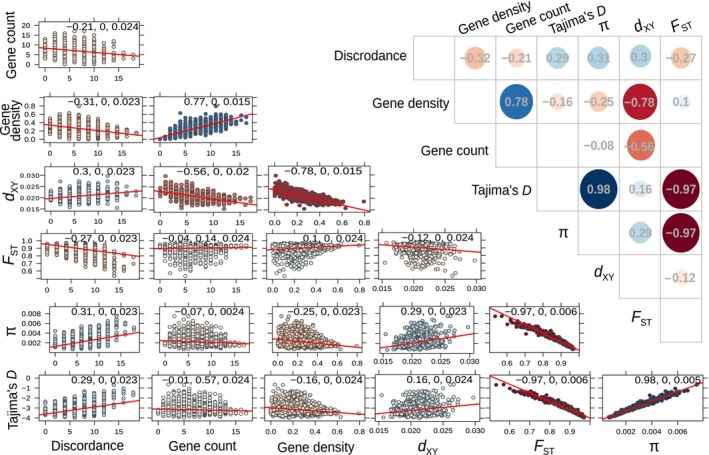
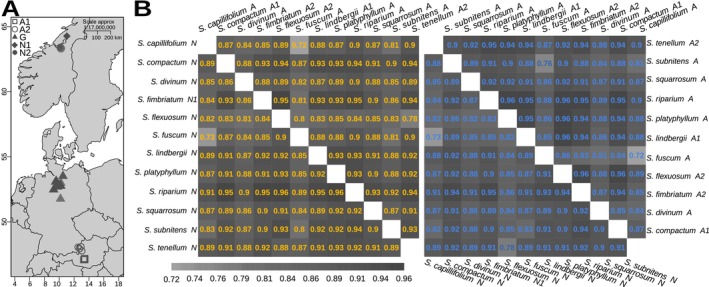
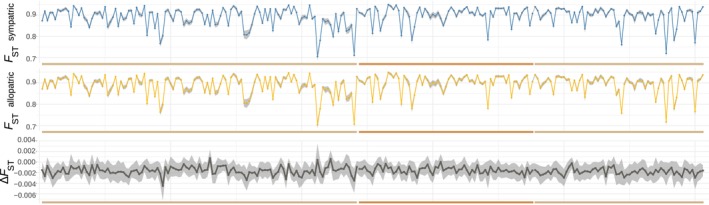
Genome evolution under speciation is poorly understood in nonmodel and nonvascular plants, such as bryophytes-the largest group of nonvascular land plants. Their genomes are structurally different from angiosperms and likely subjected to stronger linked selection pressure, which may have profound consequences on genome evolution in diversifying lineages, even more so when their genome architecture is conserved. We use the highly diverse, rapidly radiated group of peatmosses () to characterize the processes affecting genome diversification in bryophytes. Using whole-genome sequencing data from populations of 12 species sampled at different phylogenetic and geographical scales, we describe high correlation of the genomic landscapes of differentiation, divergence, and diversity in . Coupled with evidence from the patterns of covariation among different measures of genetic diversity, phylogenetic discordance, and gene density, this provides strong support that peatmoss genome evolution has been shaped by the long-term effects of linked selection, constrained by distribution of selection targets in the genome. Thus, peatmosses join the growing number of animal and plant groups where functional features of the genome, such as gene density, and linked selection drive genome evolution along predetermined and highly similar routes in different species. Our findings demonstrate the great potential of bryophytes for studying the genomics of speciation and highlight the urgent need to expand the genomic resources in this remarkable group of plants.
在非模式植物和非维管植物中,如苔藓植物(苔藓植物是最大的非维管陆地植物类群),物种形成过程中的基因组进化仍知之甚少。它们的基因组在结构上与被子植物不同,可能受到更强的连锁选择压力,这可能对多样化谱系中的基因组进化产生深远影响,当它们的基因组结构保守时更是如此。我们利用高度多样化、快速辐射演化的泥炭藓类群来描述影响苔藓植物基因组多样化的过程。通过对来自不同系统发育和地理尺度的12个物种群体的全基因组测序数据,我们描述了泥炭藓中分化、分歧和多样性的基因组景观的高度相关性。再加上来自遗传多样性不同指标之间的协变模式、系统发育不一致性和基因密度的证据,这有力地支持了泥炭藓基因组进化是由连锁选择的长期效应塑造的,受到基因组中选择靶点分布的限制。因此,泥炭藓加入了越来越多的动植物类群,在这些类群中,基因组的功能特征,如基因密度,以及连锁选择在不同物种中沿着预定且高度相似的路径驱动基因组进化。我们的研究结果证明了苔藓植物在研究物种形成基因组学方面的巨大潜力,并强调了迫切需要扩大这一非凡植物类群的基因组资源。