Arora Ruma, Sudhakar K, Rana R S
Engineering Science and Humanities, Chameli Devi Group of Institutions Indore, M.P, India.
Faculty of Mechanical and Automotive Engineering Technology, Universiti Malaysia Pahang Al Sultan Abdullah, 26600, Pekan, Pahang, Malaysia.
Heliyon. 2024 Jul 26;10(15):e35168. doi: 10.1016/j.heliyon.2024.e35168. eCollection 2024 Aug 15.
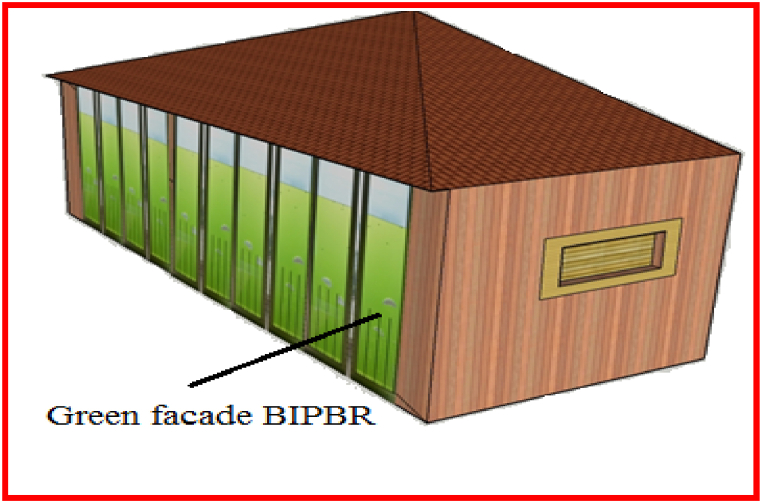
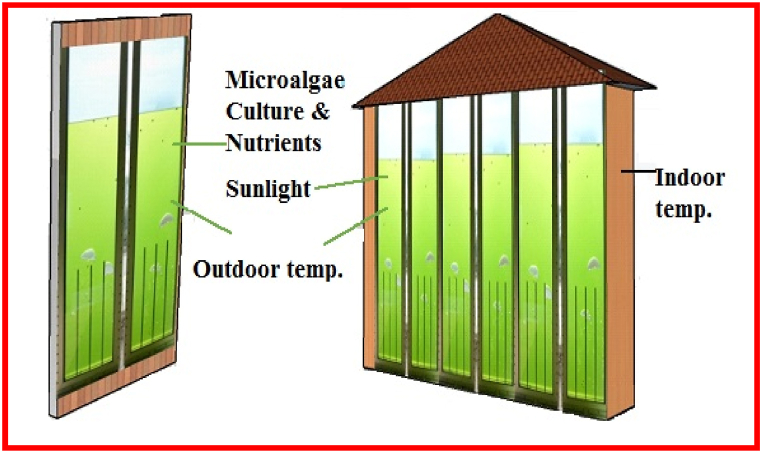
The global community faces critical energy and environmental challenges, necessitating innovative solutions to ensure a sustainable future.In response to these challenges, this paper explores the potential of integrating microalgal biotechnology with renewable energy systems within buildings. This innovative approach could transform architecture into a "bio-factory" capable of producing food, energy, and other valuable products.The success of this concept hinges on developing highly efficient photobioreactors specifically designed for building integration. Optimizing these systems requires careful consideration of design parameters, growth rate models, and factors influencing performance within diverse urban environments.Furthermore, integrating these systems must prioritize productivity and aesthetics to promote urban self-sufficiency and a sustainable built environment. By utilizing microalgae and renewable energy sources, building-integrated photobioreactors offer a promising solution for reducing energy consumption and carbon footprints in modern buildings.
全球社会面临着严峻的能源和环境挑战,需要创新解决方案以确保可持续的未来。为应对这些挑战,本文探讨了将微藻生物技术与建筑内的可再生能源系统相结合的潜力。这种创新方法可以将建筑转变为一个能够生产食物、能源和其他有价值产品的“生物工厂”。这一概念的成功取决于开发专门为建筑集成设计的高效光生物反应器。优化这些系统需要仔细考虑设计参数、生长速率模型以及影响不同城市环境中性能的因素。此外,整合这些系统必须优先考虑生产力和美观性,以促进城市自给自足和可持续的建筑环境。通过利用微藻和可再生能源,建筑集成光生物反应器为减少现代建筑的能源消耗和碳足迹提供了一个有前景的解决方案。