Yu Ting, Zheng Fang, He Wenbo, Muyldermans Serge, Wen Yurong
Center for Microbiome Research of Med-X Institute, Shaanxi Provincial Key Laboratory of Sepsis in Critical Care Medicine, The First Affiliated Hospital, Xi'an Jiaotong University, Xi'an, China.
The Key Laboratory of Environment and Genes Related to Disease of Ministry of Education, Health Science Center, Xi'an Jiaotong University, Xi'an, China.
Immunol Rev. 2024 Nov;328(1):98-112. doi: 10.1111/imr.13381. Epub 2024 Aug 21.
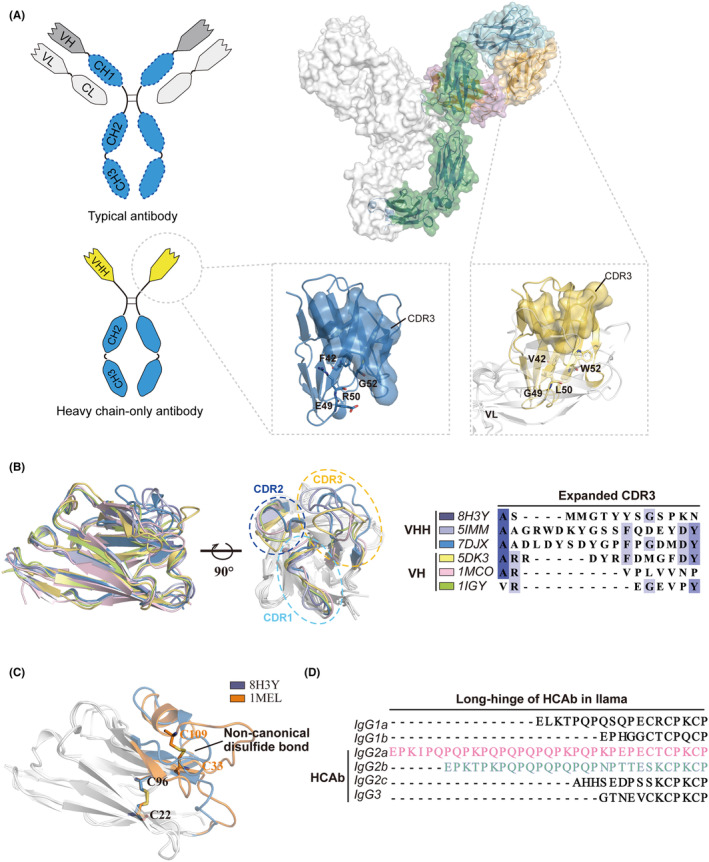
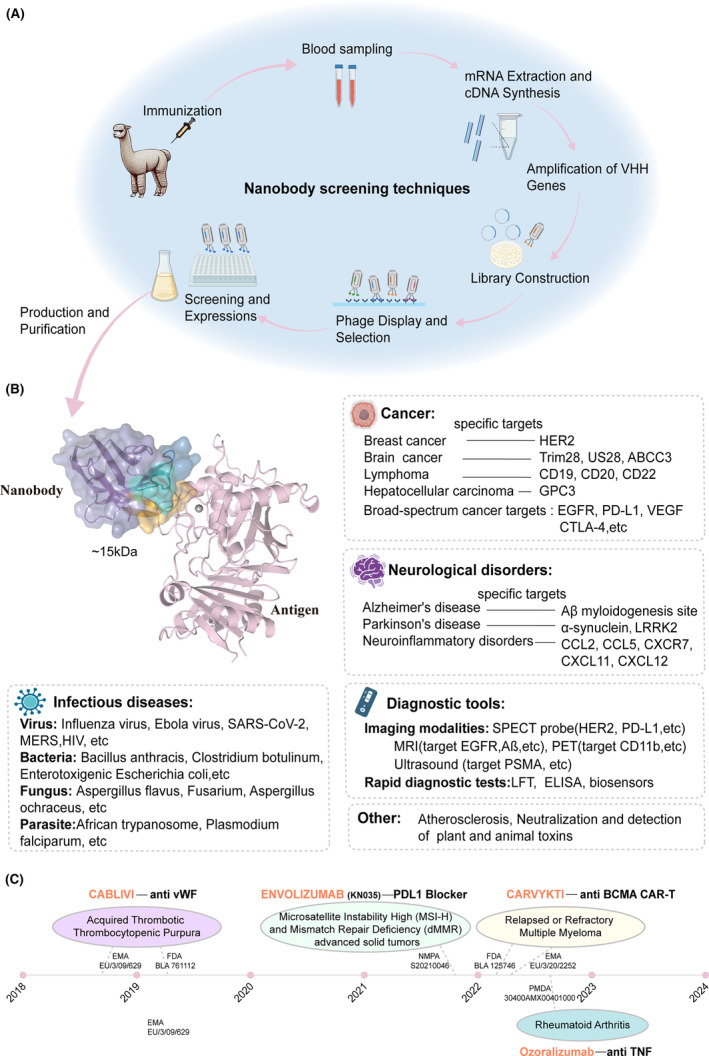
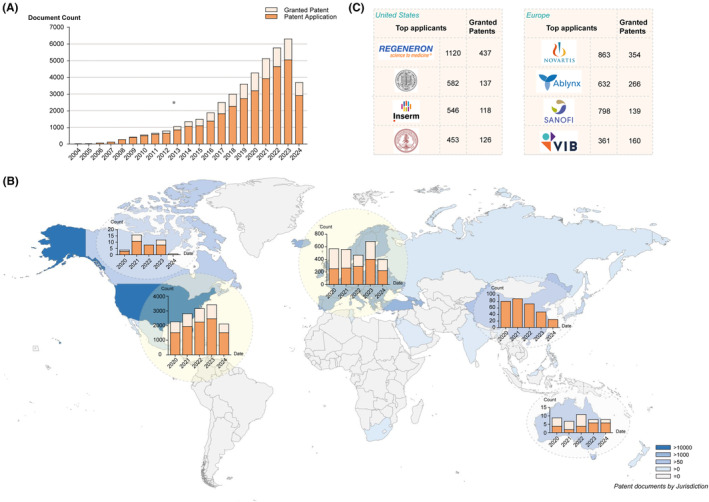
Heavy-chain antibodies (HCAbs) are a unique type of antibodies devoid of light chains, and comprised of two heavy chains-only that recognize their cognate antigen by virtue of a single variable domain also referred to as VHH, single domain antibody (sdAb), or nanobody (Nb). These functional HCAbs, serendipitous discovered about three decades ago, are exclusively found in camelids, comprising dromedaries, camels, llamas, and vicugnas. Nanobodies have become an essential tool in biomedical research and medicine, both in diagnostics and therapeutics due to their beneficial properties: small size, high stability, strong antigen-binding affinity, low immunogenicity, low production cost, and straightforward engineering into more potent affinity reagents. The occurrence of HCAbs in camelids remains intriguing. It is believed to be an evolutionary adaptation, equipping camelids with a robust adaptive immune defense suitable to respond to the pressure from a pathogenic invasion necessitating a more profound antigen recognition and neutralization. This evolutionary innovation led to a simplified HCAb structure, possibly supported by genetic mutations and drift, allowing adaptive mutation and diversification in the heavy chain variable gene and constant gene regions. Beyond understanding their origins, the application of nanobodies has significantly advanced over the past 30 years. Alongside expanding laboratory research, there has been a rapid increase in patent application for nanobodies. The introduction of commercial nanobody drugs such as Cablivi, Nanozora, Envafolimab, and Carvykti has boosted confidence among in their potential. This review explores the evolutionary history of HCAbs, their ontogeny, and applications in biotechnology and pharmaceuticals, focusing on approved and ongoing medical research pipelines.
重链抗体(HCAbs)是一种独特的抗体类型,不含轻链,仅由两条重链组成,其通过一个也被称为VHH、单域抗体(sdAb)或纳米抗体(Nb)的单个可变域识别其同源抗原。这些功能性重链抗体大约在三十年前被偶然发现,仅存在于骆驼科动物中,包括单峰驼、骆驼、美洲驼和小羊驼。由于纳米抗体具有诸多有益特性:尺寸小、稳定性高、抗原结合亲和力强、免疫原性低、生产成本低以及易于工程改造为更有效的亲和试剂,它们已成为生物医学研究和医学领域诊断与治疗中的重要工具。骆驼科动物中重链抗体的存在仍然引人关注。人们认为这是一种进化适应,使骆驼科动物具备强大的适应性免疫防御,以应对病原体入侵带来的压力,从而需要更深入的抗原识别和中和。这种进化创新导致了重链抗体结构的简化,可能受到基因突变和漂变的支持,使得重链可变基因和恒定基因区域能够进行适应性突变和多样化。除了了解它们的起源,在过去30年里纳米抗体的应用有了显著进展。除了实验室研究不断扩展外,纳米抗体的专利申请也迅速增加。Cablivi、Nanozora、Envafolimab和Carvykti等商业纳米抗体药物的推出增强了人们对其潜力的信心。本综述探讨了重链抗体的进化史、个体发育以及在生物技术和制药领域的应用,重点关注已获批和正在进行的医学研究管线。