Majumdar Dhrubajyoti, Chatterjee Ankita, Feizi-Dehnayebi Mehran, Kiran Neelakanta Sarvashiva, Tuzun Burak, Mishra Dipankar
Department of Chemistry, Tamralipta Mahavidyalaya, Tamluk, 721636, West Bengal, India.
Department of Biotechnology, School of Applied Sciences, REVA University, Kattigenahalli, Yelahanka, Bangalore, Karnataka, India, 560064.
Heliyon. 2024 Aug 2;10(15):e35591. doi: 10.1016/j.heliyon.2024.e35591. eCollection 2024 Aug 15.
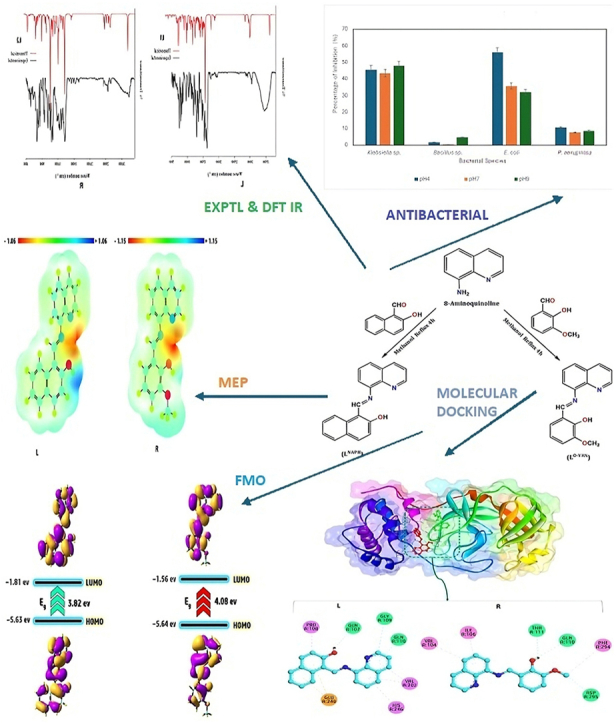
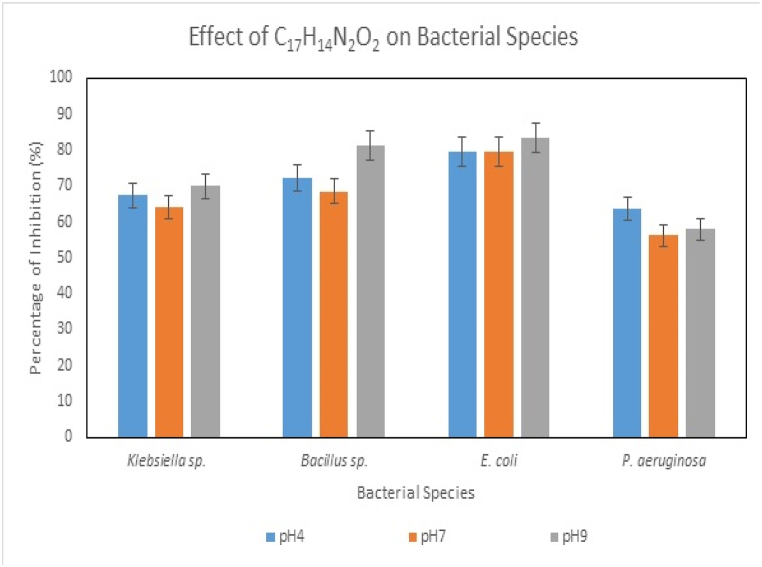
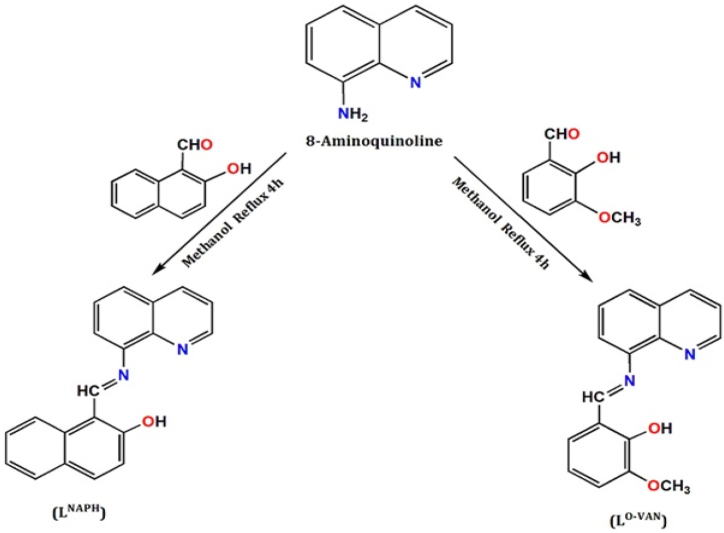
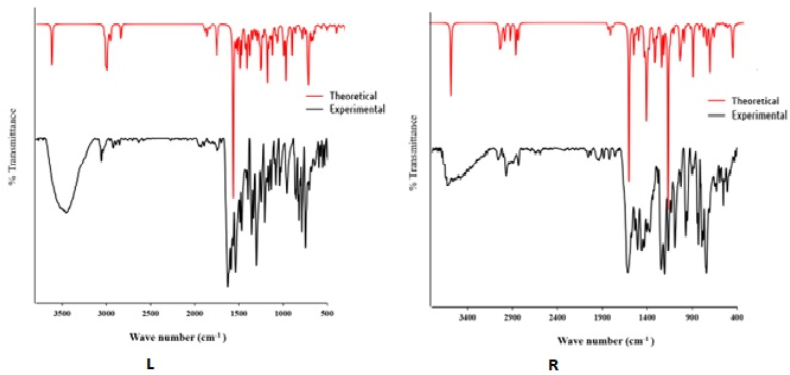
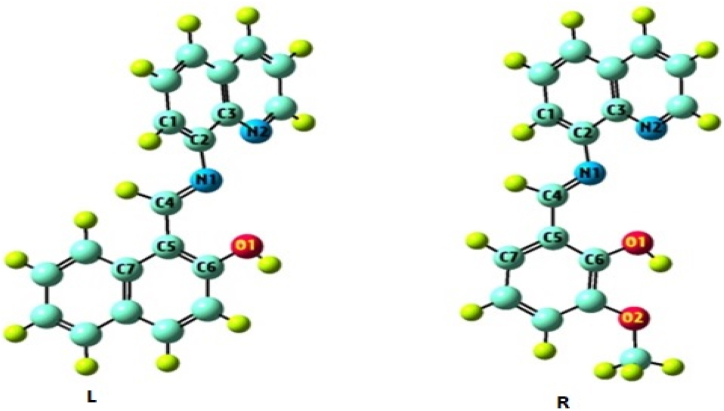
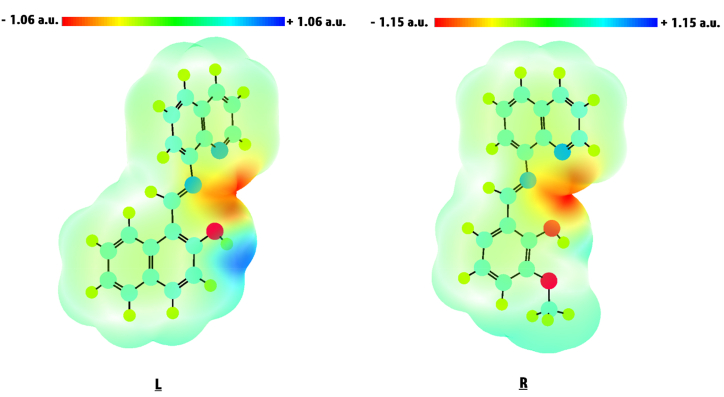
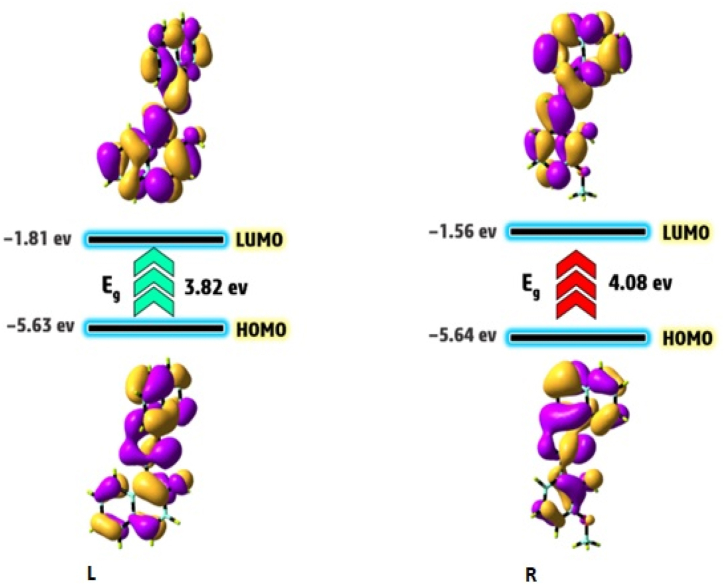
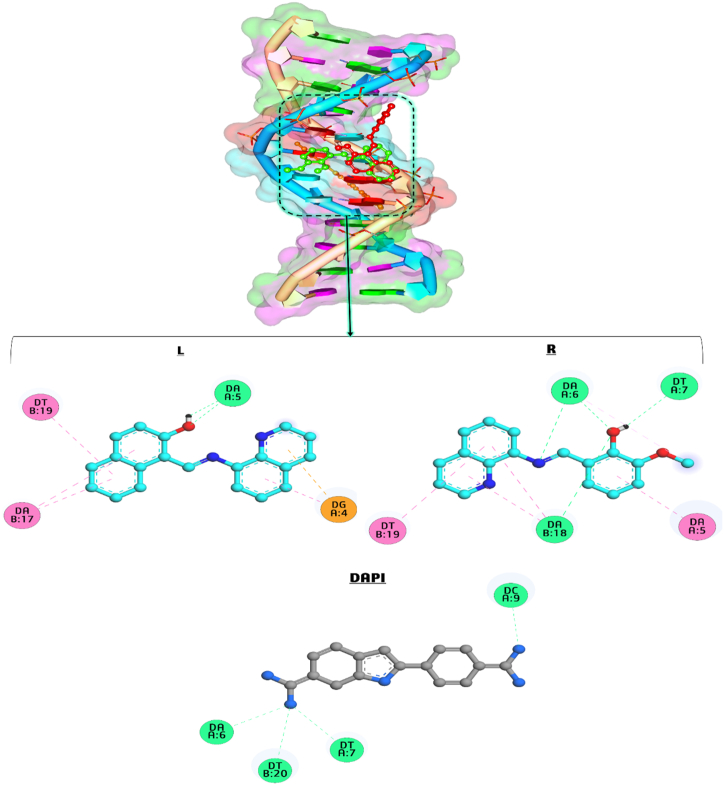
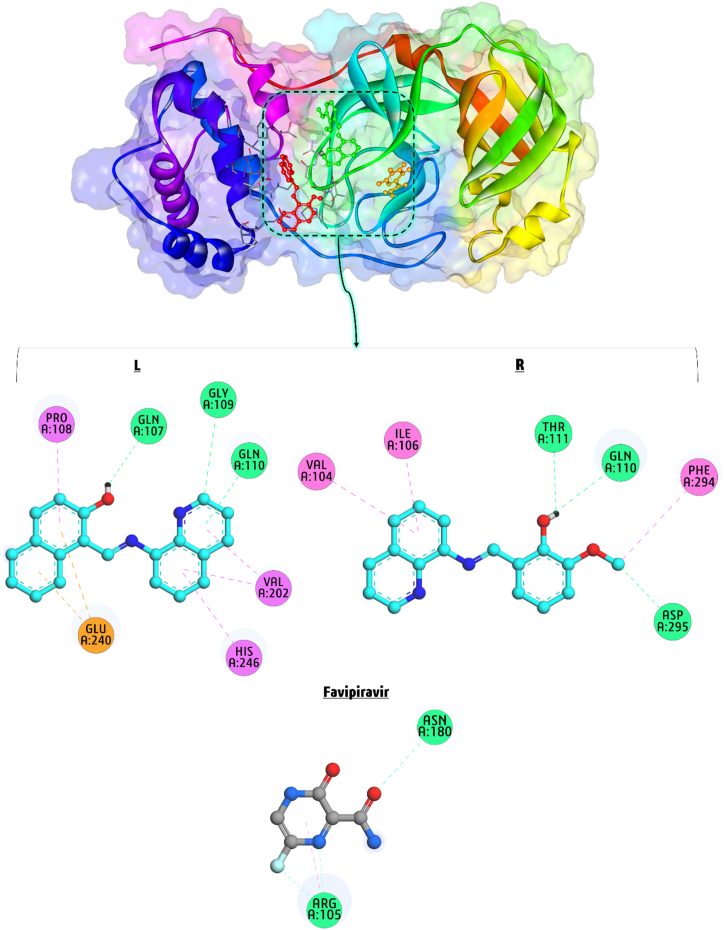
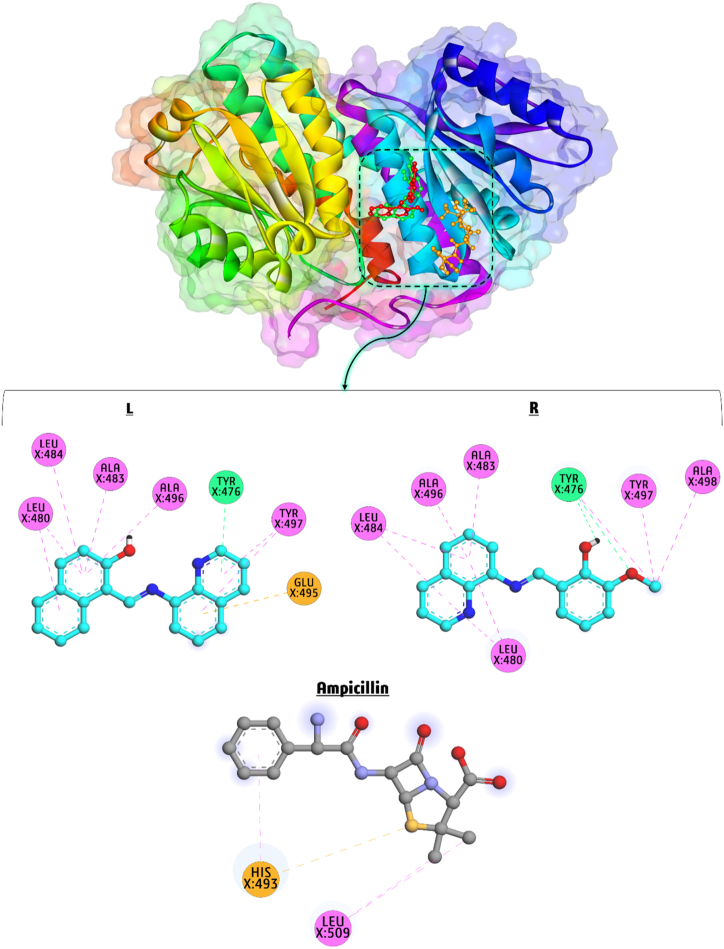
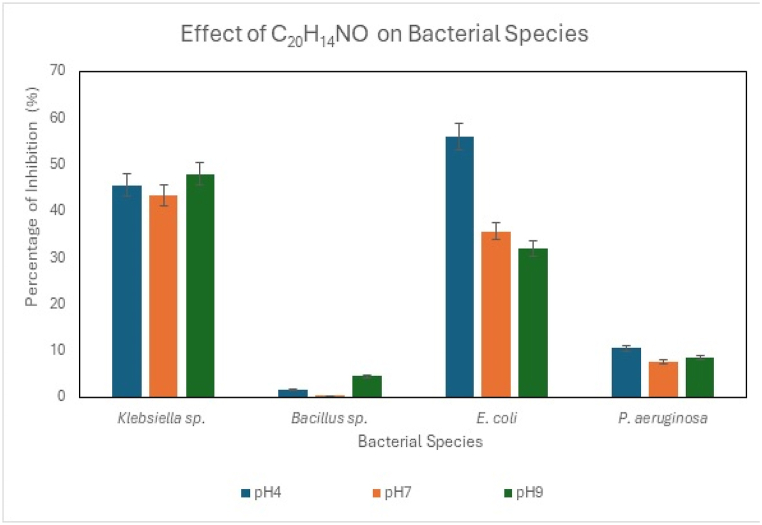
The current research divulges the synthesis of two new Schiff base (SB) ( / ) derived from 8-aminoquinoline (8-AMQ) in the presence of 2-hydroxy naphthaldehyde (NAPH) and ortho-vanillin (O-VAN) in CHOH solvent. They are structurally characterized by spectroscopic methods (IR/Raman/UV-vis/DRS/NMR) and SEM-EDX. SB compounds have a biologically active avenue of azomethine/imine group (H-C=N) that can donate N e's to M ions, showing coordinating flexibility. The -OH and imine (H-C=N) groups are stable in air, light, and alkalis but undergo acidic environments hydrolysis, separating -NH and carbonyl compounds. Moreover, buffer solutions with a pH range of 4-6 release aldehyde. Molecular electrostatic potential (MEP), Frontier molecular orbitals (FMO), Fukui function, and Non-linear optical (NLO) were conducted to elucidate SBs chemical potency, optoelectronic significance, and corrosion inhibitor. Accordingly, the calculated ΔE of FMO for and is 3.82 and 4.08 eV, ensuring potent biological function. DFT supported the experimental and theoretical IR spectral correlation to enrich better structural insights. NLO-based polarizability (α) and hyperpolarizability (β) factors successfully explore the potential optoelectronic significance. Molecular docking experiments were simulated against DNA, anti-COVID-19, and . The potential microbiological activity was screened against the bacterial strains , Klebsiella, Bacillus, and Pseudomonas sp. based on zone of inhibition and MIC values. These experiments also explored the fact that and discourage microbial cell biofilms and corrosion. We extensively covered the as-prepared compounds' pH-dependent bacterial effects.
当前的研究揭示了在乙醇溶剂中,由8-氨基喹啉(8-AMQ)与2-羟基萘甲醛(NAPH)和邻香草醛(O-VAN)反应合成的两种新型席夫碱(SB)( / )。通过光谱方法(红外/拉曼/紫外-可见/漫反射光谱/核磁共振)和扫描电子显微镜-能谱仪对其结构进行了表征。SB化合物具有甲亚胺/亚胺基团(H-C=N)这种生物活性途径,该基团能够向金属离子提供孤对电子,显示出配位灵活性。-OH和亚胺(H-C=N)基团在空气、光和碱中稳定,但在酸性环境下会发生水解,分离出-NH和羰基化合物。此外,pH值范围为4-6的缓冲溶液会释放醛。进行了分子静电势(MEP)、前线分子轨道(FMO)、福井函数和非线性光学(NLO)研究,以阐明SBs的化学活性、光电意义和缓蚀性能。因此,计算得出的 和 的FMO的ΔE分别为3.82和4.08 eV,确保了强大的生物功能。密度泛函理论支持了实验和理论红外光谱的相关性,以丰富更好的结构见解。基于NLO的极化率(α)和超极化率(β)因子成功地探索了潜在的光电意义。针对DNA、抗新冠病毒和 进行了分子对接实验模拟。基于抑菌圈和最低抑菌浓度值,针对细菌菌株 、克雷伯氏菌、芽孢杆菌和假单胞菌属筛选了潜在的微生物活性。这些实验还探究了 和 抑制微生物细胞生物膜和腐蚀的事实。我们广泛研究了所制备化合物的pH依赖性细菌效应。