Xie Shiqin, Deng Na, Fang Leyao, Shen Junxi, Tan Zhoujin, Cai Ying
College of Traditional Chinese Medicine, Hunan University of Chinese Medicine, Changsha, Hunan, China.
Hunan Key Laboratory of Traditional Chinese Medicine Prescription and Syndromes Translational Medicine, Changsha, Hunan, China.
Heliyon. 2024 Jul 30;10(15):e35461. doi: 10.1016/j.heliyon.2024.e35461. eCollection 2024 Aug 15.
Trimethylamine-N-oxide (TMAO) is a harmful metabolite dependent on the intestinal microbiota and excreted through the kidneys. According to numerous investigations, rich circulation concentrations of TMAO have been linked to kidney and gastrointestinal disorders. Through the "gut-kidney axis" mediated by TMAO, this research attempted to clarify the microbiological causes of kidney-yang deficiency syndrome diarrhea.
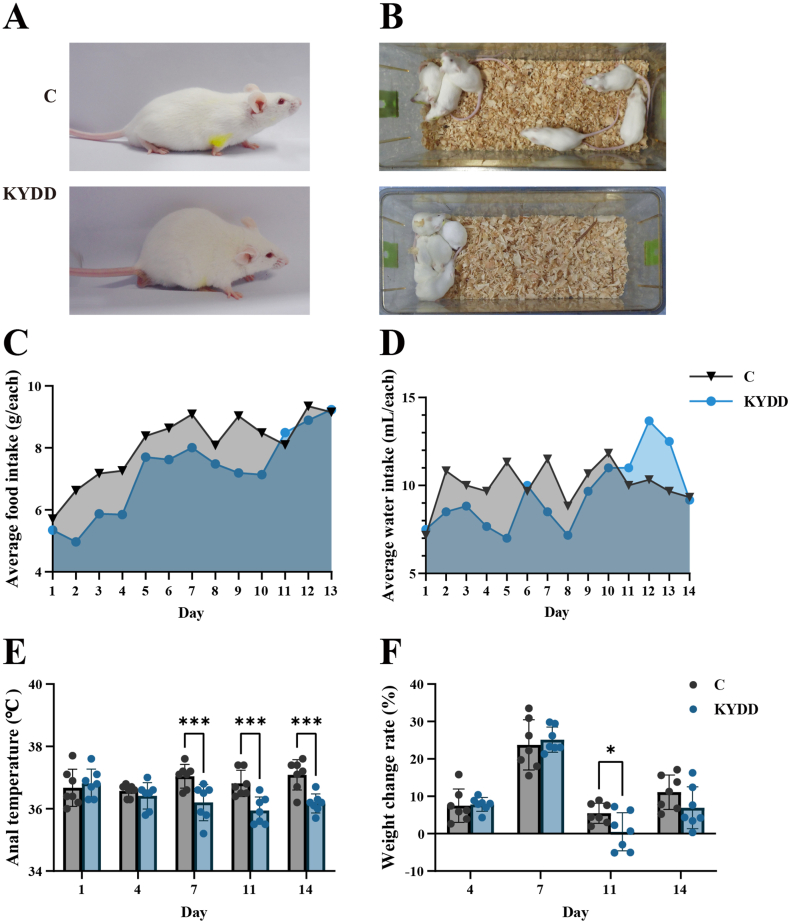
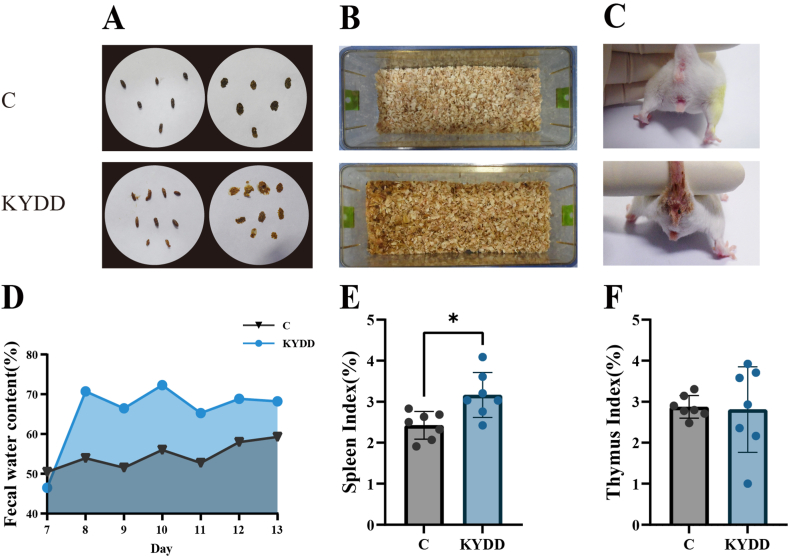
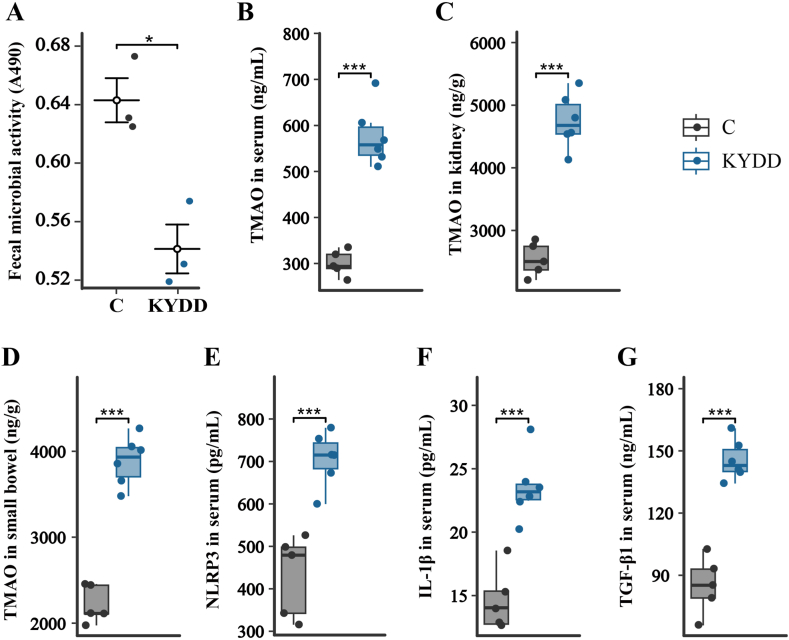
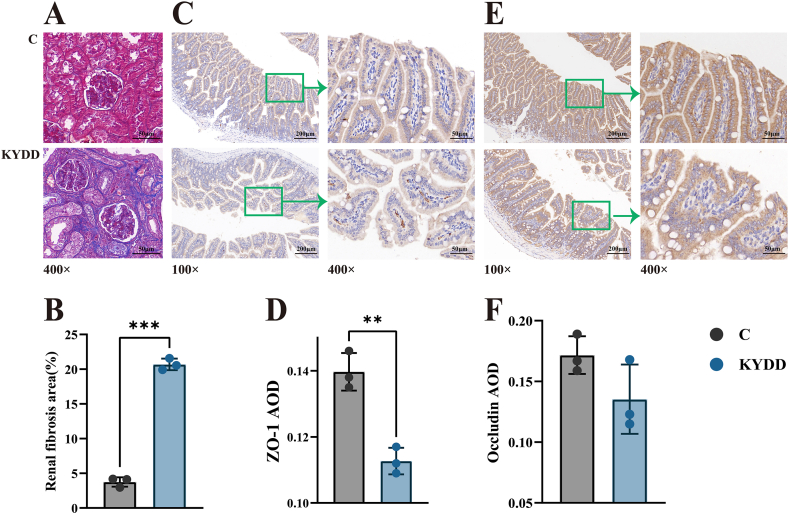
Adenine and were used to create a mouse model of kidney-yang deficiency syndrome diarrhea. 16S rRNA sequencing was used to identify the traits of the intestinal mucosal microbiota. ELISA was used to assess TMAO, transforming growth factor-β1 (TGF-β1), interleukin-1β (IL-1β), and NOD-like receptor thermal protein domain associated protein 3 (NLRP3). Kidney tissue fibrosis was evaluated using Masson's trichrome staining, and immunohistochemical labeling was used to investigate the protein expression of occludin and Zonula Occludens-1(ZO-1) in small intestine tissue. Microbial activity was determined by using fluorescein diacetate (FDA) hydrolysis spectrophotometry.
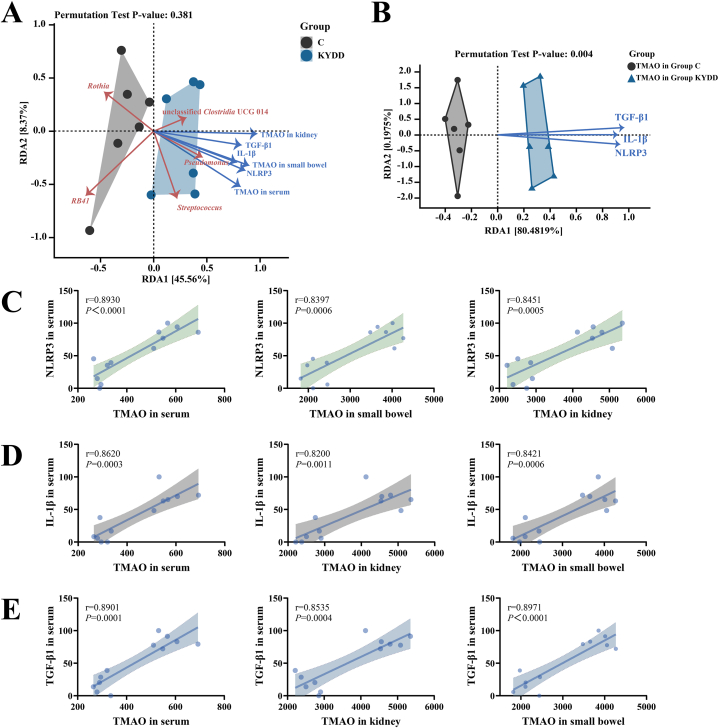
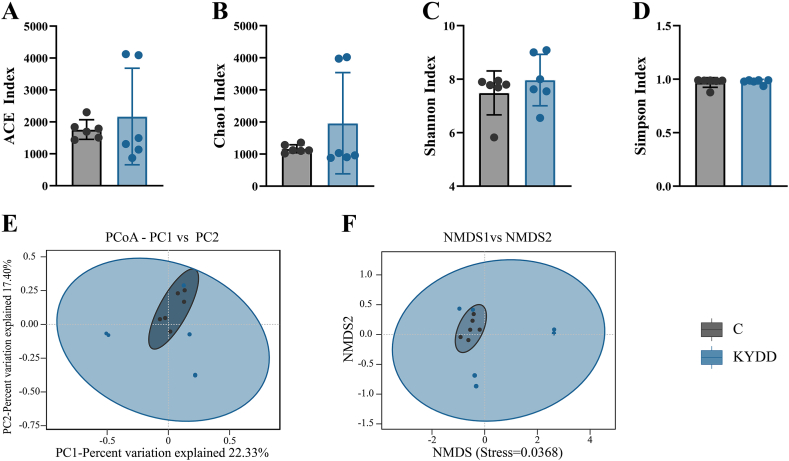
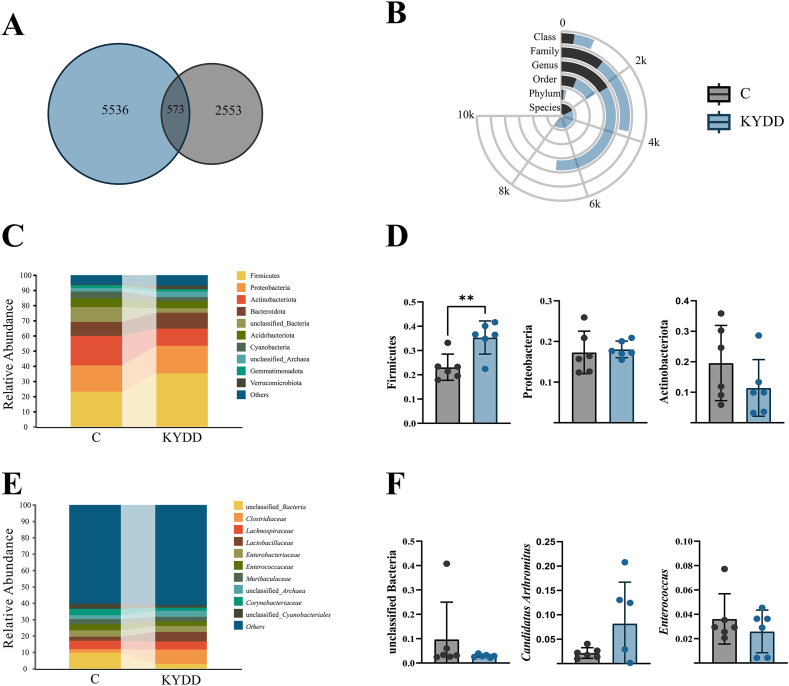
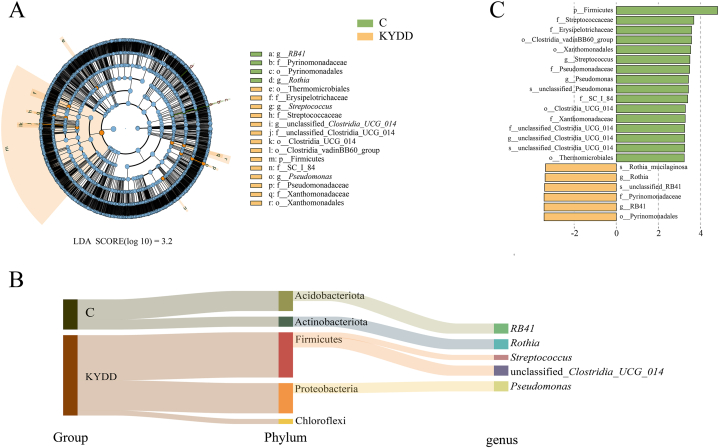
TMAO showed a positive correlation with NLRP3, IL-1β and TGF-β1, all of which exhibited substantial increases ( < 0.05). Significant renal fibrosis and decreased ZO-1 and occludin expression in small intestine tissues were detected in the model group. The sequencing results revealed alterations in both α and β diversities of small intestinal mucosal microbiota. Elevated TMAO concentrations were potentially associated with increasing Firmicutes/Bacteroidota (F/B) ratios, , and UCG 014, but with decreasing and .
This study establishes a link between intestinal microbiota dysbiosis and elevated TMAO concentrations. TMAO can activate inflammatory responses and cytokines, contributing to kidney-yang deficiency syndrome diarrhea via the "gut-kidney axis". Moreover, TMAO may coincide with disruptions in the intestinal barrier and renal fibrosis. Dysfunction of the "gut-kidney axis" further elevates TMAO levels, perpetuating a vicious cycle.
氧化三甲胺(TMAO)是一种依赖肠道微生物群且通过肾脏排泄的有害代谢产物。根据大量研究,循环中高浓度的TMAO与肾脏和胃肠道疾病有关。本研究试图通过由TMAO介导的“肠 - 肾轴”来阐明肾阳虚证腹泻的微生物学原因。
使用腺嘌呤建立肾阳虚证腹泻小鼠模型。采用16S rRNA测序鉴定肠道黏膜微生物群的特征。采用酶联免疫吸附测定法(ELISA)评估TMAO、转化生长因子-β1(TGF-β1)、白细胞介素-1β(IL-1β)和NOD样受体热蛋白结构域相关蛋白3(NLRP3)。使用Masson三色染色评估肾脏组织纤维化,并采用免疫组织化学标记法研究小肠组织中闭合蛋白(occludin)和紧密连接蛋白1(ZO-1)的蛋白表达。使用荧光素二乙酸酯(FDA)水解分光光度法测定微生物活性。
TMAO与NLRP3、IL-1β和TGF-β1呈正相关,三者均显著升高(P<0.05)。模型组检测到明显的肾纤维化以及小肠组织中ZO-1和occludin表达降低。测序结果显示小肠黏膜微生物群的α和β多样性均发生改变。TMAO浓度升高可能与厚壁菌门/拟杆菌门(F/B)比值增加、[具体菌属1]、[具体菌属2]和UCG 014增加有关,但与[具体菌属3]和[具体菌属4]减少有关。
本研究建立了肠道微生物群失调与TMAO浓度升高之间的联系。TMAO可激活炎症反应和细胞因子,通过“肠 - 肾轴”导致肾阳虚证腹泻。此外,TMAO可能与肠道屏障破坏和肾纤维化同时出现。“肠 - 肾轴”功能障碍进一步升高TMAO水平,形成恶性循环。