Hägglund Susanne, Andtfolk Malin, Rosenberg Sara, Wingren Mattias, Andersson Sören, Nyholm Linda
Faculty of Education and Welfare Studies, Åbo Akademi University, Vaasa, Finland.
Pharmaceutical Sciences Laboratory, Faculty of Science and Engineering, Åbo Akademi University, Turku, Finland.
Front Robot AI. 2024 Aug 7;11:1332110. doi: 10.3389/frobt.2024.1332110. eCollection 2024.
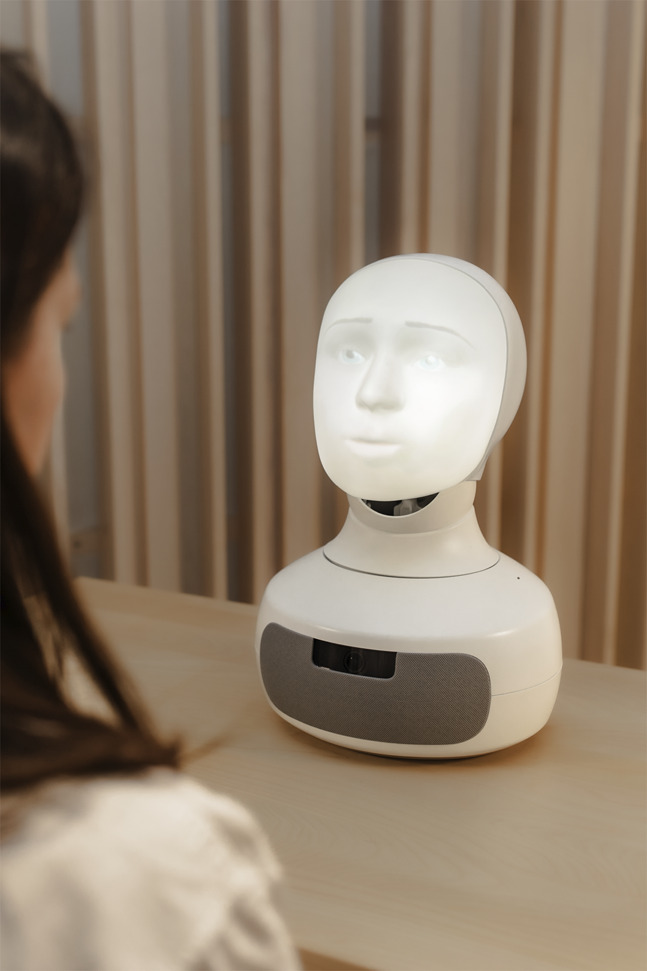
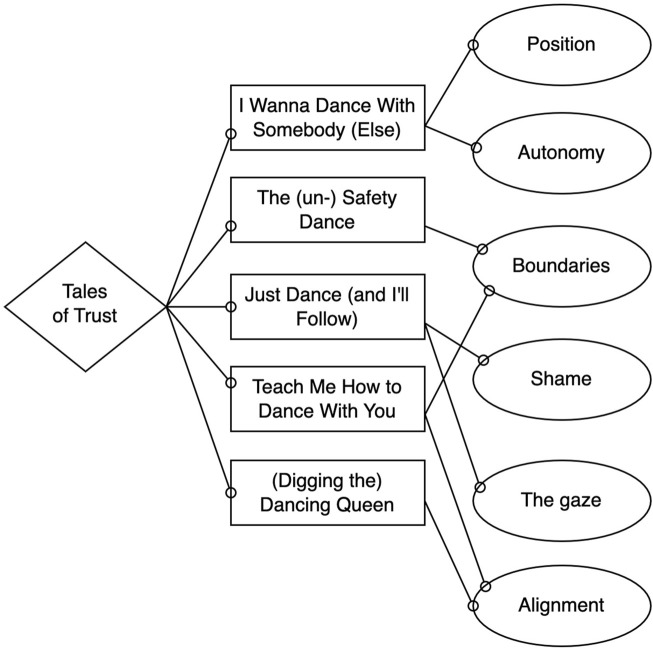
The sustainable implementation of socially assistive robots in a pharmacy setting requires that customers trust the robot. Our aim was to explore young adults' anticipations of and motives for trusting robot medication counseling in a high-stakes scenario. Through a co-creation approach, we co-designed a prototype application for the Furhat platform together with young adults. In-lab testing of a pharmacy scenario, where the robot provides medication counseling related to emergency contraceptive pills, was conducted to deepen our understanding of some factors driving young adults' initial trust establishment and anticipations of interacting with a robot in a high-stakes scenario. Qualitative data from interviews with six study participants were analyzed using inductive, reflexive thematic analysis and are presented through a narrative approach. We outline five tales of trust characterized by personas. A continuum of different anticipations for consulting a robot in medication counseling is presented, ranging from low to high expectations of use. Driving factors in the initial trust establishment process are position, autonomy, boundaries, shame, gaze, and alignment. The article adds to the understanding of the dimensions of the multifaceted trust concept, of driving trust factors, and of the subsequent anticipation to trust robots in a high-stakes pharmacy context.
在药房环境中可持续地应用社交辅助机器人需要顾客信任该机器人。我们的目标是探讨年轻人在高风险场景下对机器人药物咨询的信任预期和动机。通过共创方法,我们与年轻人共同为Furhat平台设计了一个原型应用程序。针对药房场景进行了实验室测试,其中机器人提供与紧急避孕药相关的药物咨询,以加深我们对一些驱动年轻人建立初步信任以及在高风险场景下与机器人互动预期的因素的理解。使用归纳性、反思性主题分析对来自六位研究参与者的访谈定性数据进行了分析,并通过叙事方法呈现。我们概述了五个以人物角色为特征的信任故事。呈现了在药物咨询中咨询机器人的不同预期的连续体,从对使用的低期望到高期望。初始信任建立过程中的驱动因素包括位置、自主性、边界、羞耻感、目光接触和一致性。本文增进了对多方面信任概念的维度、驱动信任的因素以及随后在高风险药房环境中信任机器人的预期的理解。