Chair of Microbiology, University of Würzburg, Würzburg, Germany.
Research Centre for Infectious Diseases, Institute for Molecular Infection Biology, University of Würzburg, Würzburg, Germany.
PLoS Pathog. 2024 Aug 22;20(8):e1012144. doi: 10.1371/journal.ppat.1012144. eCollection 2024 Aug.
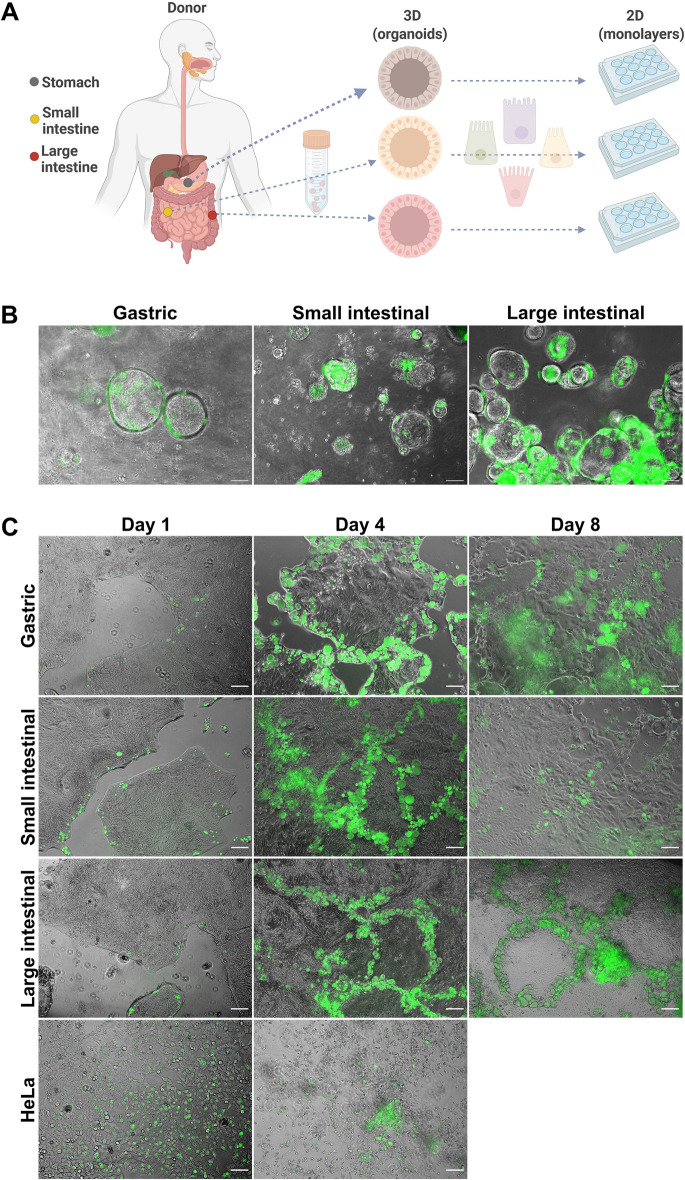
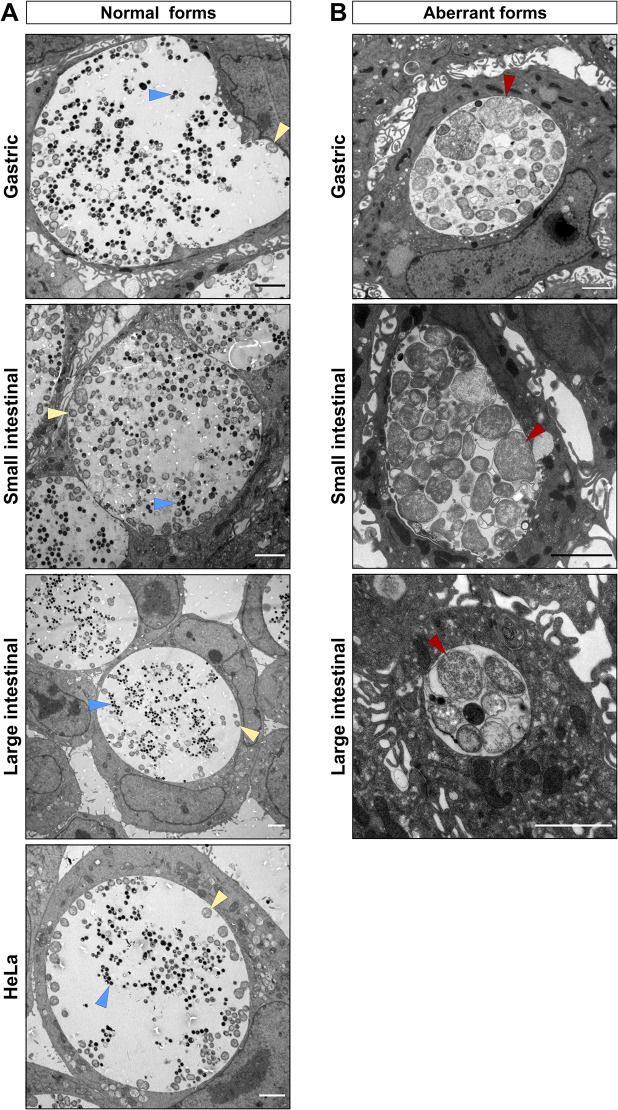
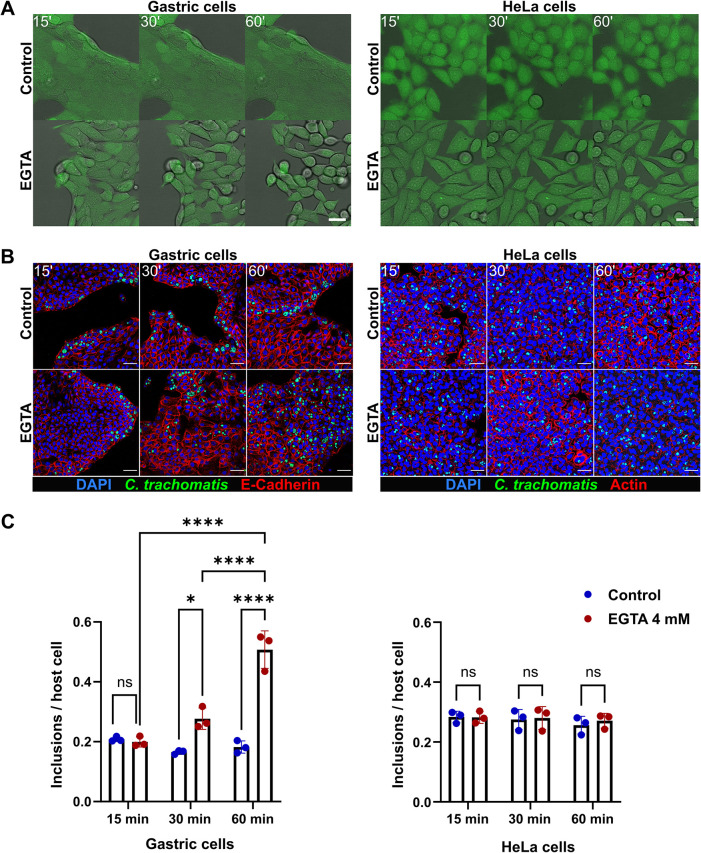
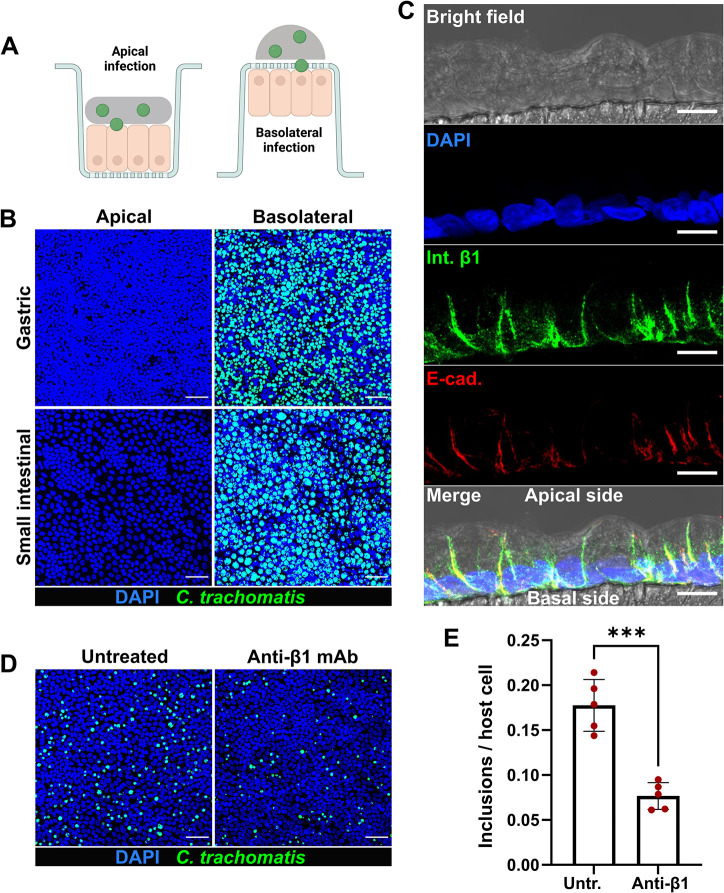
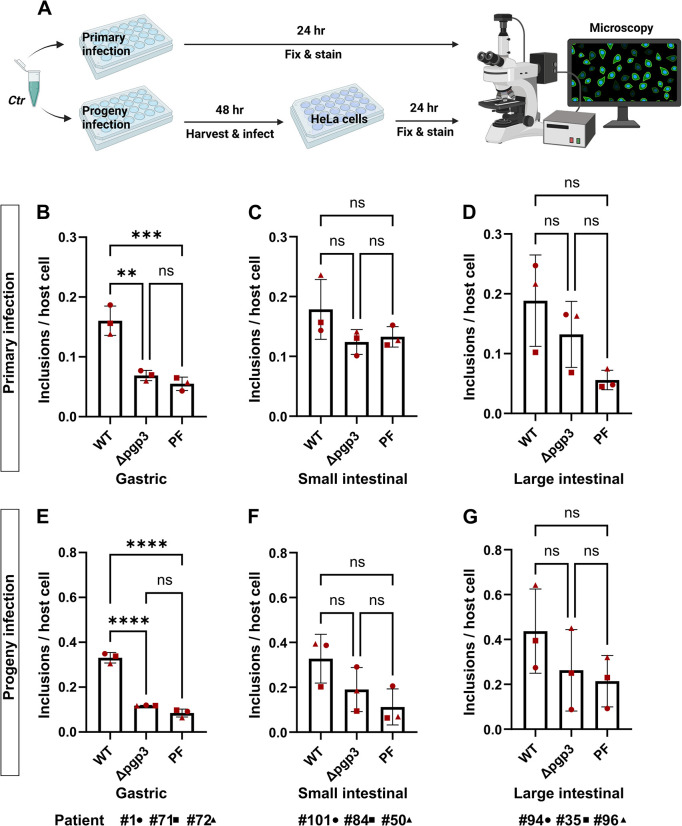
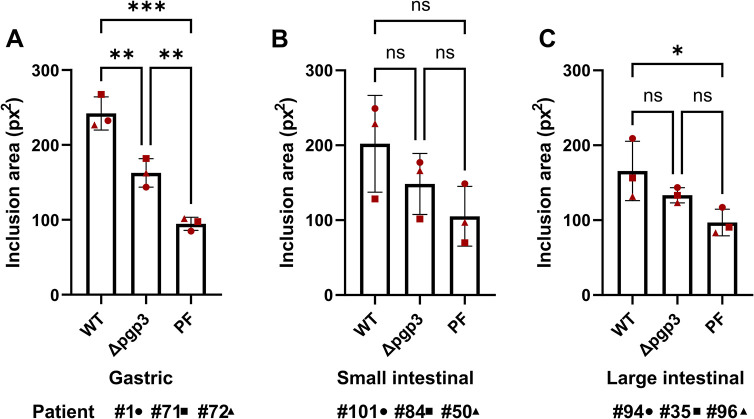
Several reports suggest that intestinal tissue may be a natural niche for Chlamydia trachomatis infection and a reservoir for persistent infections in the human body. Due to the human specificity of the pathogen and the lack of suitable host models, there is limited knowledge on this topic. In our study, we modelled the course of the chlamydial infection in human primary gastrointestinal (GI) epithelial cells originating from patient-derived organoids. We show that GI cells are resistant to apical infection and C. trachomatis needs access to the basolateral membrane to establish an infection. Transmission electron microscopy analysis reveals the presence of both normal as well as aberrant chlamydial developmental forms in the infected cells, suggesting a possible cell-type specific nature of the infection. Furthermore, we show that the plasmid-encoded Pgp3 is an important virulence factor for the infection of human GI cells. This is the first report of C. trachomatis infection in human primary intestinal epithelial cells supporting a possible niche for chlamydial infection in the human intestinal tissue.
有几项报告表明,肠道组织可能是沙眼衣原体感染的天然栖息地,也是人体中持续性感染的储库。由于病原体具有人类特异性,且缺乏合适的宿主模型,因此人们对此类感染的了解有限。在本研究中,我们以源自患者来源的类器官的人原发性胃肠道 (GI) 上皮细胞为模型,模拟了沙眼衣原体的感染过程。我们发现 GI 细胞对顶端感染具有抗性,并且沙眼衣原体需要进入基底外侧膜才能建立感染。透射电子显微镜分析显示,受感染的细胞中存在正常和异常的沙眼衣原体发育形态,这表明感染可能具有细胞类型特异性。此外,我们还表明,质粒编码的 Pgp3 是感染人 GI 细胞的重要毒力因子。这是首例关于沙眼衣原体感染人原发性肠道上皮细胞的报告,支持了沙眼衣原体在人类肠道组织中可能存在的感染部位。