Landau Madeleine B, Abdelmaksoud Ahmed, Hussein Mohammad H, Jishu Jessan A, Fawzy Manal S, Toraih Eman A, Kandil Emad
School of Medicine, Tulane University, New Orleans, LA, USA.
Division of Endocrine and Oncologic Surgery, Department of Surgery, School of Medicine, Tulane University, New Orleans, LA, USA.
Gland Surg. 2024 Jul 30;13(7):1291-1304. doi: 10.21037/gs-24-173. Epub 2024 Jul 24.
The interwoven immunological, biological, and genetic complexity of thyroid diseases makes suitable targeted therapies particularly challenging to develop. Stemming from ancient practices, al-hijamah, or wet cupping, has achieved notable popularity in recent years, leading to unique applications in modern medicine. By grappling with the current literature that links the effects of wet cupping with the immune system in patients with Hashimoto's thyroiditis (HT), this narrative review aims to compose a comprehensive assessment of this adjunctive treatment based on evidence of its integration into practice.
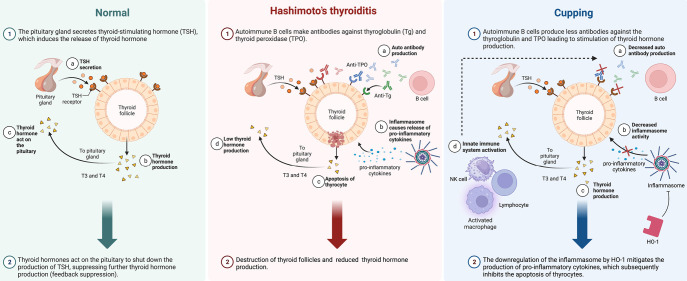
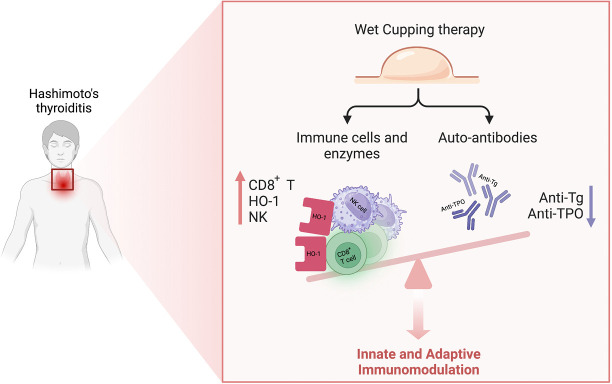
Between upregulating critical players of the innate immune system, such as immunostimulatory cytokines, white blood cells (WBCs) and natural killer (NK) cells, and downregulating essential thyroid antibodies (anti-thyroid peroxidase and anti-thyroglobulin) and inflammatory markers (C-reactive protein and erythrocyte sedimentation rate), wet cupping practices provide promising complementary therapy for hypothyroidism.
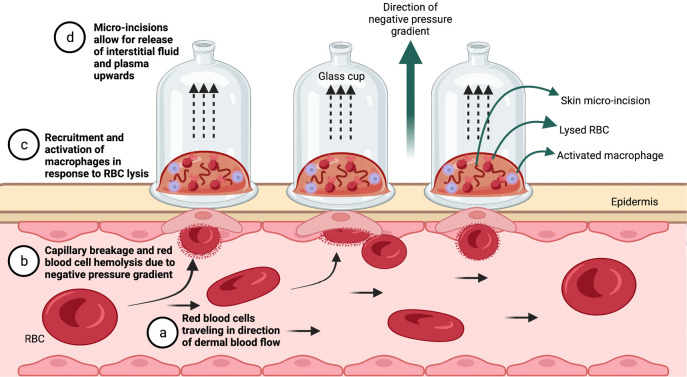
Wet cupping manipulates in vivo molecular mechanisms, as outlined in hemodynamic and microparticle clearance theories, to slow disease progression and even development in disease-free populations. Given the established utilization of wet cupping in the context of autoimmune diseases and inflammatory conditions, the emerging utility of wet cupping continues to gain credibility.
This literature review illuminates the documented improvements in immune and biological function due to cupping therapeutic practices and sheds light on its appropriate application in the clinical setting for patients with HT. Furthermore, this review proposes a clear need for implementing future clinical trials, which may effectively bridge pathophysiological causes of hypothyroidism with underrated techniques for enhanced thyroid health.
甲状腺疾病交织的免疫、生物学和遗传复杂性使得开发合适的靶向治疗极具挑战性。源于古代疗法的阿拔斯式拔火罐(al-hijamah),即湿拔罐,近年来颇受欢迎,在现代医学中有独特应用。通过研究当前将湿拔罐效果与桥本甲状腺炎(HT)患者免疫系统联系起来的文献,本叙述性综述旨在基于其融入实践的证据,对这种辅助治疗进行全面评估。
湿拔罐操作上调先天性免疫系统的关键参与者,如免疫刺激细胞因子、白细胞(WBC)和自然杀伤(NK)细胞,同时下调重要的甲状腺抗体(抗甲状腺过氧化物酶和抗甲状腺球蛋白)和炎症标志物(C反应蛋白和红细胞沉降率),为甲状腺功能减退提供了有前景的辅助治疗。
湿拔罐通过血流动力学和微粒清除理论中概述的体内分子机制,减缓疾病进展,甚至在未患病群体中预防疾病发展。鉴于湿拔罐在自身免疫性疾病和炎症性疾病中的既定应用,其新出现的效用不断获得可信度。
本文献综述阐明了拔罐治疗实践在免疫和生物学功能方面已记录的改善,并揭示了其在HT患者临床环境中的适当应用。此外,本综述明确提出需要开展未来的临床试验,这可能有效地将甲状腺功能减退的病理生理原因与未得到充分重视的技术联系起来,以促进甲状腺健康。