Michigan State University, East Lansing, USA.
University of South Florida, Tampa, USA.
Sci Rep. 2024 Aug 23;14(1):19659. doi: 10.1038/s41598-024-70450-2.
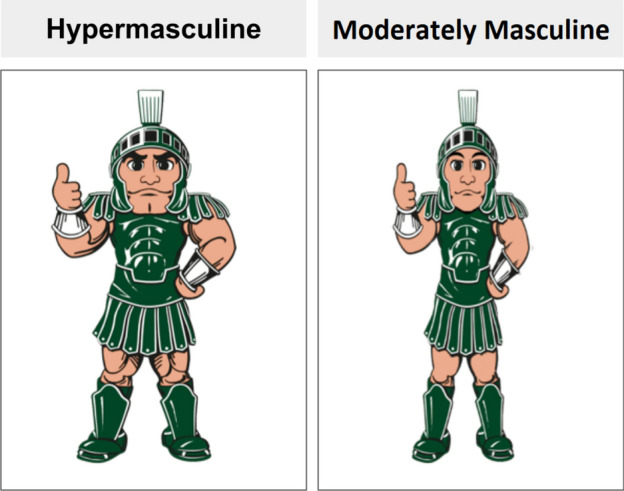
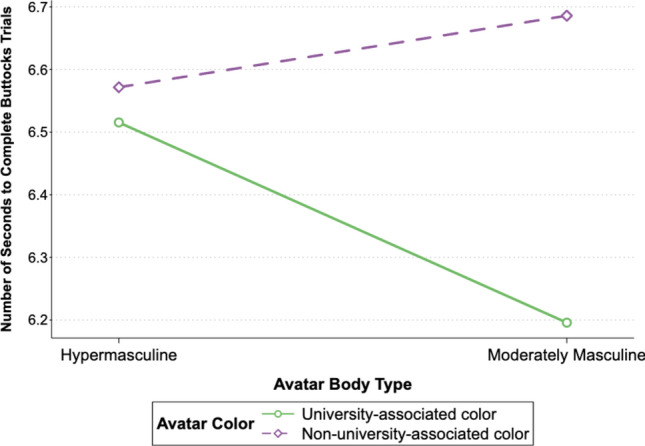
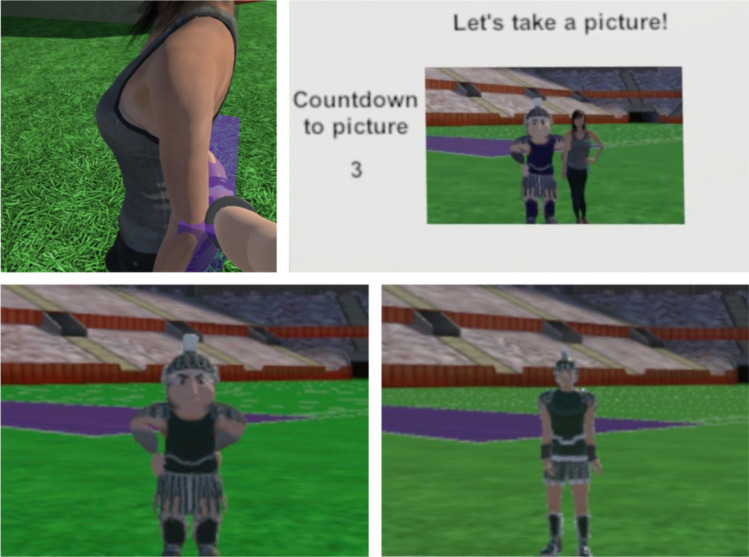
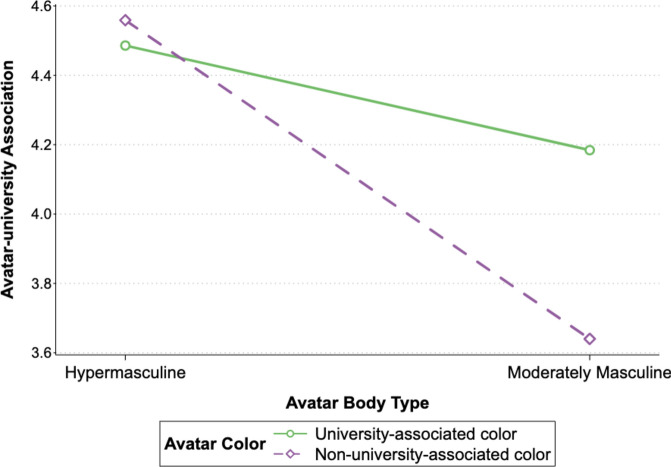
The Proteus effect is a phenomenon found in over 60 studies where people tend to conform behaviorally to their avatars' identity characteristics, especially in virtual reality. This study extends research on the Proteus effect to consider organization-representing avatars and misogynistic behavioral outcomes. Male participants (N = 141) in a lab experiment embodied a set of pretested avatars which varied in level of association with a university mascot (i.e., color and body type) in a bespoke virtual reality simulation designed to elicit misogynistic behavior. Namely, participants were directed to place a hand on virtual agents' body parts, including the buttocks (i.e., a transgressive misogynistic act). Time delay in complying with directions to touch the agents' buttocks served as an implicit measure of resistance to this misogynistic behavior. Results suggest that within moderately masculine body-size avatar users, those who embodied a university-color-associated avatar exhibited more misogynistic behaviors (i.e., faster buttocks-touching). Unexpectedly, this effect of avatar color was not apparent within the hypermasculine body-size avatars, and within the university-associated color condition, hypermasculine body-type was associated with less misogynistic behavior. These findings suggest that organization-representing avatars may induce behavioral conformity to implicit attitudes associated with the organization, such as misogyny.
变形效应是在超过 60 项研究中发现的一种现象,人们倾向于根据自己的虚拟形象身份特征来调整行为,尤其是在虚拟现实中。本研究将变形效应的研究扩展到考虑代表组织的虚拟形象和厌恶女性的行为结果。在一项实验室实验中,男性参与者(N=141)在一个定制的虚拟现实模拟中体现了一组经过预先测试的虚拟形象,这些虚拟形象与大学吉祥物的关联程度不同(即颜色和体型),以引发厌恶女性的行为。具体来说,参与者被要求触摸虚拟代理的身体部位,包括臀部(即一种越轨的厌恶女性行为)。参与者遵守触摸代理臀部的指令的时间延迟是对这种厌恶女性行为的抵制的隐性衡量标准。结果表明,在体型中等偏男性化的虚拟形象用户中,那些体现了与大学颜色相关联的虚拟形象的用户表现出更多的厌恶女性行为(即更快地触摸臀部)。出乎意料的是,在体型超男性化的虚拟形象中,这种虚拟形象颜色的影响并不明显,而在与大学相关的颜色条件下,超男性化的体型与较少的厌恶女性行为有关。这些发现表明,代表组织的虚拟形象可能会引起对与组织相关的隐性态度的行为一致性,例如厌恶女性。