Wang Xiaomu, Niu Yunping, Bian Fang
Department of Pharmacy, Xiangyang Key Laboratory of Special Preparation of Vitiligo, Xiangyang Central Hospital, Affiliated Hospital of Hubei University of Arts and Science, Xiangyang, Hubei, China.
Department of Laboratory Medicine, The First People's Hospital of Xiangyang, Xiangyang, Hubei, China.
Clin Transl Oncol. 2025 Mar;27(3):1062-1074. doi: 10.1007/s12094-024-03678-z. Epub 2024 Aug 23.
Non-small cell lung cancer (NSCLC) remains a significant global health challenge, with high mortality rates and limited treatment options. Tumor vaccines have emerged as a potential therapeutic approach, aiming to stimulate the immune system to specifically target tumor cells.
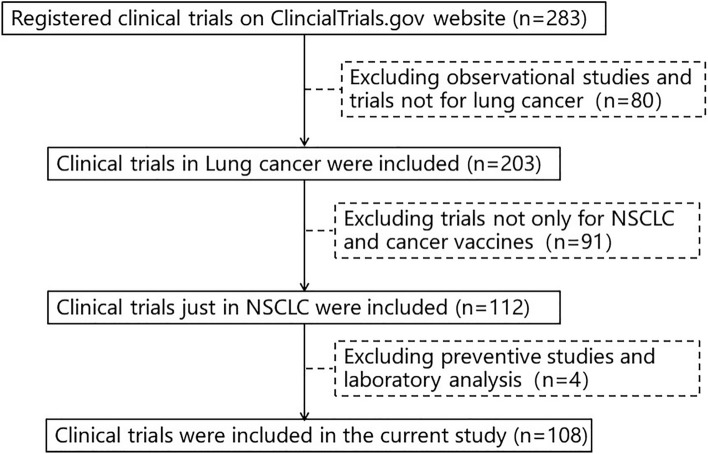
This study screened 283 clinical trials registered on ClinicalTrials.gov through July 31, 2023. After excluding data that did not meet the inclusion criteria, a total of 108 trials were assessed. Data on registered number, study title, study status, vaccine types, study results, conditions, interventions, outcome measures, sponsor, collaborators, drug target, phases, enrollment, start date, completion date and locations were extracted and analyzed.
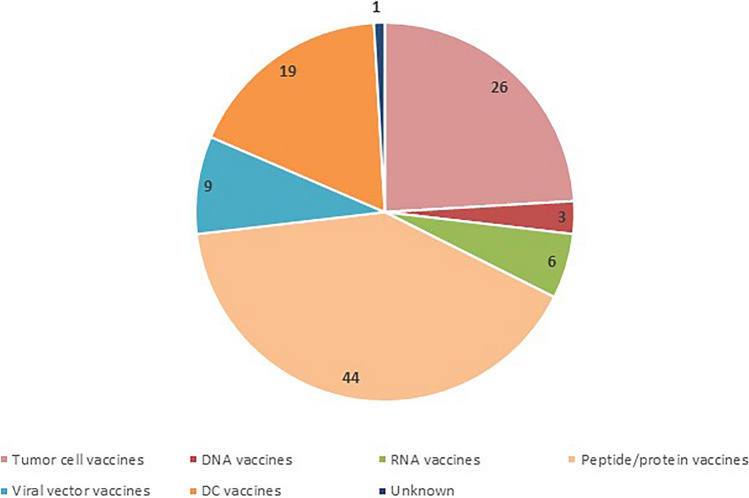
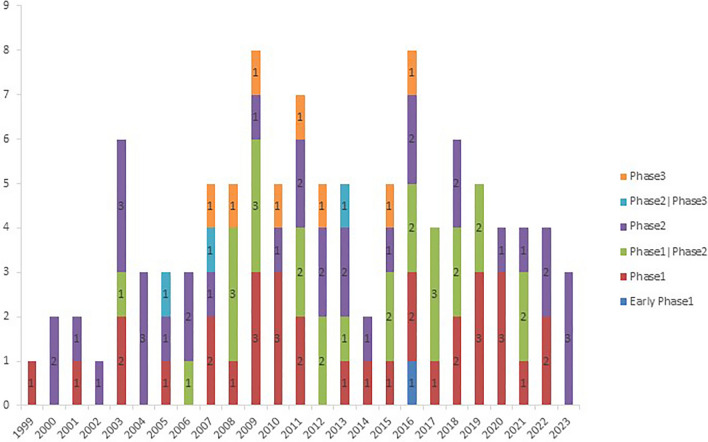
The number of vaccines clinical trials for NSCLC has continued to increase in recent years, the majority of which were conducted in the United States. Most of the clinical trials were at stages ranging from Phase I to Phase II. Peptide-based vaccines accounted for the largest proportion. Others include tumor cell vaccines, DNA/RNA vaccines, viral vector vaccines, and DC vaccines. Several promising tumor vaccine candidates have shown encouraging results in early-phase clinical trials. However, challenges such as heterogeneity of tumor antigens and immune escape mechanisms still need to be addressed.
Tumor vaccines represent a promising avenue in the treatment of NSCLC. Ongoing clinical trials are crucial for optimizing vaccine strategies and identifying the most effective combinations. Further research is needed to overcome existing limitations and translate these promising findings into clinical practice, offering new hope for NSCLC patients.
非小细胞肺癌(NSCLC)仍然是一项重大的全球健康挑战,死亡率高且治疗选择有限。肿瘤疫苗已成为一种潜在的治疗方法,旨在刺激免疫系统特异性靶向肿瘤细胞。
本研究筛选了截至2023年7月31日在ClinicalTrials.gov上注册的283项临床试验。在排除不符合纳入标准的数据后,共评估了108项试验。提取并分析了注册编号、研究标题、研究状态、疫苗类型、研究结果、疾病、干预措施、结局指标、申办者、合作者、药物靶点、阶段、入组人数、开始日期、完成日期和地点等数据。
近年来,NSCLC疫苗临床试验数量持续增加,其中大部分在美国进行。大多数临床试验处于I期到II期阶段。基于肽的疫苗占比最大。其他包括肿瘤细胞疫苗、DNA/RNA疫苗、病毒载体疫苗和树突状细胞疫苗。几种有前景的肿瘤疫苗候选物在早期临床试验中已显示出令人鼓舞的结果。然而,肿瘤抗原的异质性和免疫逃逸机制等挑战仍需解决。
肿瘤疫苗是NSCLC治疗中一条有前景的途径。正在进行的临床试验对于优化疫苗策略和确定最有效的组合至关重要。需要进一步研究以克服现有局限性,并将这些有前景的发现转化为临床实践,为NSCLC患者带来新希望。