Department of Ophthalmology, Tianjin Medical University General Hospital, International Joint Laboratory of Ocular Diseases (Ministry of Education), Tianjin Key Laboratory of Ocular Trauma, Tianjin Institute of Eye Health and Eye Diseases, China-UK "Belt and Road" Ophthalmology Joint Laboratory, Laboratory of Molecular Ophthalmology, Tianjin Medical University, Tianjin, China.
The Province and Ministry Co-sponsored Collaborative Innovation Center for Medical Epigenetics, Key Laboratory of Immune Microenvironment and Disease (Ministry of Education), State Key Laboratory of Experimental Hematology, Department of Biochemistry and Molecular Biology, School of Basic Medical Sciences, Tianjin Medical University, Tianjin, China.
Nat Commun. 2024 Aug 25;15(1):7324. doi: 10.1038/s41467-024-51624-y.
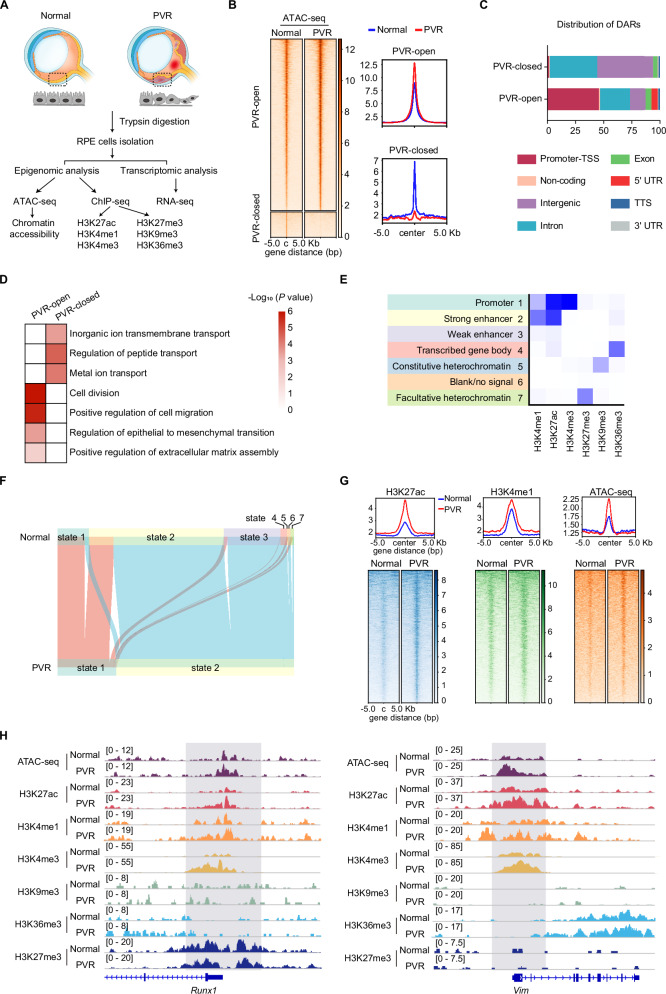
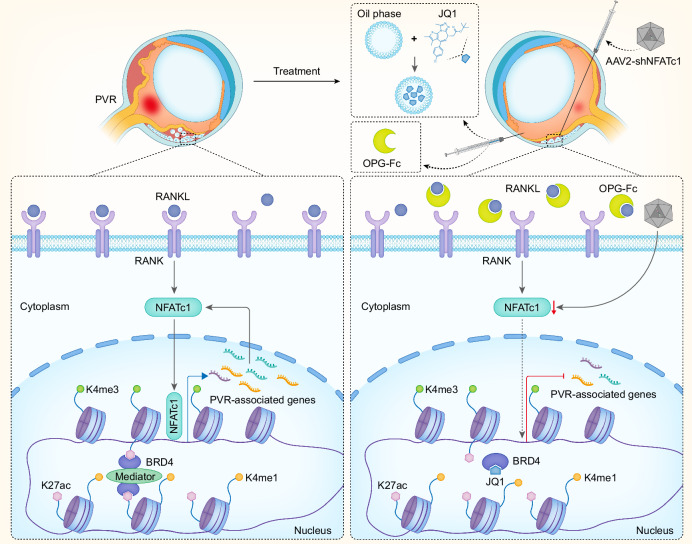
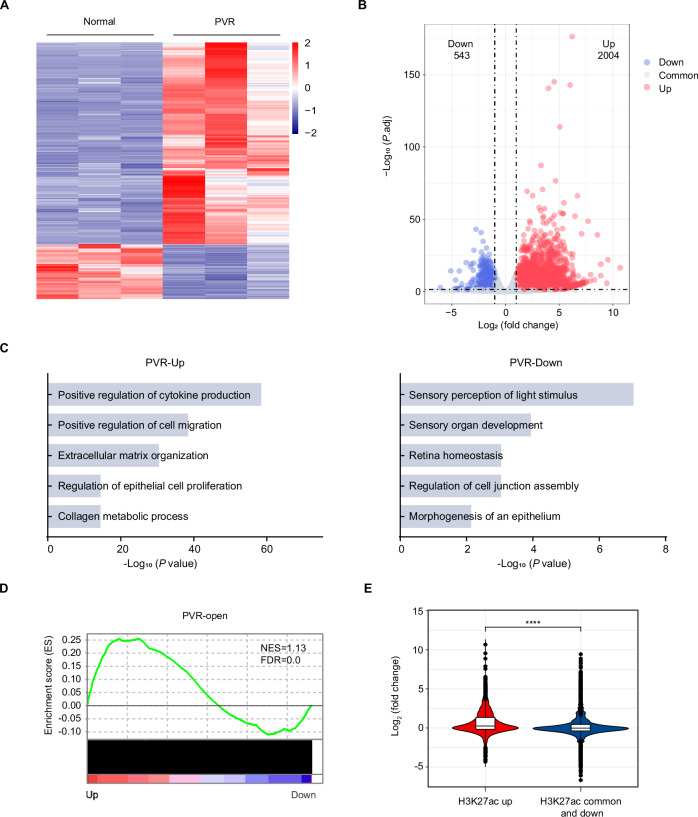
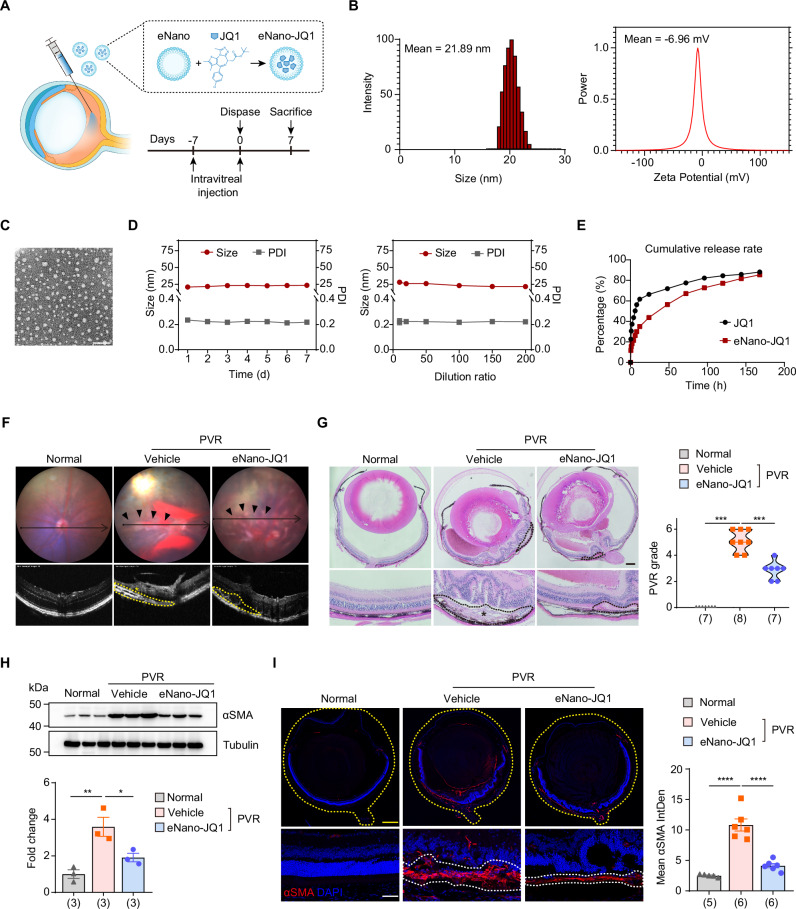
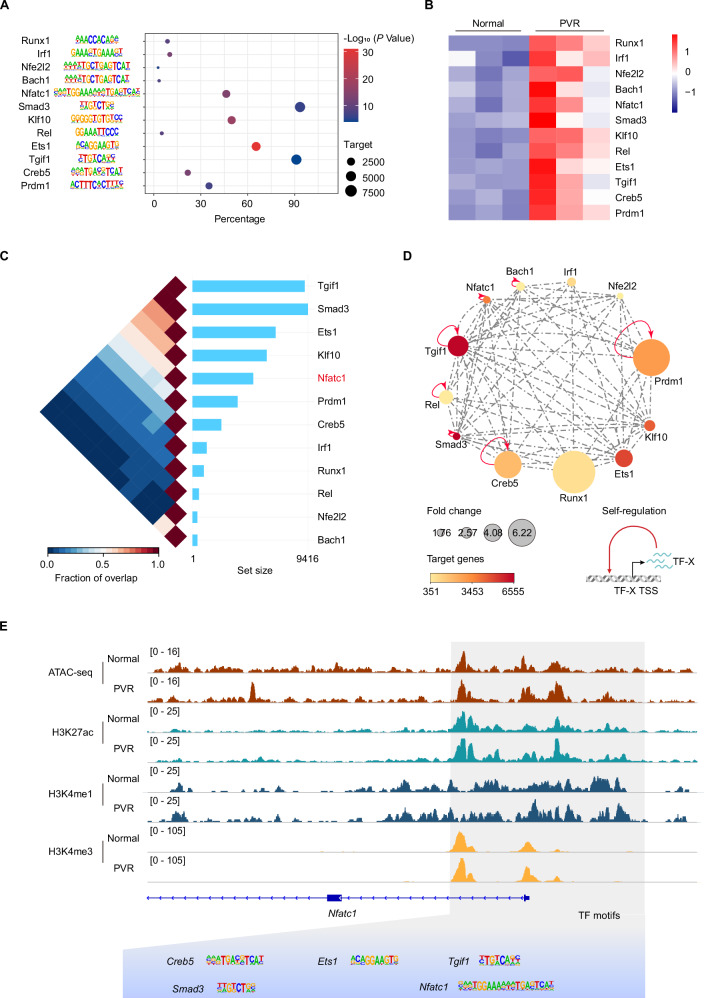
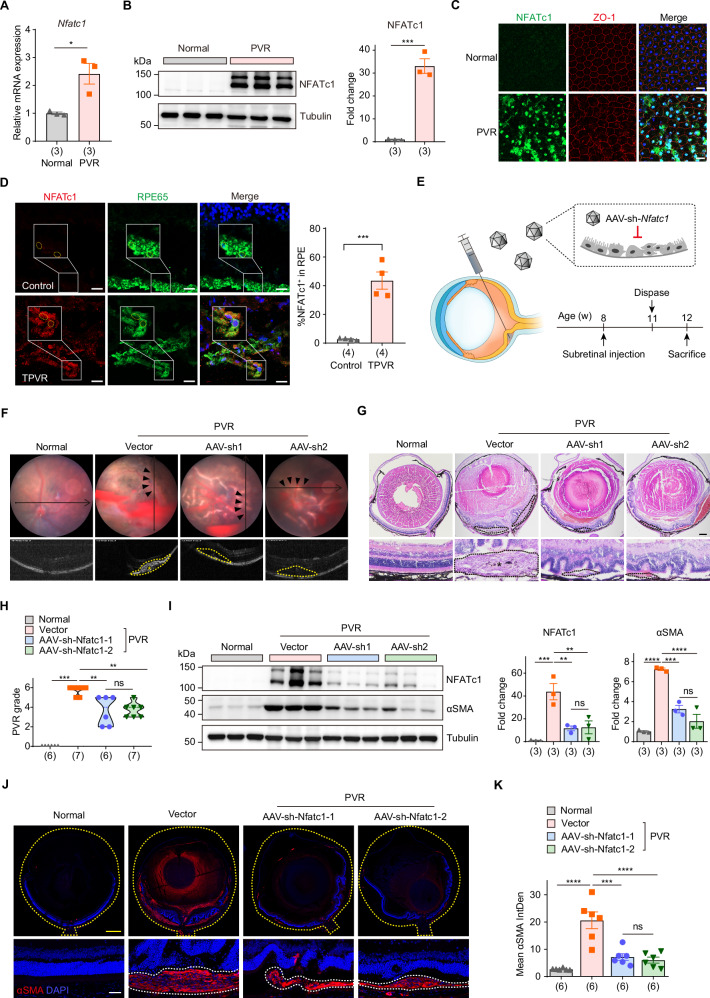
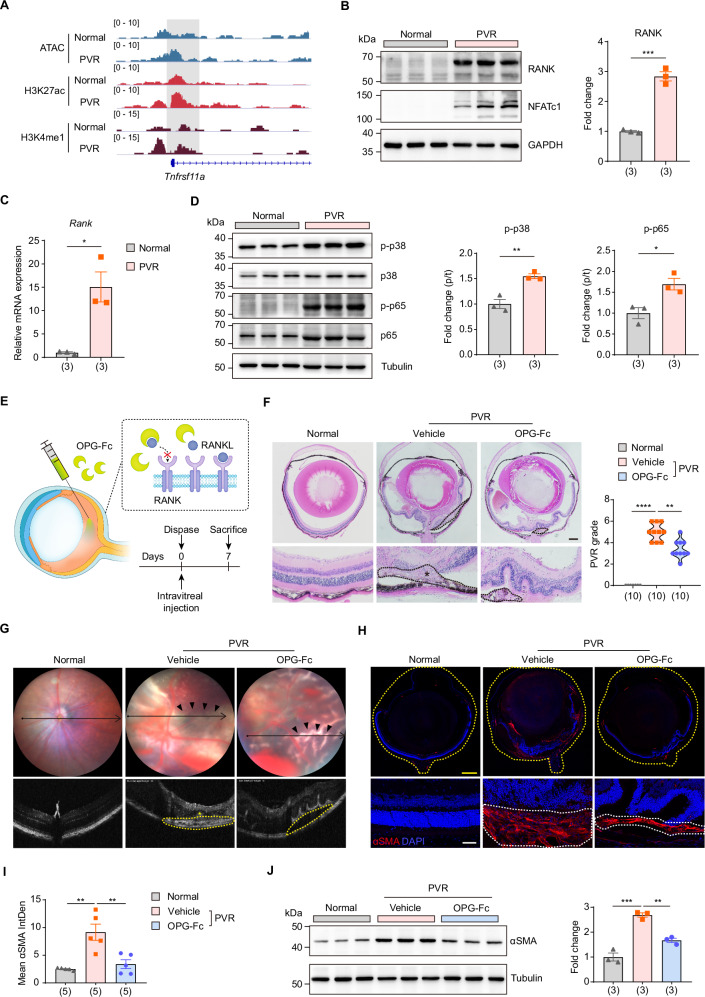
During the progression of proliferative vitreoretinopathy (PVR) following ocular trauma, previously quiescent retinal pigment epithelial (RPE) cells transition into a state of rapid proliferation, migration, and secretion. The elusive molecular mechanisms behind these changes have hindered the development of effective pharmacological treatments, presenting a pressing clinical challenge. In this study, by monitoring the dynamic changes in chromatin accessibility and various histone modifications, we chart the comprehensive epigenetic landscape of RPE cells in male mice subjected to traumatic PVR. Coupled with transcriptomic analysis, we reveal a robust correlation between enhancer activation and the upregulation of the PVR-associated gene programs. Furthermore, by constructing transcription factor regulatory networks, we identify the aberrant activation of enhancer-driven RANK-NFATc1 pathway as PVR advanced. Importantly, we demonstrate that intraocular interventions, including nanomedicines inhibiting enhancer activity, gene therapies targeting NFATc1 and antibody therapeutics against RANK pathway, effectively mitigate PVR progression. Together, our findings elucidate the epigenetic basis underlying the activation of PVR-associated genes during RPE cell fate transitions and offer promising therapeutic avenues targeting epigenetic modulation and the RANK-NFATc1 axis for PVR management.
在眼外伤后增殖性玻璃体视网膜病变 (PVR) 的进展过程中,先前静止的视网膜色素上皮 (RPE) 细胞转变为快速增殖、迁移和分泌的状态。这些变化背后难以捉摸的分子机制阻碍了有效的药物治疗的发展,这是一个紧迫的临床挑战。在这项研究中,通过监测染色质可及性和各种组蛋白修饰的动态变化,我们描绘了雄性小鼠创伤性 PVR 中 RPE 细胞的全面表观遗传景观。结合转录组分析,我们揭示了增强子激活与 PVR 相关基因程序上调之间的强相关性。此外,通过构建转录因子调控网络,我们发现增强子驱动的 RANK-NFATc1 通路的异常激活是 PVR 进展的原因。重要的是,我们证明了眼内干预,包括抑制增强子活性的纳米药物、针对 NFATc1 的基因治疗和针对 RANK 通路的抗体治疗,可有效减轻 PVR 的进展。总之,我们的研究结果阐明了 RPE 细胞命运转变过程中 PVR 相关基因激活的表观遗传基础,并为针对表观遗传调节和 RANK-NFATc1 轴的 PVR 管理提供了有前途的治疗途径。