Research Institute for Global Change, Japan Agency for Marine-Earth Science and Technology (JAMSTEC), 2-15 Natsushima-cho, Yokosuka 237-0061, Japan.
Environ Sci Technol. 2024 Sep 10;58(36):16121-16130. doi: 10.1021/acs.est.4c02212. Epub 2024 Aug 25.
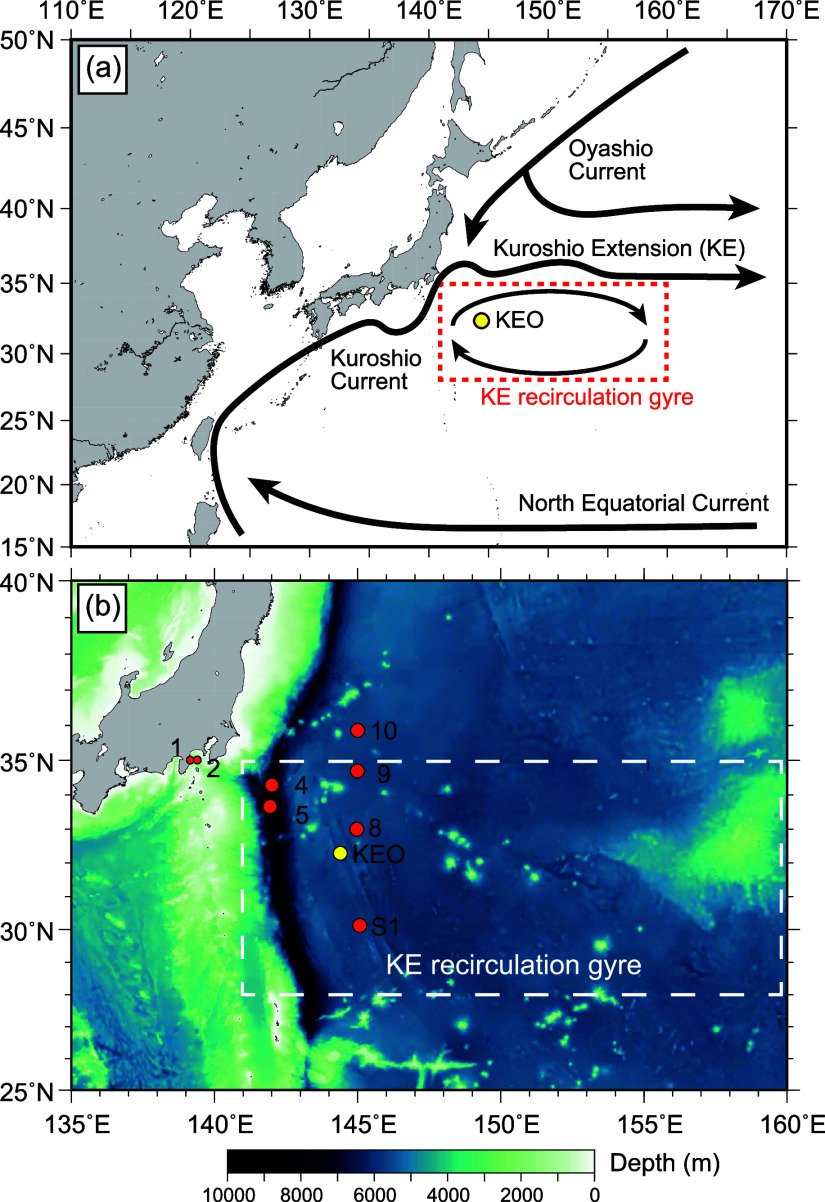
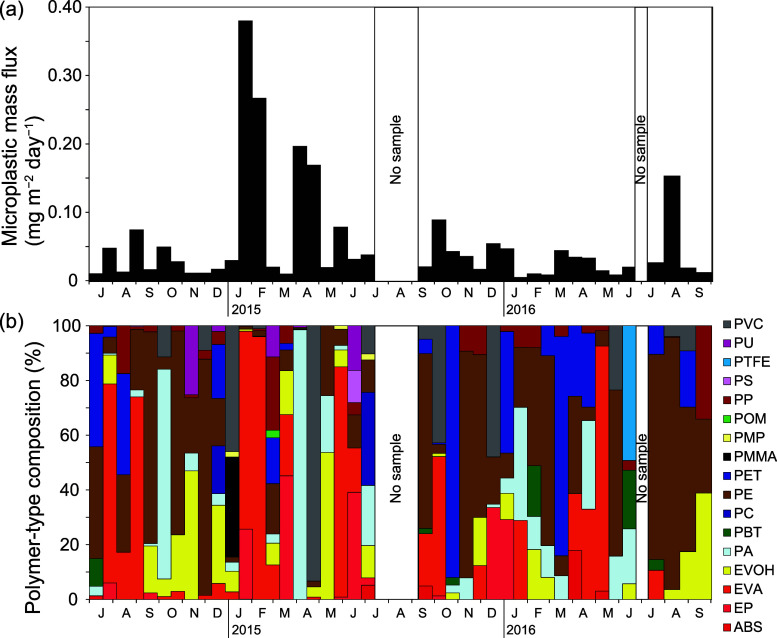
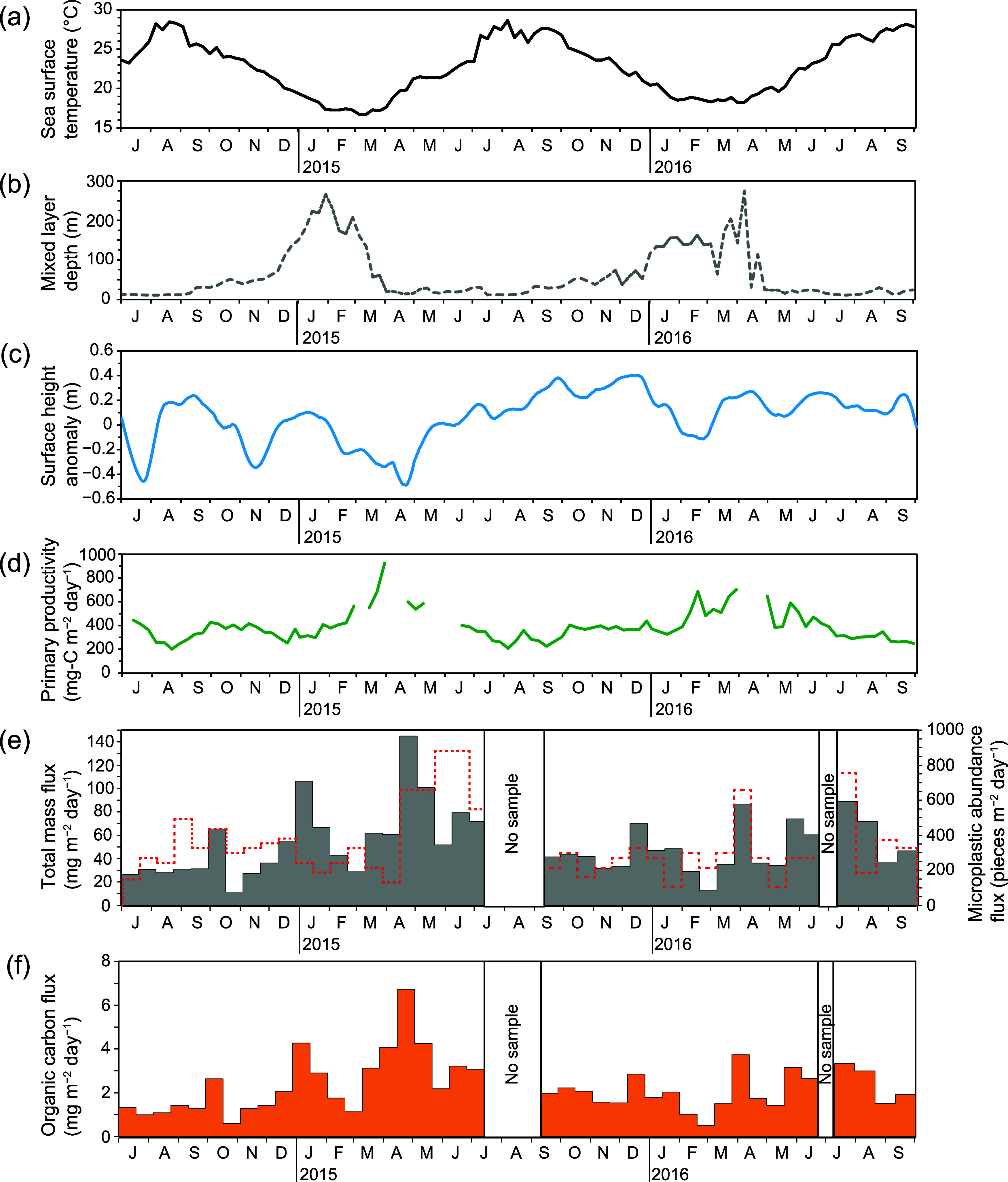
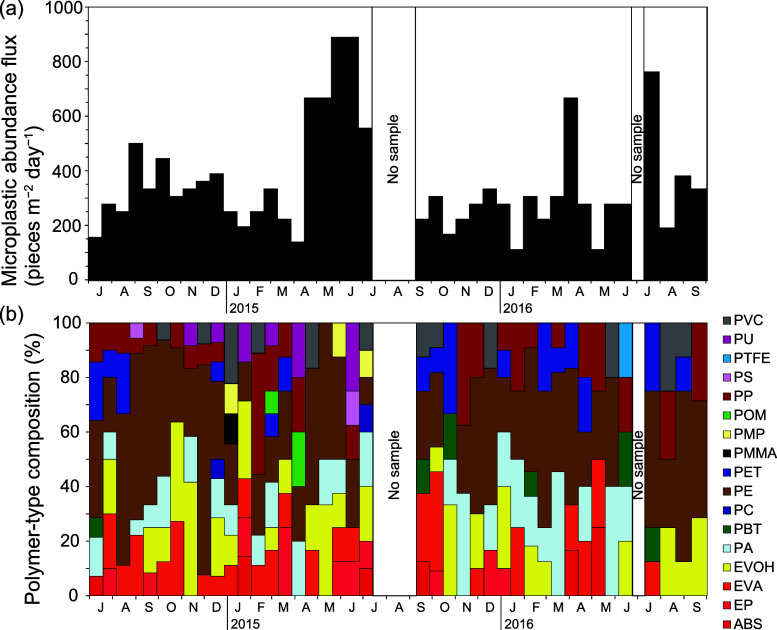
The Kuroshio Extension recirculation gyre in the western North Pacific is an accumulation site of plastic litter transported by the Kuroshio Current. A sediment trap was moored at a depth of 4900 m at Station KEO within the Kuroshio Extension recirculation gyre, and the vertical flux of microplastics in sinking particles of size <1 mm was observed. Forty-one sediment-trap samples collected from July 1, 2014, to October 2, 2016, were analyzed with a micro-Fourier transform infrared spectrometer and microplastics were detected in all samples. Seventeen polymer types were identified, and 90% of the microplastics were less than 100 μm in size. Microplastic sinking was driven by the action of the biological pump, which was in turn driven by seasonal variations in solar radiation and increased surface primary production typical of the spring season. Microplastic mass flux varied from 4.5 × 10 to 0.38 mg m day during the sampling period, with a mean and standard deviation of 0.054 ± 0.075 mg m day. Extrapolating the annual microplastic mass flux at Station KEO to the entire Kuroshio Extension recirculation gyre, it is estimated that 0.028 million metric tons of microplastics are transported annually to 4900 m depth in this area.
北太平洋黑潮延伸体回旋流是被黑潮输送的塑料垃圾的积聚地。在黑潮延伸体回旋流内的 KEO 站,一个沉积物捕集器被系泊在 4900 米的深度,观测到粒径小于 1 毫米的下沉颗粒中微塑料的垂直通量。2014 年 7 月 1 日至 2016 年 10 月 2 日采集了 41 个沉积物捕集器样本,用微傅里叶变换红外光谱仪进行了分析,所有样本中均检测到微塑料。鉴定出 17 种聚合物类型,90%的微塑料小于 100 微米。微塑料下沉是由生物泵的作用驱动的,而生物泵又受太阳辐射季节性变化和春季典型的表层初级生产力增加的驱动。在采样期间,微塑料质量通量变化范围为 4.5×10至 0.38mg m -2 d -1,平均值和标准差分别为 0.054±0.075mg m -2 d -1。将 KEO 站的年微塑料质量通量外推到整个黑潮延伸体回旋流,估计每年有 0.028 百万吨微塑料被输送到该地区 4900 米深度。