Soto Celia A, Lesch Maggie L, Becker Jennifer L, Sharipol Azmeer, Khan Amal, Schafer Xenia L, Becker Michael W, Munger Joshua C, Frisch Benjamin J
Department of Pathology and Laboratory Medicine, University of Rochester School of Medicine, Rochester, NY, USA.
Wilmot Cancer Institute, University of Rochester Medical Center, Rochester, NY, USA.
bioRxiv. 2025 Mar 6:2023.11.13.566874. doi: 10.1101/2023.11.13.566874.
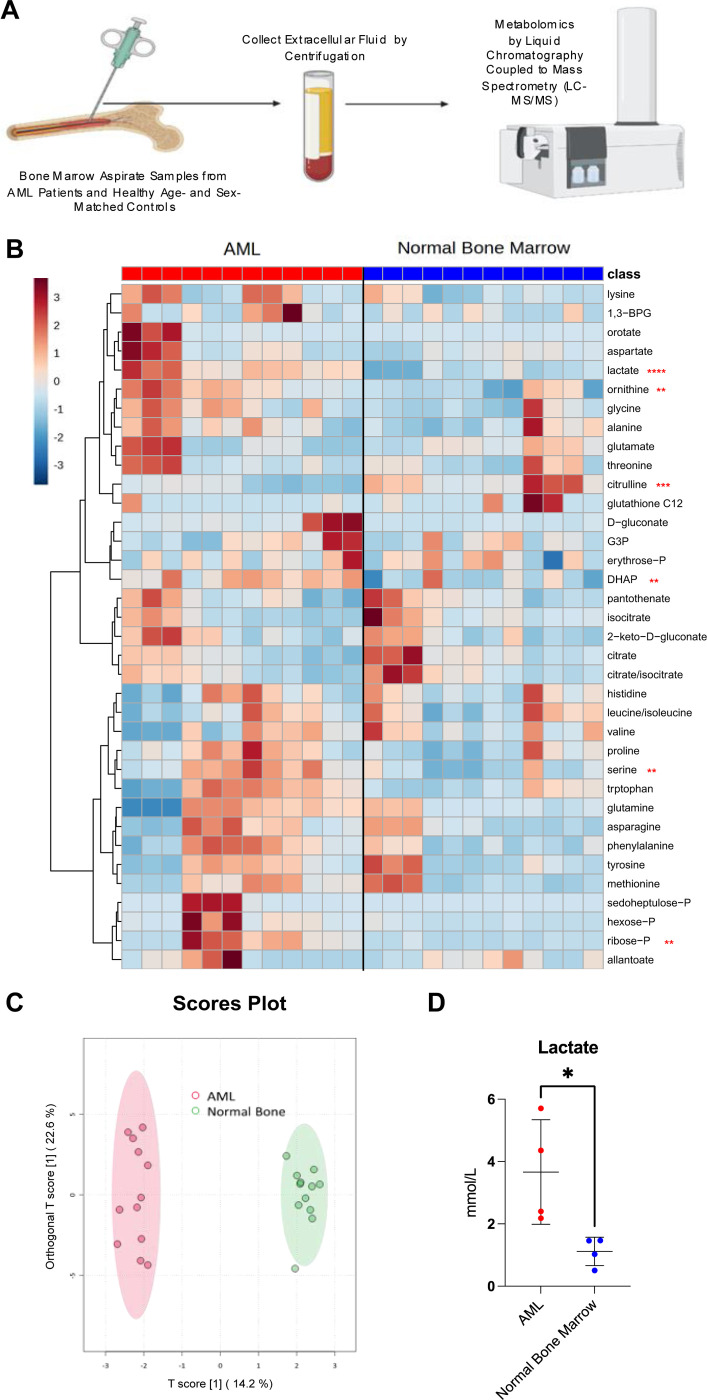
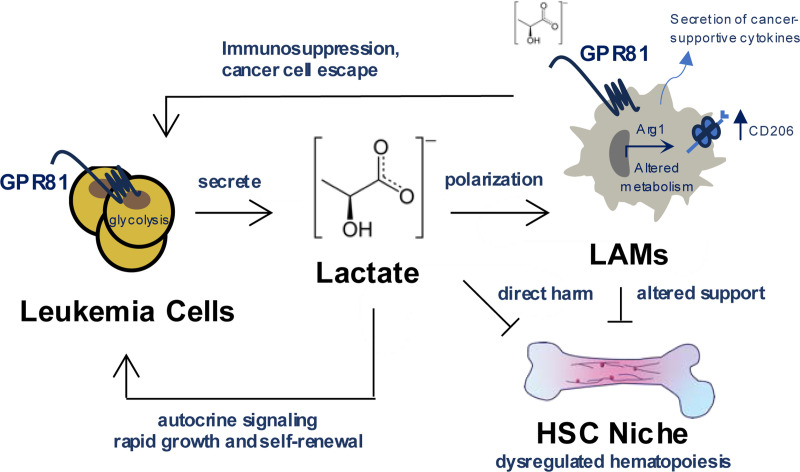
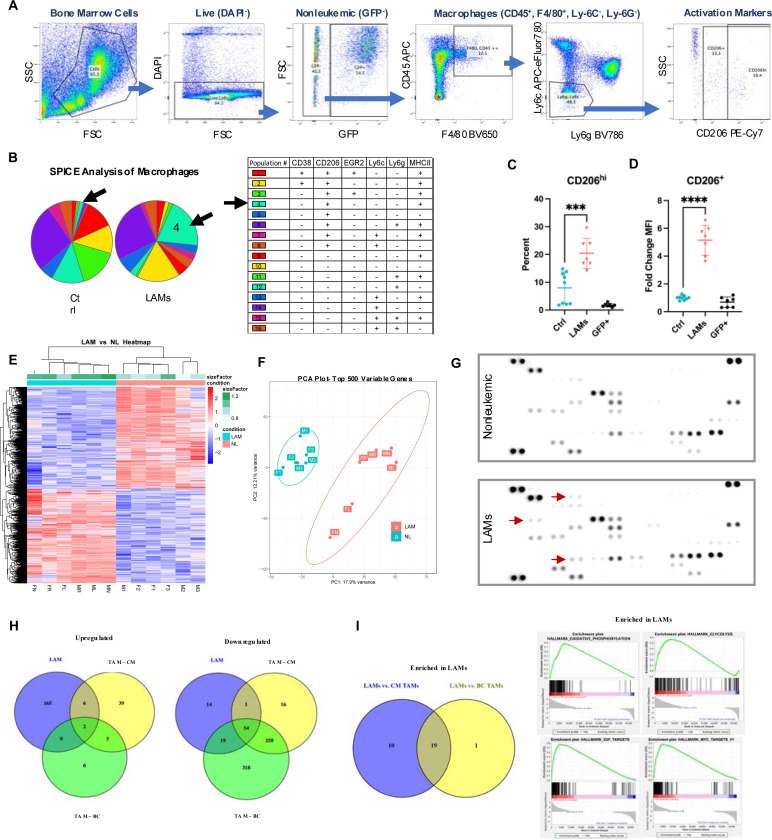
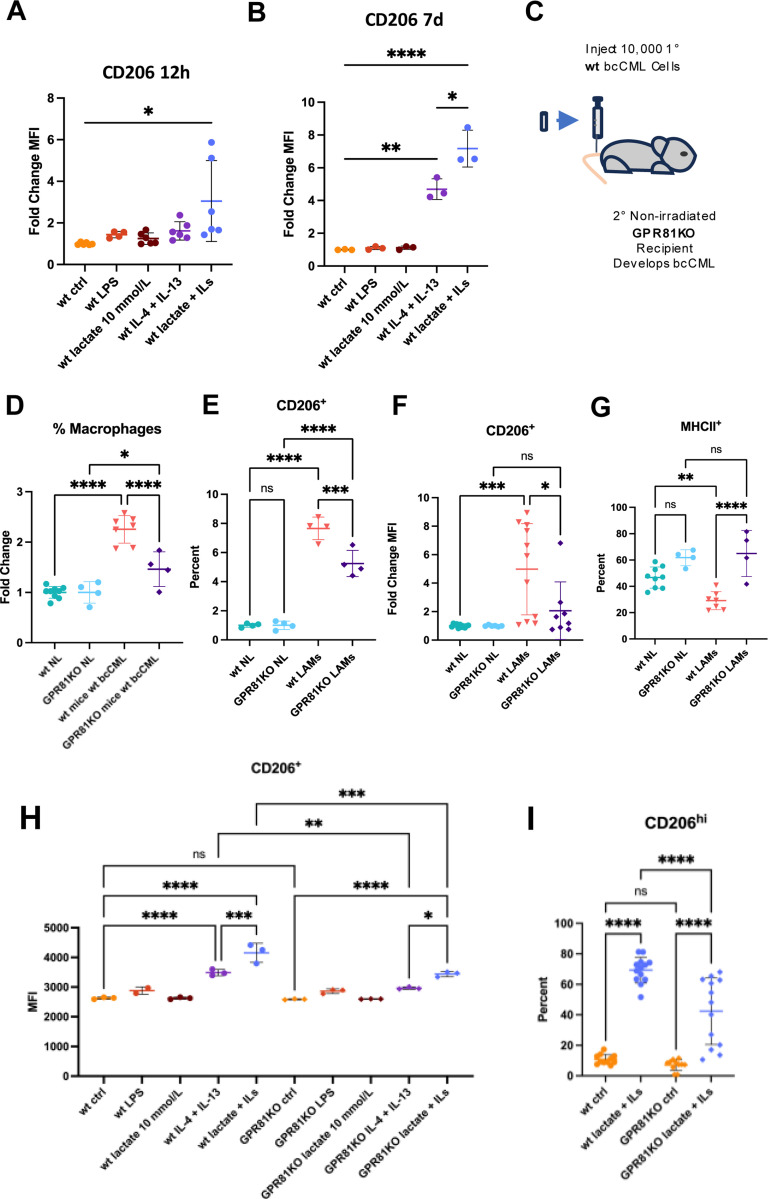
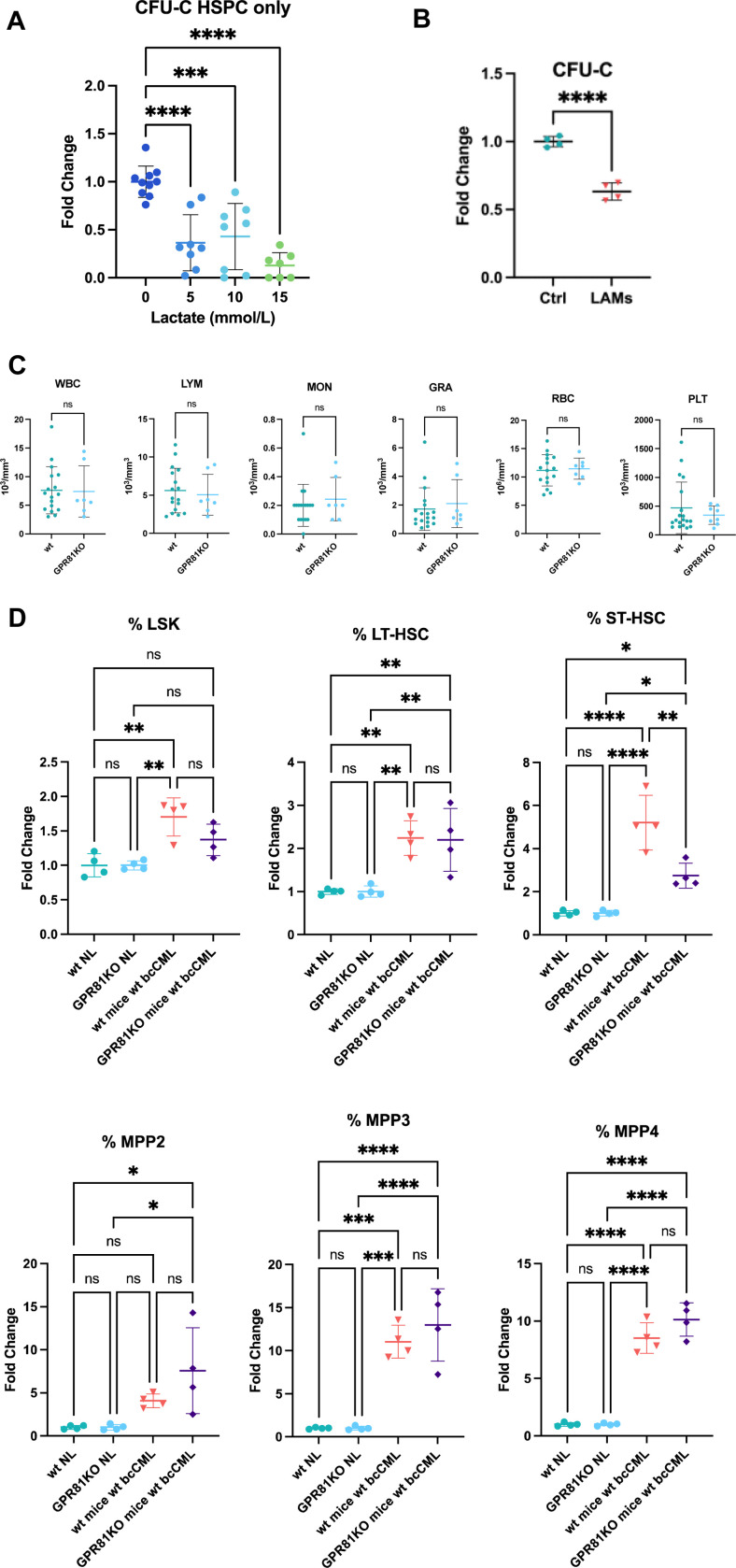
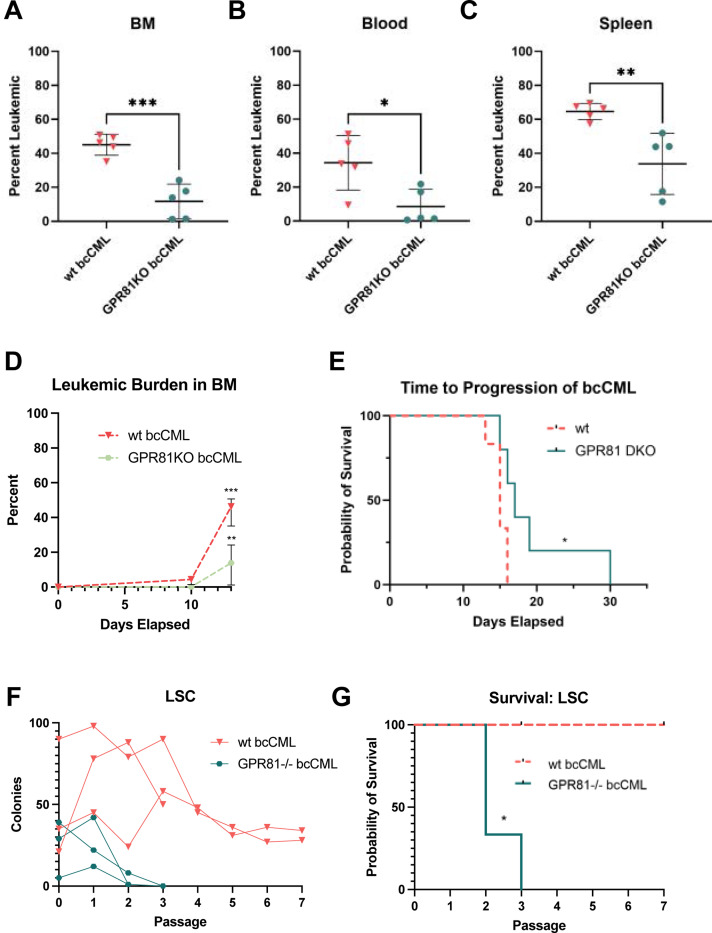
Interactions between acute myeloid leukemia (AML) and the bone marrow microenvironment (BMME) are critical to leukemia progression and chemoresistance. In the solid tumor microenvironment, altered metabolite levels contribute to cancer progression. We performed a metabolomic analysis of AML patient bone marrow serum, revealing increased metabolites compared to age- and sex-matched controls. The most highly elevated metabolite in the AML BMME was lactate. Lactate signaling in solid tumors induces immunosuppressive tumor-associated macrophages and correlates with poor prognosis. This has not yet been studied in the leukemic BMME. Herein, we describe the role of lactate in the polarization of leukemia-associated macrophages (LAMs). Using a murine AML model of blast crisis chronic myelogenous leukemia (bcCML), we characterize the suppressive phenotype of LAMs by surface markers, transcriptomics, and cytokine profiling. Then, mice genetically lacking GPR81, the extracellular lactate receptor, were used to demonstrate GPR81 signaling as a mechanism of both the polarization of LAMs and the direct support of leukemia cells. Furthermore, elevated lactate diminished the function of hematopoietic progenitors and reduced stromal support for normal hematopoiesis. We report microenvironmental lactate as a mechanism of AML-induced immunosuppression and leukemic progression, thus identifying GPR81 signaling as an exciting and novel therapeutic target for treating this devastating disease.
急性髓系白血病(AML)与骨髓微环境(BMME)之间的相互作用对白血病进展和化疗耐药性至关重要。在实体瘤微环境中,代谢物水平的改变有助于癌症进展。我们对AML患者的骨髓血清进行了代谢组学分析,发现与年龄和性别匹配的对照组相比,代谢物有所增加。AML骨髓微环境中升高最显著的代谢物是乳酸。实体瘤中的乳酸信号诱导免疫抑制性肿瘤相关巨噬细胞,并与不良预后相关。这在白血病骨髓微环境中尚未得到研究。在此,我们描述了乳酸在白血病相关巨噬细胞(LAM)极化中的作用。使用 blast 危机慢性粒细胞白血病(bcCML)的小鼠AML模型,我们通过表面标志物、转录组学和细胞因子谱分析来表征LAM的抑制表型。然后,使用基因敲除细胞外乳酸受体GPR81的小鼠来证明GPR81信号传导是LAM极化和白血病细胞直接支持的机制。此外,升高的乳酸会削弱造血祖细胞的功能,并减少对正常造血的基质支持。我们报告微环境乳酸是AML诱导的免疫抑制和白血病进展的一种机制,从而确定GPR81信号传导是治疗这种毁灭性疾病的一个令人兴奋的新治疗靶点。